
9 Ways to Fix Dictation Not Working on iPhone
Apple's dictation gives you a raw transcript. SpeakON gives you ready-to-send text shaped for the app you're in. One press between thought and word.
If dictation, voice-to-text, or talk-to-text has stopped working on your iPhone, you're not alone. This is one of the more common iPhone frustrations, and it tends to appear after an iOS update, a settings change, or when a restriction gets toggled without the user realizing it.
Before running through every fix, it helps to understand why this happens. Dictation on iPhone can fail for several reasons: it might simply be switched off in your keyboard settings, a Screen Time restriction could be blocking it, Siri may have gotten into a bad state, your microphone might be blocked or faulty, or a recent iOS update may have reset a setting. In most cases, it's a software issue that takes a couple of minutes to resolve.
The fixes below are ordered from the simplest and most common causes to the more involved ones. Start at the top and work your way down until dictation starts working again.
9 ways to fix iPhone/iPad dictation not working
Before making advanced changes when voice-to-text is not working on your iPhone, try the basic troubleshooting steps below:
Try your microphone on another app.
Restart your phone.
Enable and disable flight mode to refresh your network.
If the issue persists, you can proceed to the fixes below:
Check That Dictation Is Actually Turned On
This is the most common cause. iOS doesn't always keep dictation enabled after an update, and some users don't realize it was turned off.
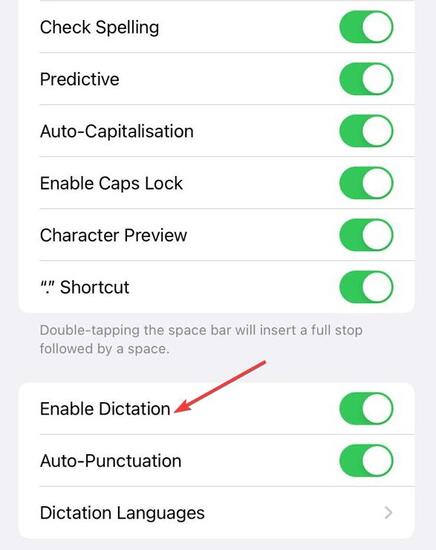
Open Settings, tap General, then tap Keyboard. Scroll down until you see Enable Dictation and make sure the toggle is green. If it's already on, toggle it off, wait a few seconds, and toggle it back on. This refresh clears minor configuration glitches that can cause dictation to stop responding even when it appears to be enabled.
After turning it back on, open the Messages app, tap in the text field, and look for the microphone icon on the keyboard. Tap it and try speaking. If it responds, you're done.
Sometimes, the talk-to-text not working on iPhone issues might be because you have not enabled dictation. You can use the voice typing feature again after following the steps above.
Tap the ‘Settings’ app and select ‘General’.
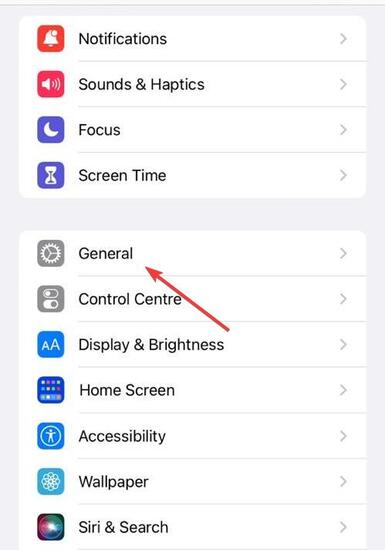
Choose the ‘Keyboard’ option.
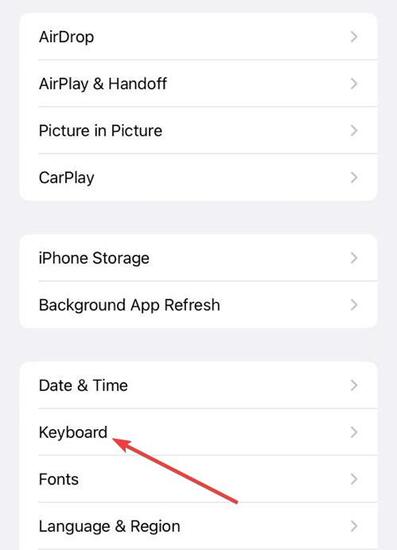
Finally, toggle on the switch ‘Enable Dictation’ to activate it. If dictation is active, toggle the switch backward and forward again to refresh it.

A MagSafe voice button for iPhone 12 and above. Press once, speak naturally, and polished text lands directly in iMessage, Gmail, Slack, and any iOS app.
2. Refresh your Siri settings and dictation
Siri and dictation share the same underlying process on the iPhone. When Siri gets into a corrupted state, dictation can stop working alongside it even if the dictation setting itself appears active.
Go to Settings and tap Siri and Search. Turn off Listen for "Hey Siri" and, depending on your iPhone model, turn off either Press Side Button for Siri or Press Home Button for Siri. Wait about 30 seconds, then turn them all back on again.
Tap the ‘Settings’ app and choose ‘Siri & Search’ from the list of options.
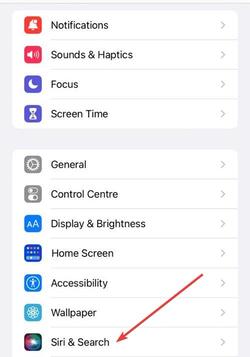
Toggle the switch for ‘Press Side Button for Siri’ or ‘Press Home for Siri’, depending on your iPhone version, backward to disable it.
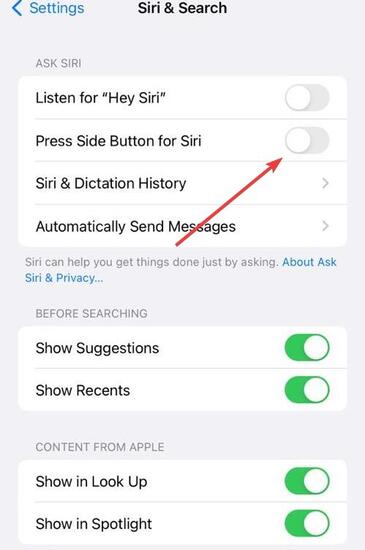
Now, toggle the switch for the Listen for “Hey Siri” option backward.
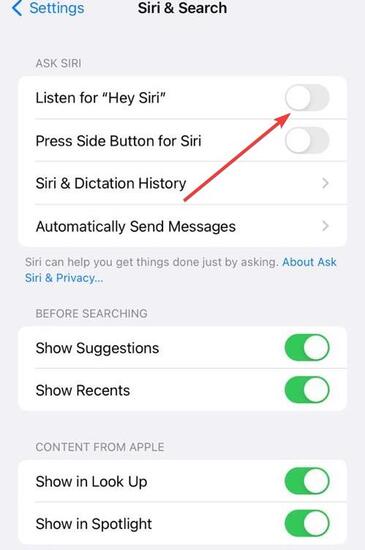
Next, wait some minutes, toggle the switches for ‘Press Side Button for Siri’ and Listen for “Hey Siri” forward to enable them.
Finally, repeat the steps in Solution 1 above to refresh dictation.
3. Update your iOS version
Running an outdated version of iOS is a common cause of dictation problems, especially if the issue started after a partial update or if you've been delaying updates for a while. Apple frequently patches voice and Siri-related bugs in minor iOS releases.
Go to Settings > General > Software Update. If an update is available, download and install it, then restart your phone and test dictation again.
If you're specifically on iOS 16 and experiencing issues, updating to the latest available iOS 16 or iOS 17 release has resolved dictation problems for a large number of users, including the "spinning" issue described in Apple's own community threads.
Go to ‘Settings’ and choose ‘General’ > ‘Software Update’.
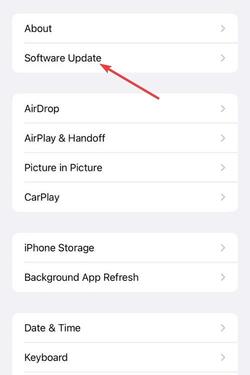
Now, tap ‘Download and Install’ to download all available updates.
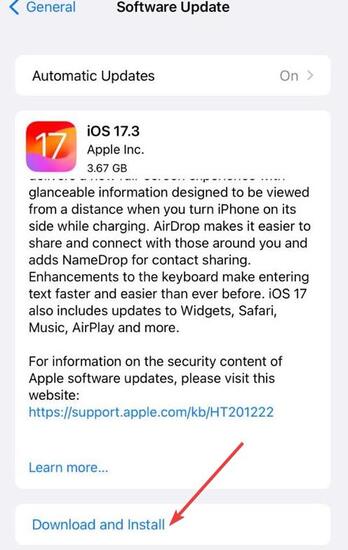
If you have not updated your phone for some time, you might experience different issues, including this problem with dictation. Updating and restarting your iPhone should restore normalcy here.
4. Check Your Language and Dictation Language Settings
Dictation not working on iOS 16 or iOS 17 is sometimes caused by a language mismatch rather than a feature being disabled. If your keyboard is set to one language but your dictation language is set to something different or not set at all, dictation can fail silently or produce no output.
Go to Settings > General > Keyboard and tap Keyboards. Check which keyboards you have active. Then go back and tap Dictation Languages to see which languages are enabled for dictation. Make sure at least one of the languages in your dictation list matches a keyboard you actively use.
Users running iOS 16 in particular have reported that switching to English (UK) from English (US), or vice versa, resolved dictation for them even without any other changes. If your current selection isn't working, try adding an alternative regional variant of the same language and testing with that.
You should also check the Voice Control language setting separately. Go to Settings > Accessibility > Voice Control > Language and confirm it matches what you've set elsewhere.
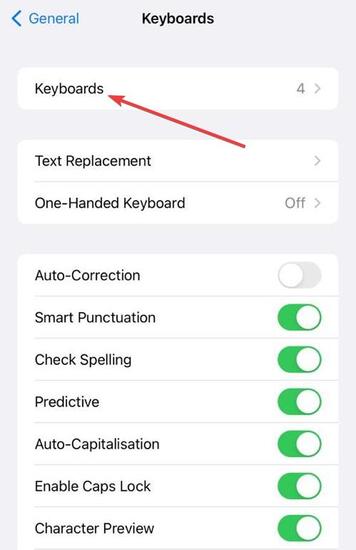
Tap ‘Settings’ and choose ‘General’ > ‘Keyboard’.
Select the ‘Keyboards’ option.
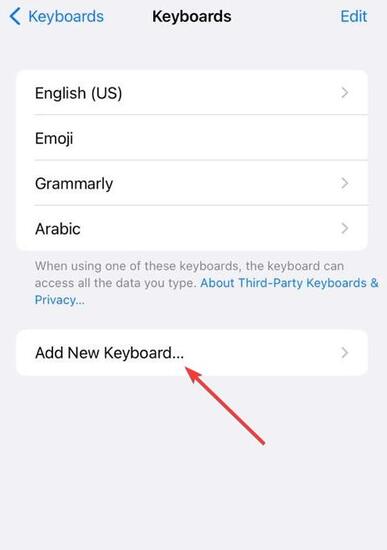
Choose ‘Add New Keyboard’ on the next page. Select a language that is different from your keyboard's default language. This will add the language to the list of languages on your keyboard.
Now, go back to ‘Settings’ > ‘General’ > ‘Keyboard’.
Choose ‘Dictation Languages’.
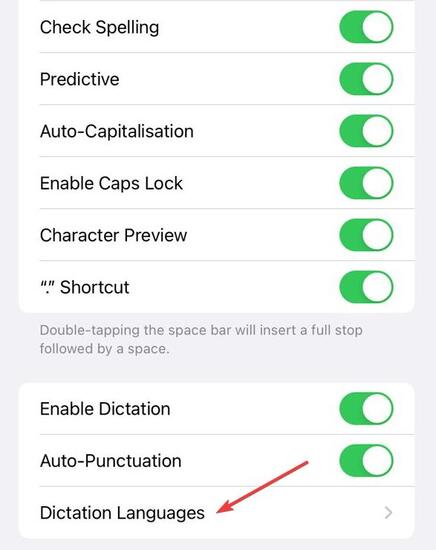
From here, select the language you added in Step 3.
Next, follow the path: Settings > Accessibility > Voice control > Language.
Finally, select the same language you added in Step 3.
5. Enable and disable Voice Control
Voice Control and dictation use overlapping system resources. If Voice Control has gotten into an unstable state, it can interfere with standard keyboard dictation in ways that are hard to diagnose otherwise.
Go to Settings > Accessibility and tap Voice Control. If it's currently on, turn it off and wait about 15 seconds before turning it back on. If it was already off, turn it on briefly, wait a moment, then turn it off again.
After doing this, go back to Settings > General > Keyboard, toggle Enable Dictation off and on once more, and then test.
6. Disable screen time restriction for Siri & Dictation
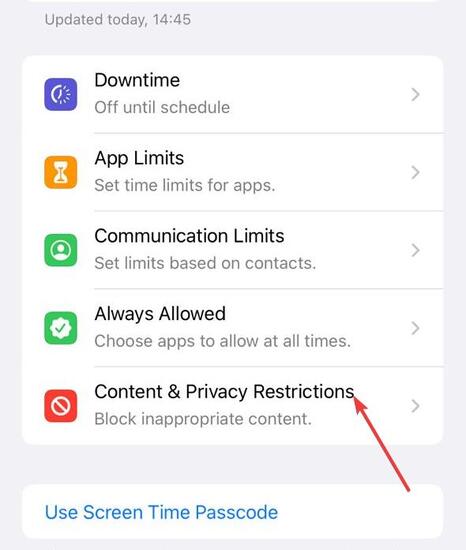
This is one of the most overlooked causes, but it accounts for a significant number of cases where dictation disappears completely with no obvious explanation. If Screen Time is active on your iPhone and Siri and Dictation has been restricted, the microphone icon won't appear on the keyboard at all.
Navigate to ‘Settings’ > ‘Screen Time’ > ‘Content & Privacy Restrictions’.
Now, choose ‘Allowed Apps.’
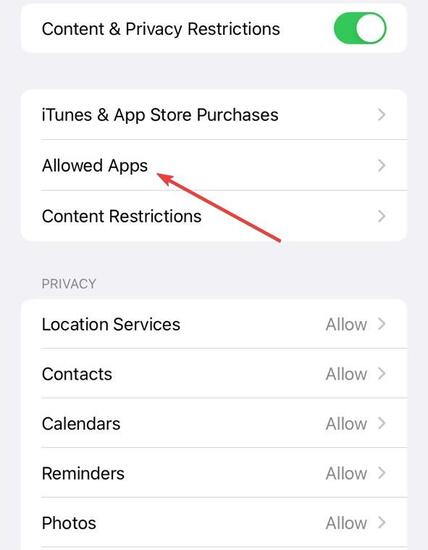
Finally, toggle off the switch ‘Siri & Dictation’ to disable it.
7. Disable low power mode
Low Power Mode restricts background processes and network activity to extend battery life. For most apps this is fine, but it can affect dictation, particularly on older iPhone models where system resources are more constrained.
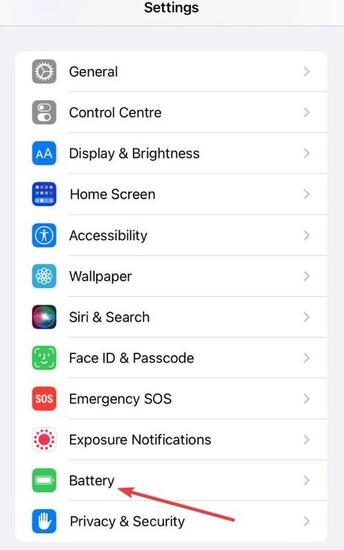
Go to ‘Settings’ and select the ‘Battery’ option.
Toggle the switch for ‘Low Power Mode’ backward to disable it.
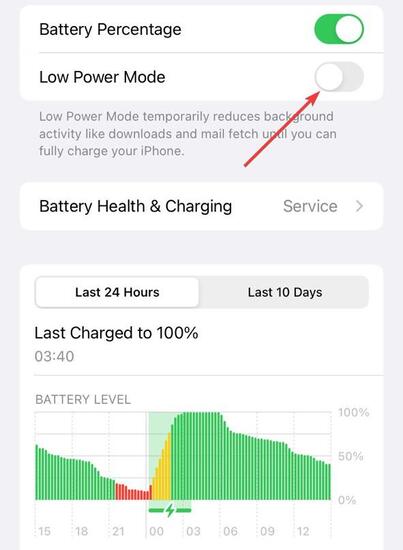
Finally, test to see if talk to text is now working.
8. Reset network settings
If you've confirmed your internet connection seems fine but dictation is still failing when it needs to reach Apple's servers, a corrupted network configuration could be preventing the connection from completing properly even though other apps work normally.
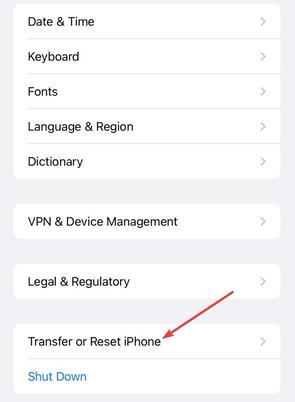
Navigate to ‘Settings’ > ‘General’, as shown in previous solutions.
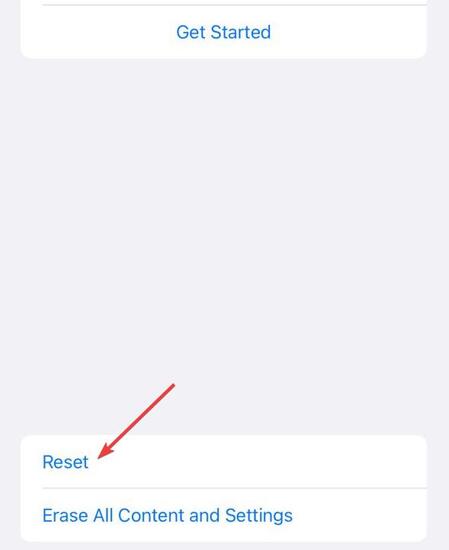
Select the ‘Transfer or Reset iPhone’ option and click ‘Reset’.
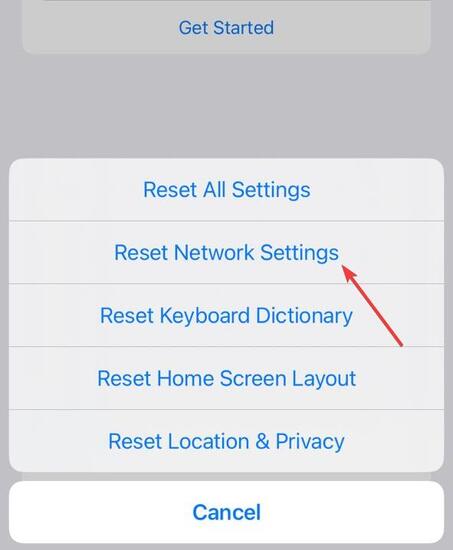
From the options, select ‘Reset Network Settings’.
Finally, enter your iPhone passcode if prompted and wait for your phone to restart.
9. Perform a factory reset
If every fix above has failed and dictation is still not working, a factory reset will restore your iPhone to its default state and eliminate any software-level cause. This should only be done after you have exhausted all other options, since it erases everything on the device.
It goes without saying that a factory reset will wipe off your data. So, you should back up your important files on iCloud or an external storage.
Open the ‘Settings’ app.
Select ‘General’ > ‘Transfer or Reset iPhone’.
Now, choose ‘Erase All Contents & Settings’.
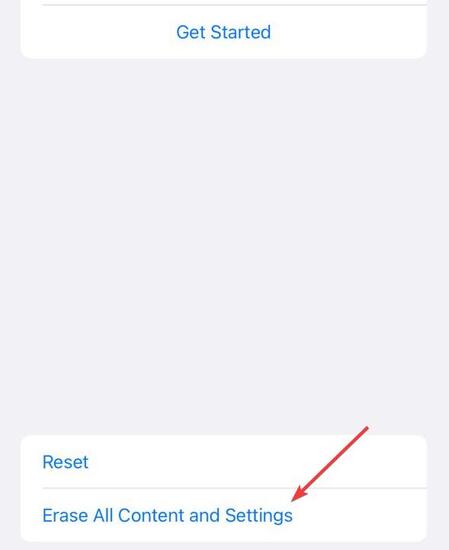
Tap the ‘Continue’ option, enter your iPhone passcode if prompted, and confirm the process.
If dictation doesn't work even on a freshly reset iPhone with no apps or settings restored, the problem is almost certainly hardware. Contact Apple Support or visit an Apple Store for a diagnosis.
Tired of Cleaning Up Clunky Transcripts? Try a Hardware Alternative
If every fix above still leaves iPhone dictation unreliable, the problem might not be your settings, it might be software dictation itself. Apple's built-in dictation captures your voice word-for-word, fillers and all. You still spend time cleaning it up before the message is ready to send.
SpeakON takes a different approach. It's a MagSafe hardware button that clips to the back of your iPhone . Press the physical button, speak naturally, and polished, ready-to-send text lands directly in whichever app you're using — iMessage, WhatsApp, Gmail, Notes, Slack, LinkedIn, or any other iOS app with a text field. No tapping the keyboard mic, no app-switching, no copy-paste.
What the device actually does
Physical button activation — a dedicated microphone on the hardware, independent of your iPhone's system mic. No background mic occupation, no app conflicts.
Smart Polish — removes filler words, run-on sentences, and verbal tics automatically; output reads like text someone wrote, not a raw transcript.
Attune tone engine — four modes (Off, Casual, Professional, Formal). Same spoken input, different tone depending on the app: Casual for iMessage, Professional for Slack, Formal for email.
13 languages with real-time translation built in.
Privacy by design — no audio stored, processed and discarded; only text output retained.
Who it's for
Founders, VCs, consultants, and other professional communicators who send a lot of high-stakes messages on iPhone. If the cost of a clunky transcript is a message that has to be edited before it's sent, SpeakON is built for that exact moment.
Frequently Asked Questions
Why is my iPhone dictation not working after an iOS update?
iOS updates occasionally reset the Enable Dictation toggle in keyboard settings, or introduce a bug that requires Siri to be refreshed. The most reliable fix after an update is to go to Settings > General > Keyboard and toggle Enable Dictation off and back on, then do the same for Siri settings. If that doesn't resolve it, checking for a follow-up iOS update often helps since Apple usually patches dictation-related bugs in the next point release.
Does iPhone dictation work without Wi-Fi?
On iOS 16 and later, yes. Apple introduced on-device dictation processing that works offline for supported languages. On iOS 15 and earlier, an active internet connection is required for dictation to function. If you're on a recent iOS version and dictation still fails offline, your language may not support offline processing yet or the on-device model may not have downloaded.
Why does my iPhone dictation keep stopping?
Dictation times out after a short period of silence by design. If it's stopping too quickly while you're still speaking, check whether Low Power Mode is active, since this can shorten the dictation timeout window. A poor internet connection can also cause dictation to terminate early on iOS versions that rely on server-side processing.
Why is voice-to-text not working on my iPhone 11, 12, or 13?
The fixes are the same regardless of iPhone model. The most common causes on these devices are Screen Time restrictions blocking Siri and Dictation, the Enable Dictation toggle being off, or a Siri settings refresh being needed. Work through the steps above starting from step 1.
My dictation microphone icon isn't showing on the keyboard. What do I do?
If the microphone icon is completely absent from your keyboard, it almost always means dictation is disabled either in Settings > General > Keyboard or through a Screen Time restriction under Content and Privacy Restrictions > Allowed Apps > Siri and Dictation. Check both of these first before trying anything else.
A MagSafe button for iPhone 12 and above. Press, speak, and cleaned-up text lands in the app you're in — no mic icon, no app switching.
Conclusion
While dictation not working on iPhone can be frustrating, the fixes above resolve the issue for most users. Start with the basics — confirm dictation is enabled, refresh Siri, check your language settings — and work down the list only if needed.
If you've tried everything and still find iPhone dictation unreliable, it might be worth stepping outside Apple's built-in tools altogether. A hardware solution like SpeakON changes the setup entirely, giving you polished text in any app with a single button press.

