
Where Are Voice Messages Saved on iPhone?
Instead of saving, exporting, and managing audio files — press SpeakOn, speak, and get text in any app instantly.
How to stop your iPhone audio messages from vanishing—and keep them forever!
On iPhone, voice messages (audio messages sent via iMessage) are saved inside the Messages conversation where they were exchanged — not in a separate app or folder. By default, they delete automatically 2 minutes after you listen to them. To keep them, tap Keep or change the expiry to Never in Settings > Messages > Audio Messages > Expire.
The problem:
You receive an important or touching audio message on your iPhone. Later, you decide you’d like to listen to it again.
You tap the Messages app, expecting the audio message to be there, but (to your dismay), it’s already vanished.
Apple has expired your audio message!
The solution:
In this article, I'll walk you through step-by-step instructions for both — plus how to export audio messages out of the Messages app entirely.
But first, let's review some basics:
How to listen & reply to your audio messages?
By default, the iPhone is set up to play all incoming audio messages using a feature called ‘Raise to Listen.’
It’s incredibly simple to use:
To listen to a message, raise the iPhone to your ear.
To reply, raise it again.
If you want to disable the feature, go to:
‘Settings’>’ Messages’
Toggle off>‘Raise to Listen.’
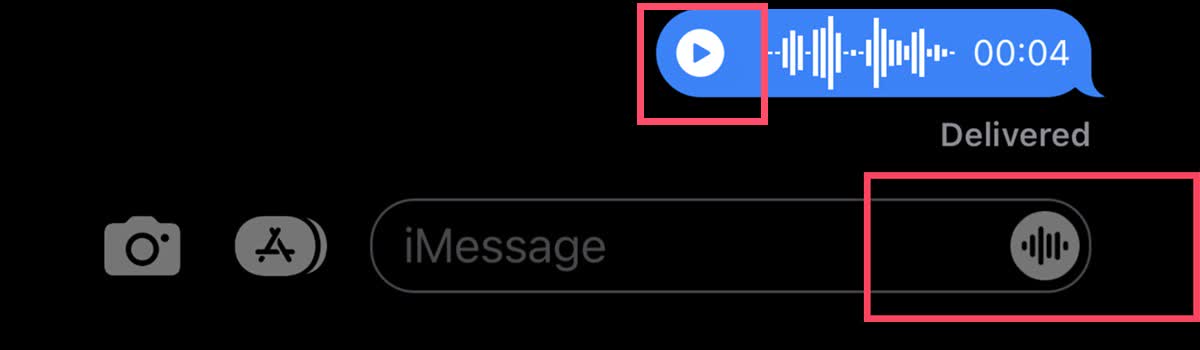
Audio messages will play when you tap on the triangular play icon.
You can respond to a message by tapping on the soundwave icon inside the message reply field.

Stop managing voice messages. SpeakON types your speech directly into any iPhone app — press, speak, done.
How to save iPhone audio messages?
You can save any audio message you’ve received on your iPhone by using one of these simple methods:
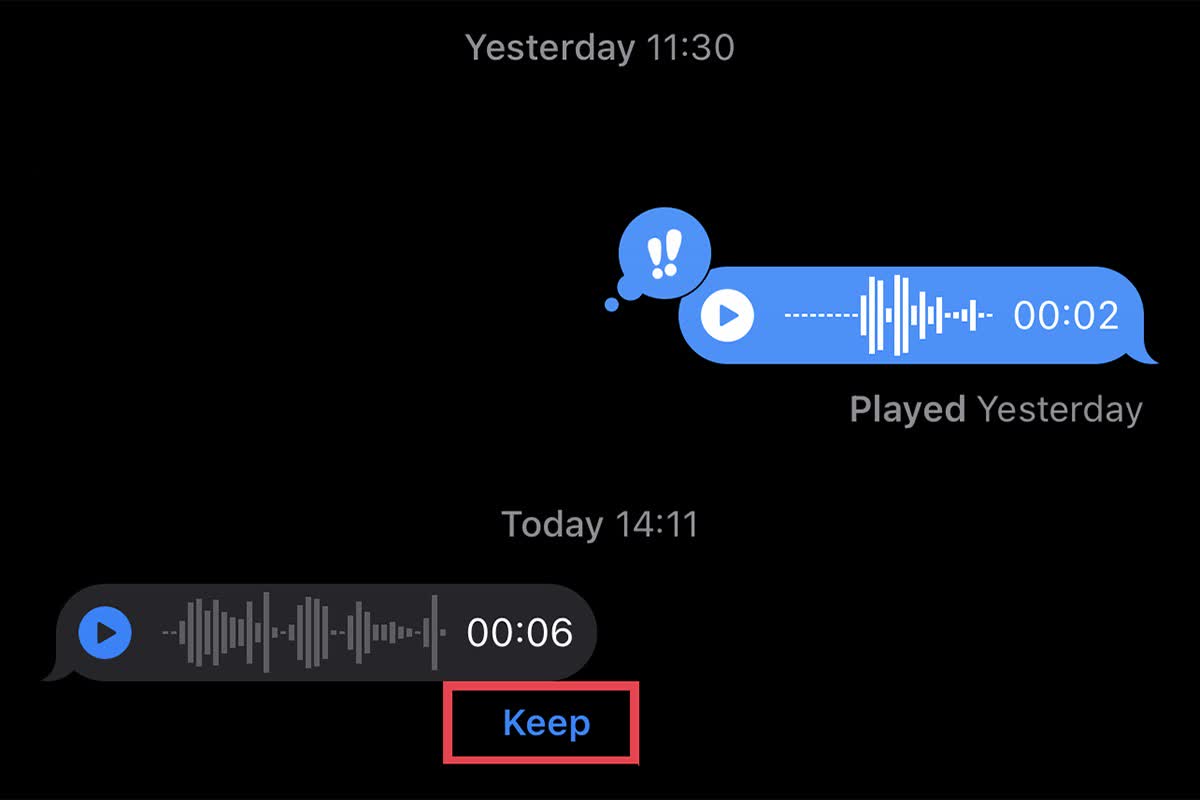
The ‘Keep’ button
Navigate to the voice message in the Message app.
If you look at the audio, you will see the word ‘Keep’ written in blue directly below it.
Tap the text to save the audio.
Doing this will ensure it remains visible for as long as you have that message thread on your iPhone.
If your iPhone messages are synced via iCloud, you can access your audio messages across all your Apple devices.
The disadvantage of using ‘Keep’ is that it’s easy to forget to save the file, and you need to remember to save each message to prevent it from expiring.
By default, messages expire 2 minutes after you listen to them. Once they do, there’s no way to retrieve them.
A better alternative to separately saving each message is to head into the iPhone ‘Settings’ menu and remove the time limit altogether.
This simple change will ensure you can keep your audio messages available indefinitely.
Here’s how:
How to change the default audio message settings?
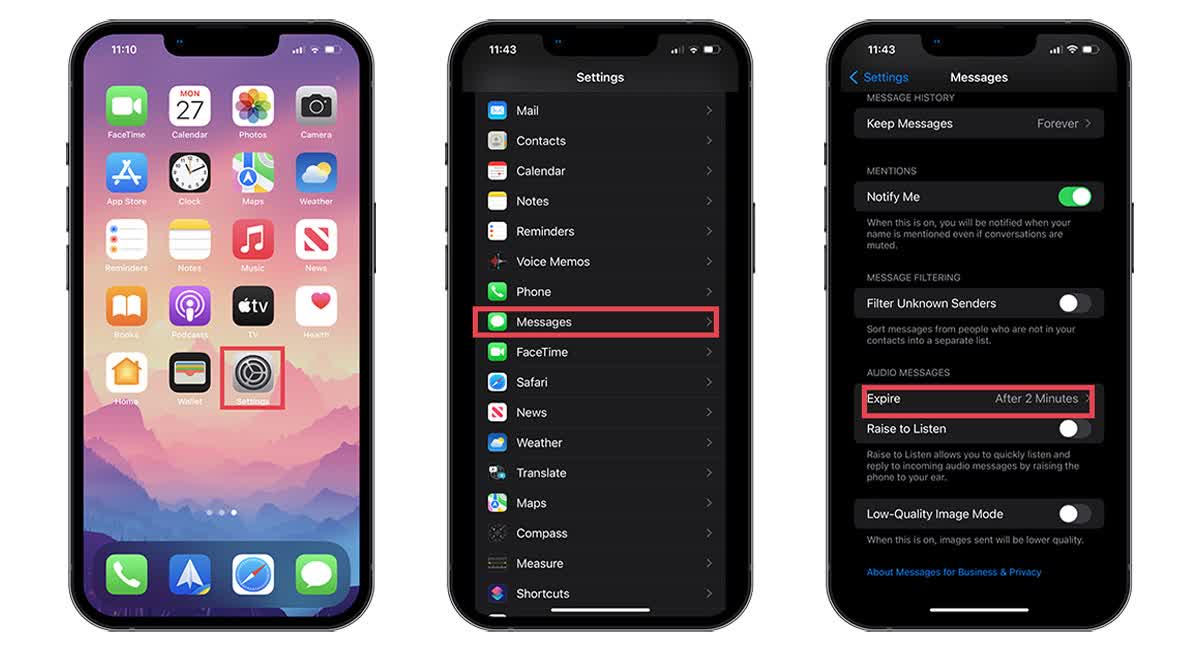
Tap the ‘Settings’ icon on your iPhone home screen.
Scroll down until you see the ‘Messages’ icon. Tap it to enter the sub-menu.
Scroll down to ‘Audio Messages’ and tap to enter the ‘Expire’ tab.
Change the expiration option to ‘Never.’
Where Do Audio Messages Save on iPhone (iMessage)?
Audio messages sent and received through the Messages app (iMessage) are stored differently from Voice Memos. They live inside the Messages conversation where they were exchanged.
By default, the iPhone deletes audio messages 2 minutes after you listen to them. This is a deliberate privacy and storage feature. Once deleted, they cannot be recovered.
To keep an audio message from being deleted, you have two options: tap Keep, or change the expiry setting to prevent all audio messages from being deleted automatically.
Finding Kept Audio Messages
When you tap Keep on an audio message, it stays in the Messages conversation thread. It does not move to a separate folder or app. To find it:
Open the Messages app.
Open the conversation where the audio message was sent or received.
Scroll up through the conversation to locate the saved message. It will be visible as an audio waveform, without the Keep option underneath it (because it is already saved).
There is no dedicated folder for kept audio messages. They remain in the conversation and will persist as long as the conversation itself exists on your iPhone.
What Does "Kept" Mean on an iPhone Audio Message?
When an audio message shows the word Keep in blue underneath it, this indicates the message has not yet been saved and will be automatically deleted after 2 minutes. Tapping Keep saves it to the conversation permanently.
Once you tap Keep, the blue label disappears, and the message stays in the thread. If you see a message without the Keep label, the message has already been saved (or it was sent recently and the 2-minute window has not yet elapsed).
Exporting voice messages using the Notes app
Ultimately, neither the ‘Keep’ function nor housing your audio voice messages inside the Messages app may be the solution you’re seeking.
What if you want to move your saved audio files outside of the Messages app altogether?
Perhaps you want to use the messages creatively, or maybe, you’d like to archive them on a secure drive that only you control.
Fortunately, this is relatively simple to do.
You’ll begin by using a Long-Press inside the ‘Messages’ app.
Here’s how it works:
Long press on the audio message you want to export/share. This action brings up a secondary menu.
Now, select the ‘Copy’ function to copy the audio file to the iPhone’s clipboard.
Next, launch the ‘Notes’ app & create a new note.
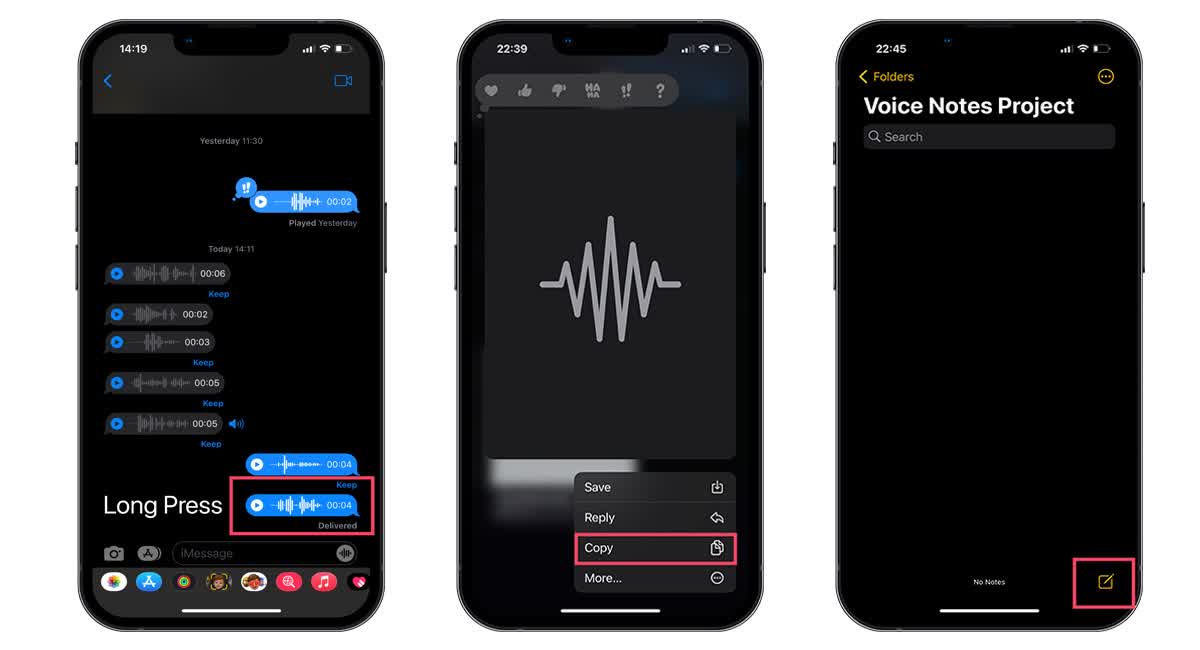
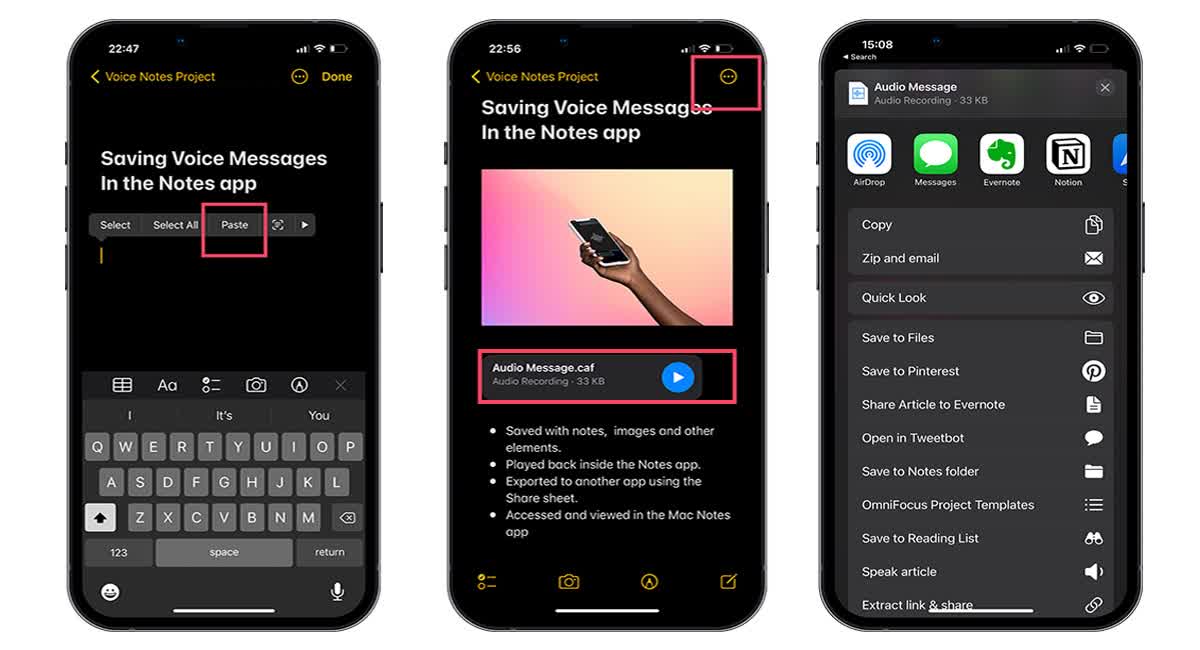
Tap the new note you created and select ’Paste’ from the pop-up menu to copy your audio file into it. Your audio message will be pasted into Notes as a .caf file.
‘Long- Press’ on this audio file, OR tap in the top right-hand corner. Either of these actions will allow you to access your iPhone’s share options.
You can now share the audio file with various apps and services.
Want your voice in any App — without the audio file?
Every workaround in this article exists for the same reason: iPhone audio messages were designed to be ephemeral. Tapping Keep, changing expiry settings, copying to Notes — you're constantly managing a system that was built to forget.
SpeakON takes a different approach entirely. It's a MagSafe device for iPhone — press the physical button, speak, and polished text appears directly in whatever app you're already using. No audio files. No Keep buttons. No 6-step export process.
Works in any app — iMessage, WhatsApp, Gmail, Notes, Slack, and more
AI polish — removes filler words and restructures speech into clean, readable text
Attune tone modes — Casual, Cordial, or Formal to match the situation
Stop managing voice messages. SpeakON types your speech directly into any iPhone app — press, speak, done.
FAQs
Where do saved messages go on my iPhone?
All saved messages are stored on iOS 12 and later in the Messages app.
But, if you’re running a version of iOS earlier than version 12, they will be stored in the Voice Memos app.
How do I know when someone has heard my audio message?
Once the person you sent the audio message to has listened to it, the word ‘Played’ will appear underneath the message.
If they save the message, you will receive a notification informing you.
NB: This notification also appears if they have used ‘Settings’ to override the default message expiry time.
Can I unsend a voice message on my iPhone?
No.
You cannot delete an audio message once you’ve sent it to someone else. Deleting it from your device will not affect its existence on theirs. Instead, you’re better advised to delete the message before sending it.
Why can't I find a saved audio message?
If you tapped Keep but cannot find the message, look in the original Messages conversation and scroll upward. If you did not tap Keep before the 2-minute window expired, the message has been automatically deleted and cannot be recovered. To prevent this happening in the future, change the expiry setting in Settings > Messages > Audio Messages > Expire > Never.
Do voice memos back up automatically?
If iCloud is enabled for Voice Memos (Settings > [Your Name] > iCloud > Voice Memos), recordings sync automatically. If iCloud is not enabled, Voice Memos are included in your iPhone backup through iCloud Backup or iTunes, but they are not accessible on other devices until the backup is restored.
Can I use my voice to type a message instead of sending a voice recording?
Yes. Voice messages send audio that the recipient has to listen to. If you'd rather speak and have your words appear as typed text instead — so you send a normal text message, not a recording — iPhone's built-in dictation (the microphone icon on the keyboard) can do this, but it outputs your speech exactly as spoken, filler words and all.
SpeakON takes a different approach: press the MagSafe hardware button, speak naturally, and AI automatically removes filler words and restructures your speech into clean, readable text — delivered directly into whichever app you're using — iMessage, WhatsApp, Notes, Gmail, and more.
Can I transcribe audio messages and voice memos on my iPhone?
iOS 17 and later includes automatic transcription for audio messages in iMessage; the transcript appears below the waveform. For Voice Memos, transcription is available on Pixel devices natively but not on iPhone. For transcribing voice memos or recorded meetings, Notta — an AI-powered meeting productivity platform — supports audio file upload and generates searchable, shareable transcripts in 58+ languages. The free plan includes 120 minutes/month; Pro starts at $8.17/month.
Conclusion
We hope you now feel more confident using your iPhone's audio messaging capabilities. Voice messaging is a great way to communicate when typing feels like too much effort.
If you'd like to skip the recording step entirely, SpeakON lets you press a button, speak naturally, and have clean, AI-polished text appear directly in any app — so you can send a typed message just as fast as a voice one, minus the filler words.
For transcribing existing audio or meetings, Notta's free Chrome extension is a great option — record and transcribe audio to text directly on the web and iPhone.

