

How to Record Presentation on PowerPoint with Audio & Video
Record, transcribe and summarize conversations with one click.
PowerPoint has a built-in recording feature that lets you narrate your slides, capture your webcam, and export the whole thing as a shareable video file. You don't need a separate screen recording tool for most use cases, and the process works whether you're recording a brand-new presentation from the first slide or adding narration to a deck that's already finished.
This guide covers both scenarios, walks through how to include webcam video alongside your slides, explains how to export your recording as an MP4, and includes practical tips for getting clean audio which is where most recordings fall apart.
Understanding the Two Recording Modes
Before pressing record, it's worth understanding which mode suits your situation. PowerPoint gives you two options inside the Slide Show tab.
Record from Beginning starts a fresh recording from slide one and works through your entire presentation in sequence. Use this when you're narrating a deck for the first time and want a single continuous recording.
Record from Current Slide starts from whichever slide is selected. Use this when you've already recorded part of your presentation and need to re-record a specific section, or when you want to add narration to a single slide without affecting the rest.
Both modes record narration audio and slide timings simultaneously. Slide timings tell PowerPoint how long to display each slide during playback, so the recording advances automatically in sync with what you said.
How to Record a PowerPoint Presentation with Audio
These steps apply to PowerPoint for Windows (Microsoft 365 and Office 2019 onwards). Mac-specific differences are noted where they apply.
Here's a secret: you don't need a dedicated screen recording tool because major OS already offers that feature.
But that does not mean an online screen recorder is of no use. It offers editing features and, in some cases, makes it easy to share the recordings with team members.
In this section, I'll reveal how to add narration to PowerPoint using the built-in audio recorder and a third-party app.
Record audio & video in PowerPoint
We have often heard the phrase — show, don't tell. But when it comes to presentations, it becomes equally important to 'show' and 'tell' — and PowerPoint's built-in audio recorder makes it easy.
Recording the presentation with audio and video lets the viewer understand what's happening on the screen clearly and what information each slide contains. Here's a simple tutorial on how to add narration to PowerPoint slides.
Step 1: The first step is to open the PowerPoint presentation and select the 'Slide Show' option available on the top Office-style toolbar.
You'll see different options, including Record from Current Slide and Record from Beginning.
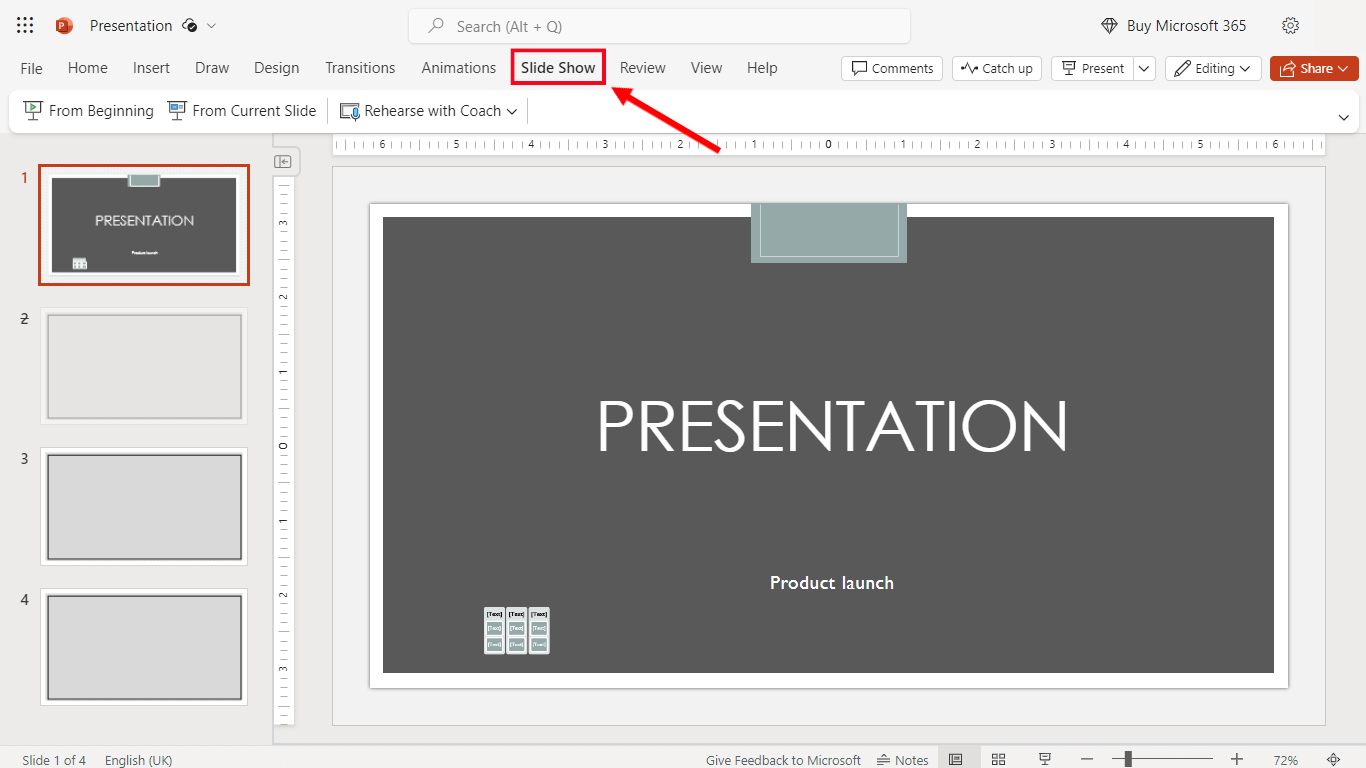
If you want to record audio and video right from the beginning, choose 'Record from Beginning,' but select 'Record from Current Slide' to record a particular slide.
Step 2: By default, PowerPoint will start recording both video and audio. You can, of course, turn the camera off if you don't want video in your presentation. Once you have modified the settings, select the 'Record' button to start recording.
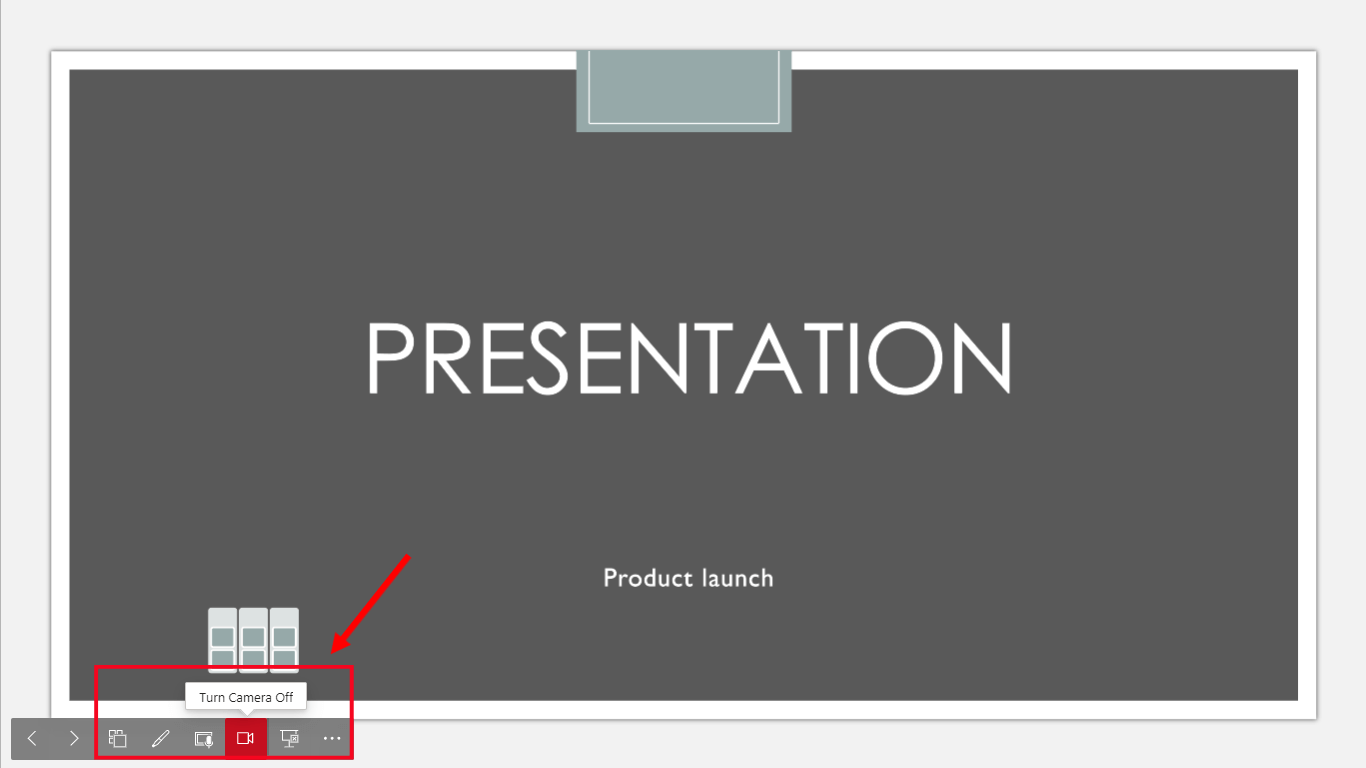
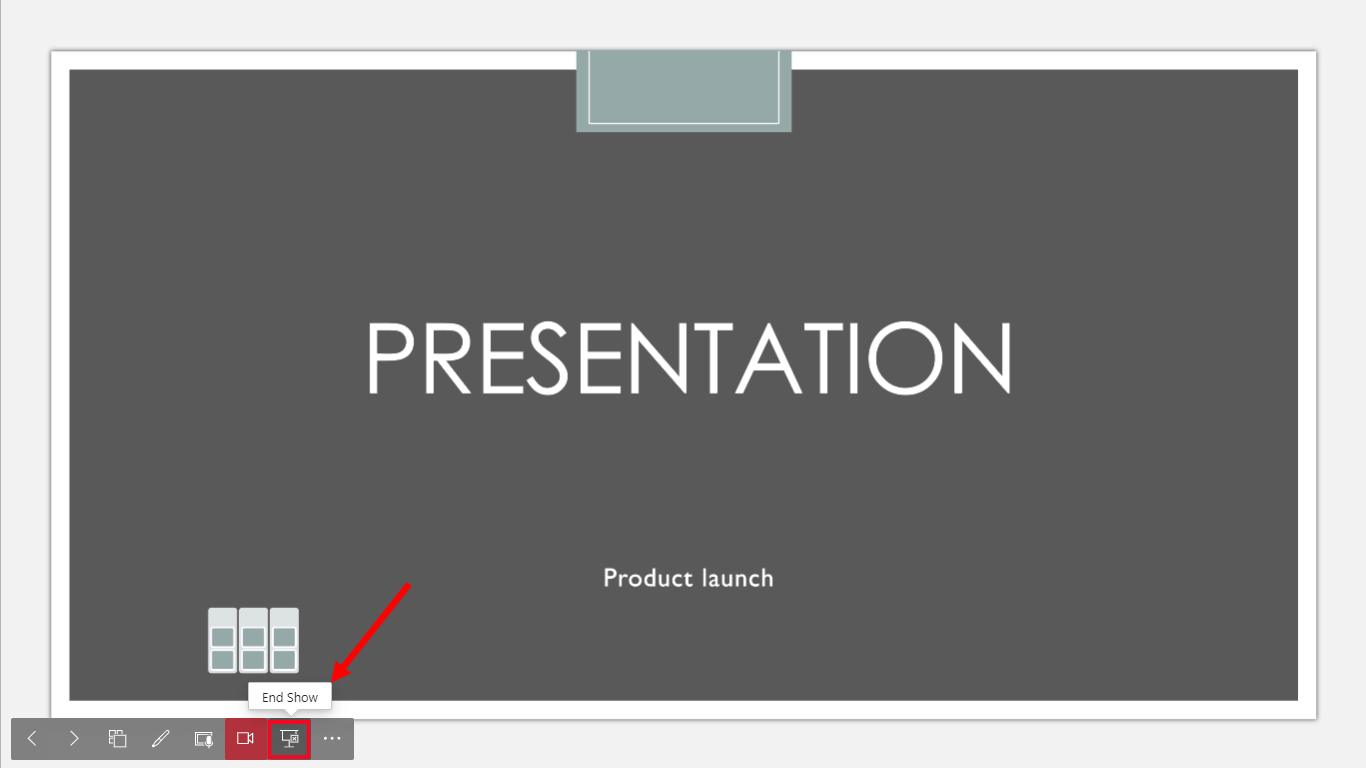
Step 3: Take your time to record the narration for the entire presentation. Just click the directional arrow buttons if you want to switch between the slides. Click 'End Show' to finish the narration.
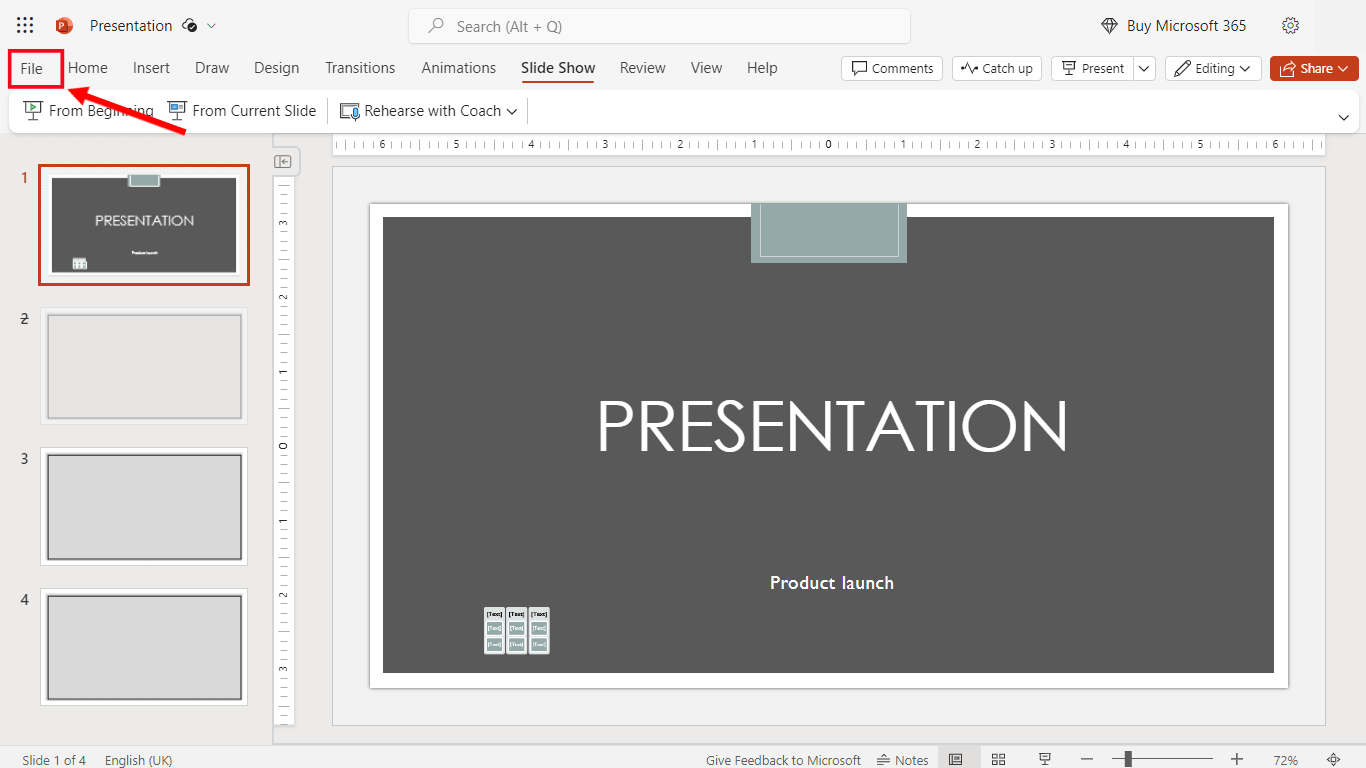
Step 4: Next, save the PowerPoint presentation — and that's quite easy: Go to the 'File' menu, choose 'Export,' and finally select 'Create a Video.'
You can also alter the video quality and choose ‘Use Recorded Timings and Narrations’ before you finally hit 'Create Video.' That's it! The video presentation with narration will be saved on your device.
Note: Those who want to record camera video during the presentation can attach a webcam to their computer.
Add pre-recorded audio in PowerPoint
If you are not making presentations for fun, you are probably using them for something important and more practical: product launches, budgets, or reports. That's why you'll need to record audio in high-quality and clear voice — and PowerPoint's built-in recorder might fall short here.
Notta is one of the most powerful and popular recording and transcribing tools for good reason. There's an audio recording — and even live video recording — feature for almost every imaginable purpose. Here's how to record audio for PowerPoint presentation using Notta.
Step 1: New users can sign up for free to get started with Notta. If you are already a Notta user, simply enter your login details to sign in. Upon entering the dashboard, select the 'Record an Audio' option available in the right sidebar.
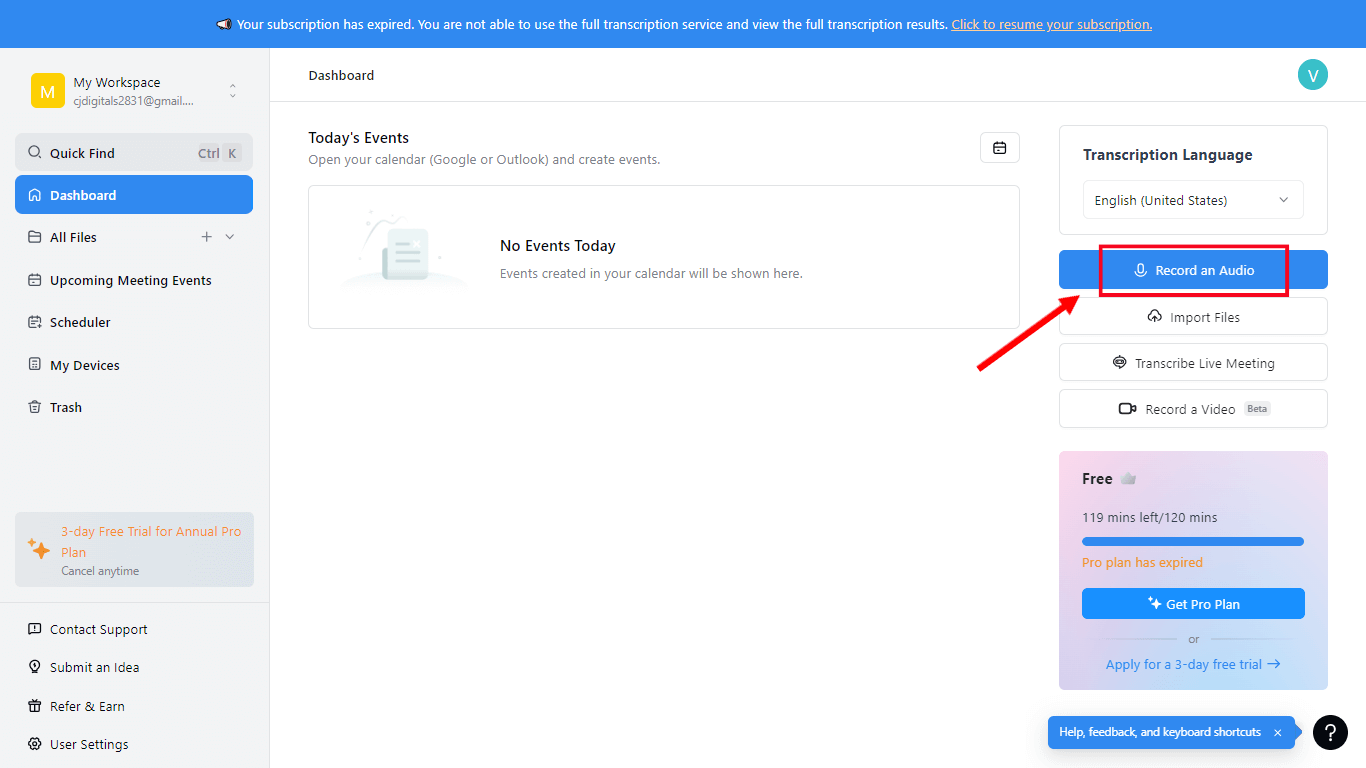
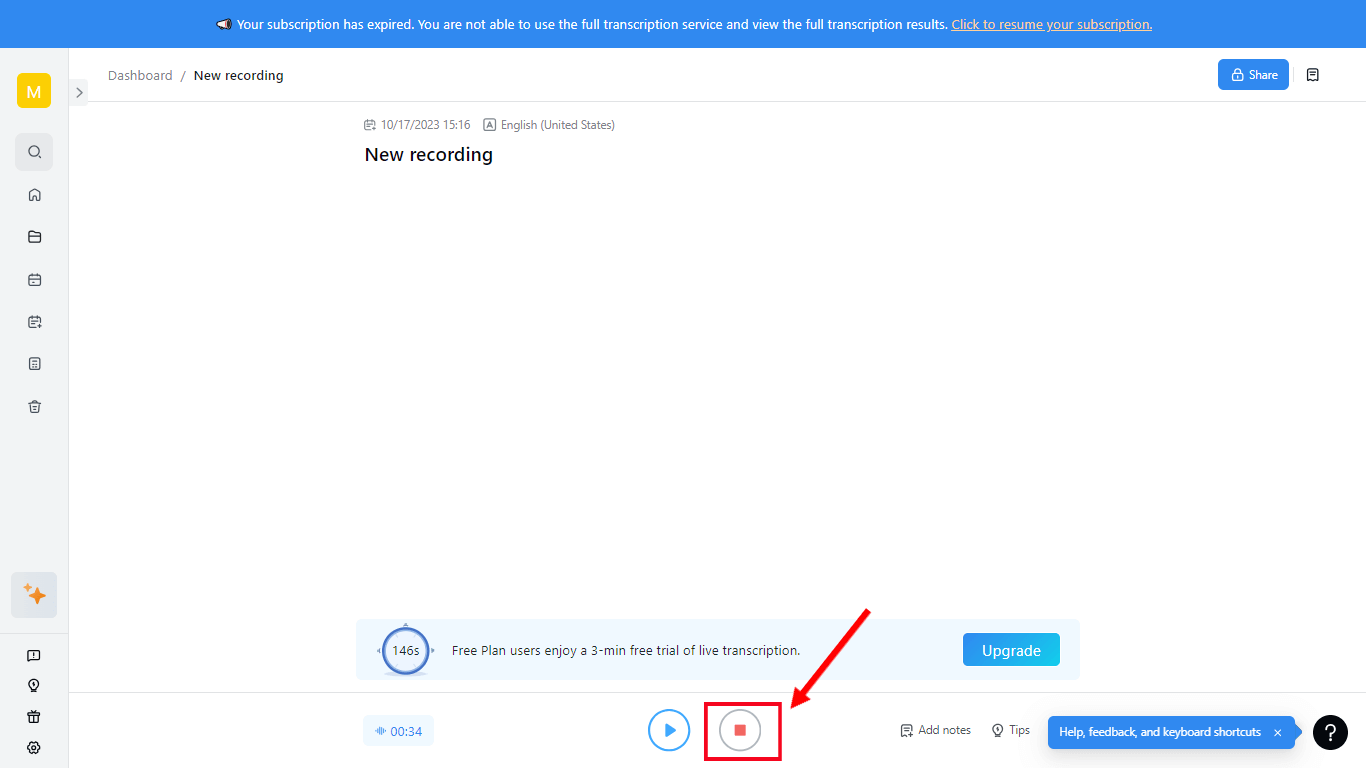
Step 2: Notta will immediately start the audio recording and transcribing process, which can be later saved to your computer or sent directly to third-party apps like Notion or Salesforce.
Step 3: Select the 'Red' button to stop the audio recording, followed by the 'Download' icon located at the top-right corner. Make sure you save the audio file with a search-friendly name so you can access it easily.
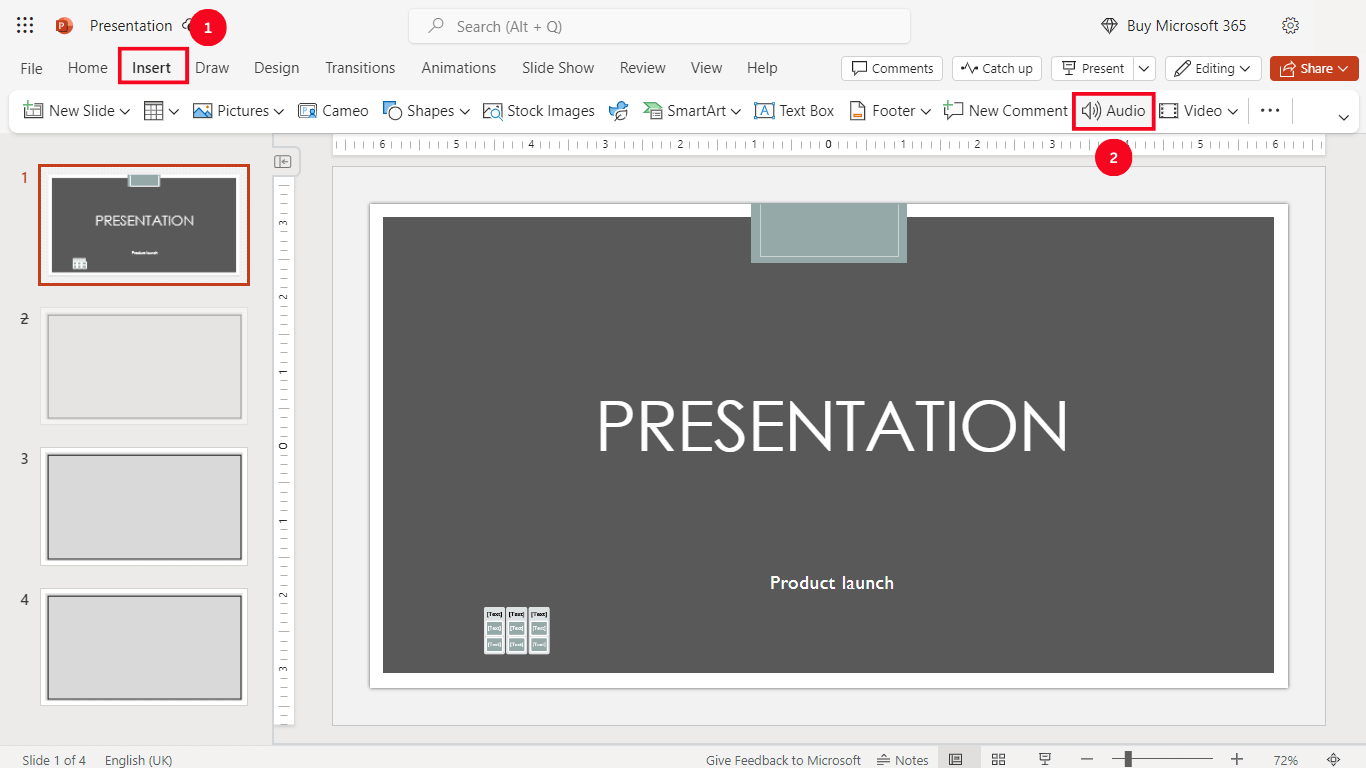
Step 4: Once you have the audio file ready and saved on the computer, open the presentation in PowerPoint and choose 'Insert' in the Office-style toolbar.
Upon clicking, you'll see options like New Slide, Pictures, Cameo, Shapes, Audio, Video, and more. Select 'Audio' and choose the recently saved file you wish to insert — and that's it! The audio will be inserted and played when you are giving the presentation.
While PowerPoint's in-built recording feature gets the job done, it still lags behind if you expect ease of use and high-quality sound from Microsoft's product. That's why it's better to choose a third-party recording tool like Notta.
One main benefit of creating and saving audio files using Notta (instead of recording and embedding audio directly into the presentation) is that you'll have easy access to audio files all the time — even outside of your PowerPoint presentation.
Notta's audio recording capabilities are a step up from PowerPoint's in-built features, as the former offers a clean, easy-to-use interface. The app doesn't skimp on shareability, either. With one click, you can simply generate a shareable link to the audio recording and send the recording to anyone you like.
How to Record Over an Existing PowerPoint Presentation
If you have a completed deck and want to add narration to it without rebuilding anything, the process is the same as above but with one important step first.
Open your presentation and navigate to the slide where you want narration to begin. Use Record from Current Slide rather than Record from Beginning. This lets you add audio to specific slides without overwriting narration you've already recorded on others.
To re-record a single slide, navigate to that slide in the editing view, go to Slide Show > Record from Current Slide, and record only that slide's narration. When you stop, only the current slide's audio is replaced. Everything else stays intact.
If you want to completely replace the narration across all slides and start fresh, go to Slide Show > Record from Beginning and record from the start. Any previously recorded narration will be overwritten as you advance through the slides.
To clear narration from specific slides without re-recording, right-click the waveform icon on that slide and delete it, or go to Slide Show > Record Slide Show > Clear and choose whether to clear timings or narrations from the current slide or all slides.
How to Record with Webcam Video in PowerPoint
Including a webcam feed is straightforward. In the recording interface, click the camera icon in the top toolbar to toggle your webcam on. A small preview of your camera feed will appear in the corner of the recording interface.
During playback and export, your webcam feed appears as a picture-in-picture overlay in the corner of the slide video. You can reposition this overlay after recording by clicking on the camera icon that appears on the slide in the normal editing view and dragging it to a different position.
For the webcam feed to look professional, a few things matter more than the camera itself. Position your camera at eye level rather than looking up or down at it. Make sure light is hitting your face from the front, not from behind. A window behind you creates a silhouette; a window or lamp in front of you creates a clear, well-lit image.
If you don't want webcam video but still want the narration, simply leave the camera toggled off in the recording interface. Your audio narration will still be embedded in the slides.
How to Export Your PowerPoint Recording as a Video
Once recording is complete, you can export the entire presentation as an MP4 video file that plays automatically without requiring PowerPoint to be installed on the viewer's device.
Go to File > Export > Create a Video. You'll see a dropdown to select video quality. The options typically include Ultra HD (4K), Full HD (1080p), HD (720p), and Standard (480p). For most purposes, Full HD is the right choice since it balances file size with visual clarity.
Below the quality selector, open the narration dropdown and choose Use Recorded Timings and Narrations. This tells PowerPoint to use the slide timings you captured during recording so that slides advance in sync with your narration in the exported video. If you leave this on "Don't Use Recorded Timings and Narrations," the video will display each slide for a fixed default duration regardless of what you recorded.
Click Create Video and choose where to save the file. The export process takes a few minutes depending on the length of your presentation and your computer's processing speed. The output file will be an MP4, which plays in any modern video player and can be uploaded directly to YouTube, Vimeo, SharePoint, or shared as an email attachment.
Tips for Getting Clean Audio
The quality of your narration matters far more than most people expect. Even a well-designed presentation becomes difficult to follow if the audio is muffled, echoey, or inconsistent in volume.
Use a headset or external microphone. The built-in laptop microphone picks up keyboard clicks, room echo, and ambient noise. A USB headset or a simple podcast-style USB microphone will produce noticeably cleaner audio for very little cost.
Record in a quiet room. Background noise compounds during long recordings. Close windows, turn off fans, and silence your phone before starting. If you're in an office, recording early in the morning or outside normal hours makes a real difference.
Do a test recording first. Record yourself speaking for 20 to 30 seconds, export it or play it back, and listen carefully through headphones. Check for echo (caused by a large empty room), hiss (caused by a poor microphone or gain being set too high), or volume that's too low. Fixing these before recording the full presentation saves a lot of time.
Keep a consistent distance from the microphone. Moving closer or further away as you talk creates volume variation that's distracting to listeners. If you're using a headset, this takes care of itself. If you're using a desk microphone, position it about 15 to 20 centimetres from your mouth and stay roughly in that position throughout.
Speak at a measured pace. In person, your body language and the physical environment help listeners follow along. In a recorded presentation, your voice has to do more of that work. Slowing down slightly from your natural speaking pace makes the narration easier to absorb.

Notta can convert your spoken interviews and conversations into text with 98.86% accuracy in minutes. Focus on conversations, not manual note-taking.
Key takeaways
PowerPoint for Windows and Mac is a popular presentation software — especially among those who prefer Microsoft products. Once you discover how to record PowerPoint with audio and video, the temptation to add audio to slides is real.
But this can leave you with a problem: complexity. That's where the third-party audio recording tools make it easy for you. Whether you are looking for a tool for personal use or you work in a large enterprise that has more advanced needs, you might find Notta helpful.
FAQs
Why is there no sound on my PowerPoint recording?
The most common cause is that the microphone wasn't selected or wasn't given permission to record. Before starting, click the microphone icon in the recording interface and confirm the correct device is selected. On Windows, also check that PowerPoint has microphone access by going to Settings > Privacy > Microphone and confirming that the toggle for desktop apps is turned on. If the microphone setting was correct but audio is still missing, close and reopen PowerPoint and try again.
Can I add audio and captions to PowerPoint slides?
Yes, you can add audio to your slides using the built-in recording tool of PowerPoint or using third-party tools like Notta. To add closed captions, the first thing is to check how the PowerPoint was installed. That's because closed captioning is only available for Click-to-Run installations of Office 2016.
If you've recorded the presentation in the compatible PowerPoint version, go to Playback and select the slide video. Then, click the 'Insert Captions' option and choose the caption file you wish to add.
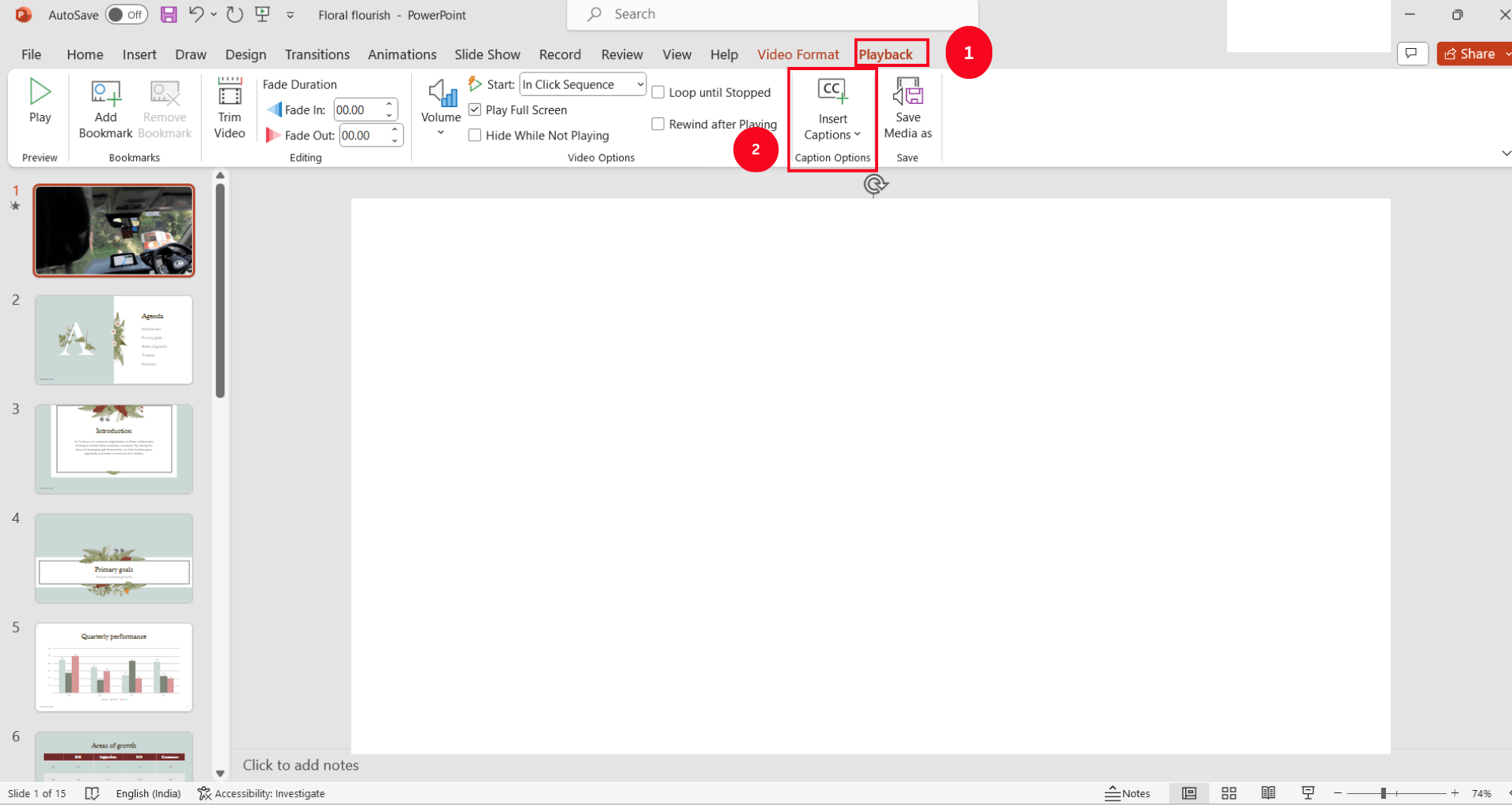
Note: If you have a compatible PowerPoint, the layout will resemble the above image.
Another option to add audio to your PowerPoint presentation is by Notta — just record your voice and download the audio file in MP3 format. Notta also lets you export the text file from the recording in multiple formats, including SRT, TXT, DOCX, PDF, and EXCEL. You can also save the transcript of your entire audio and share it with the presentation attendees.
video and audio file formats supported in PowerPoint
Some of the supported video file formats for Windows include ASF, AVI, WMV, MPG or MPEG, MP4, M4A, and MOV, while the audio file formats are AIFF, AU, WMA, MP3, WAV, M4A, MP4, MID, and MIDI.
If you are a macOS user, the supported file formats include AVI, VFW, MP4, MPG4, M4V, MPG, MPEG, MPE, M75, M15, M2V, TS, MOV, QT, and DIF. The audio file formats supported by PowerPoint on macOS are the same as those on Windows, including WAVE, BWF, AAC, and CAF.
Can I add captions to my PowerPoint recording?
Yes, but with some limitations. PowerPoint supports adding closed caption files (.vtt or .srt) to video content embedded in slides. For captions on your exported video, you would need to generate a transcript of your narration separately and add it as a caption track when uploading to a platform like YouTube, which handles this automatically, or use a dedicated captioning service.
How do I remove narration from a slide without deleting the slide?
In the normal editing view, right-click the audio waveform icon in the bottom-right corner of the slide and select Delete. Alternatively, go to Slide Show > Record Slide Show > Clear, where you can remove narrations or timings from the current slide or all slides at once.

