
Read more: How to Record a Teams Meeting Effortlessly

How to Share Sound on Teams (for PC & Mobile)
Updated:2026-03-084mins
Content
AI Transcription & Summary
Saving time and effort with Notta, starting from today!
Free trial
When you share your screen in a Microsoft Teams meeting, participants can see what's on your screen but they won't hear any sound from your computer unless you specifically enable audio sharing. This matters most when you're playing a video, a recorded presentation, a music file, or any other audio-based content as part of your meeting.
Pro tip: Enable transcription in teams to capture both audio and dialogue.
This guide covers how to share computer audio on Teams across Windows, Mac, mobile, web browser, and what to do if you want to share audio without sharing your screen.
How to Share Audio on Teams (Windows)
On the Windows desktop app, audio sharing is controlled by a toggle in the screen share panel.
When you're ready to share your screen, click Share in the meeting controls at the bottom of the Teams window. Before you click on the window or screen you want to share, look for the Include sound toggle at the top of the share panel and turn it on. Then select the screen or window you want to share.
Once active, all participants in the meeting will hear the audio coming from your computer, including any video you play, any audio files, and also system notification sounds. If notifications are likely to pop up during your presentation, it's worth silencing them before you start.
Here’s how to share audio during a Teams meeting on PC:
Step 1: Click ‘Share Screen’.
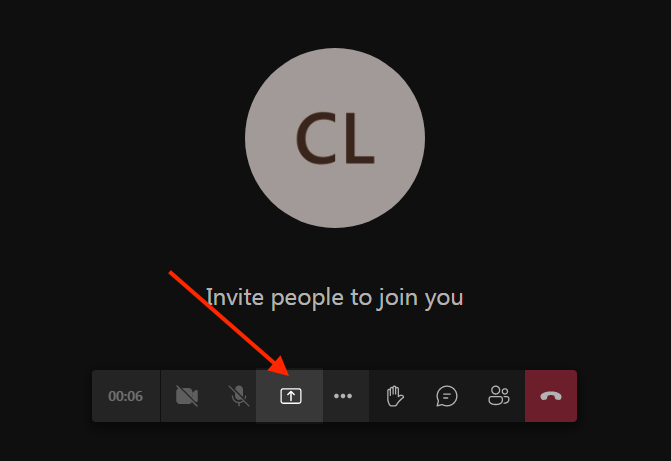
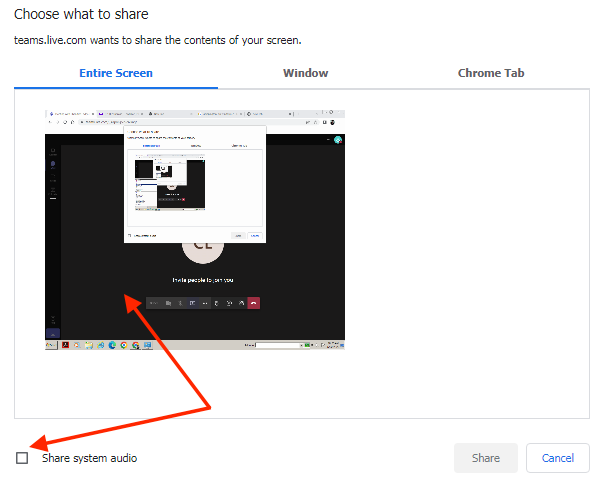
Step 2: Check the box for ‘Share system audio’. Then click on the image of your screen.
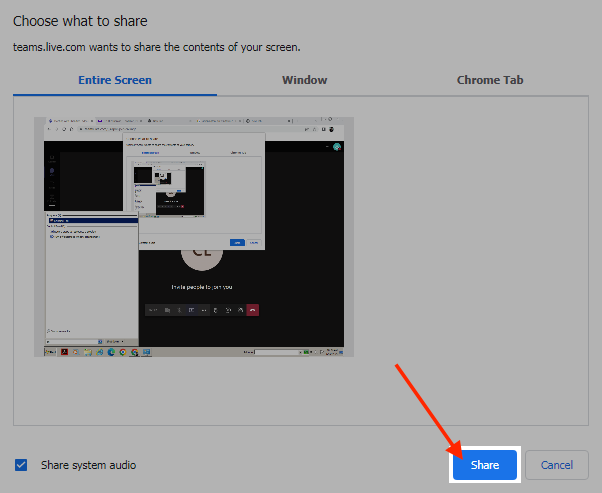
Step 3: Click on ‘Share’.
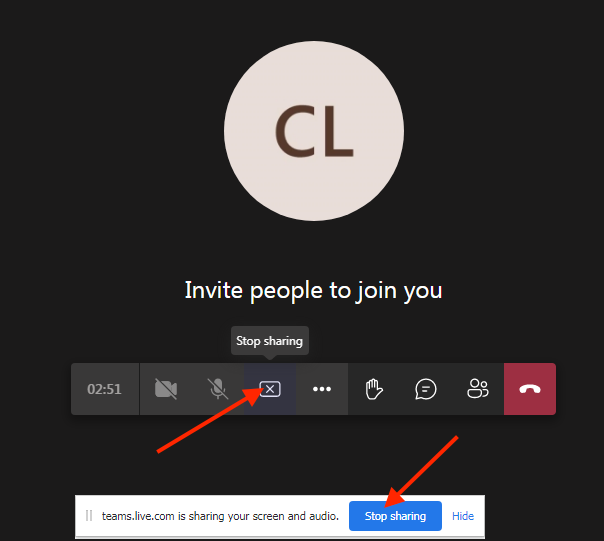
Step 4: Click ‘Stop sharing’ when you want to stop sharing audio.
Now that audio is working: Learn to transcribe Teams meetings live while sharing your screen.
Turning Audio Sharing On After You've Already Started Sharing
If you've already started sharing your screen and forgot to enable audio, you don't need to stop and restart. Hover your cursor over the "You're sharing your screen" banner that appears at the top of your shared window. This brings up the in-meeting sharing controls. Click Share audio to toggle it on. Click it again if you want to stop sharing audio while continuing to share your screen.

How to share system audio on Teams (Mobile)
On the Teams mobile app, when you share your screen during a meeting, participants will hear the audio coming from your device as part of that share. After starting a screen share, you'll see a notification confirming that participants can now hear your device audio.
To share audio on mobile, tap the Share icon during a meeting and follow the on-screen prompts to start a screen share. The audio from your device will be included automatically.
Note that mobile audio sharing is linked to screen sharing — there's no option to share audio independently without also sharing your screen on the mobile app.
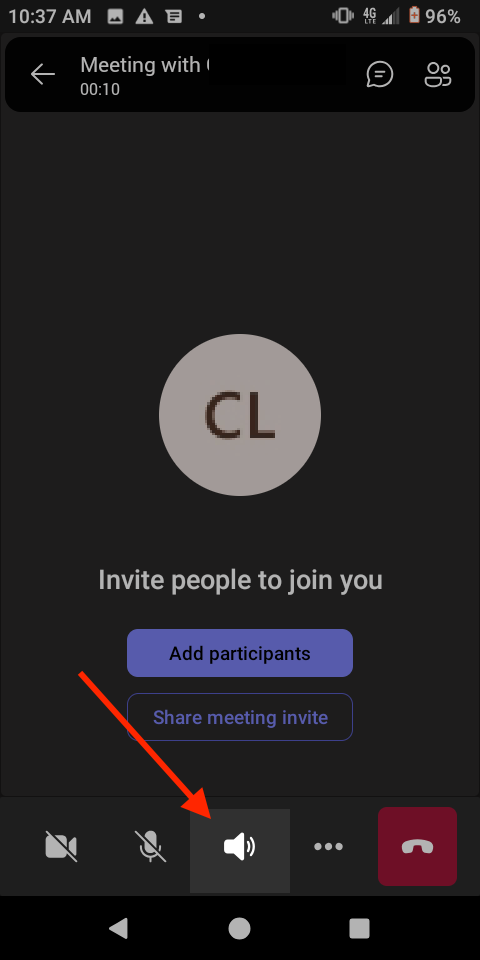
Now let’s look at how to share your mobile device’s audio on Microsoft Teams:
Step 1: Click on the speaker icon at the bottom of the screen.
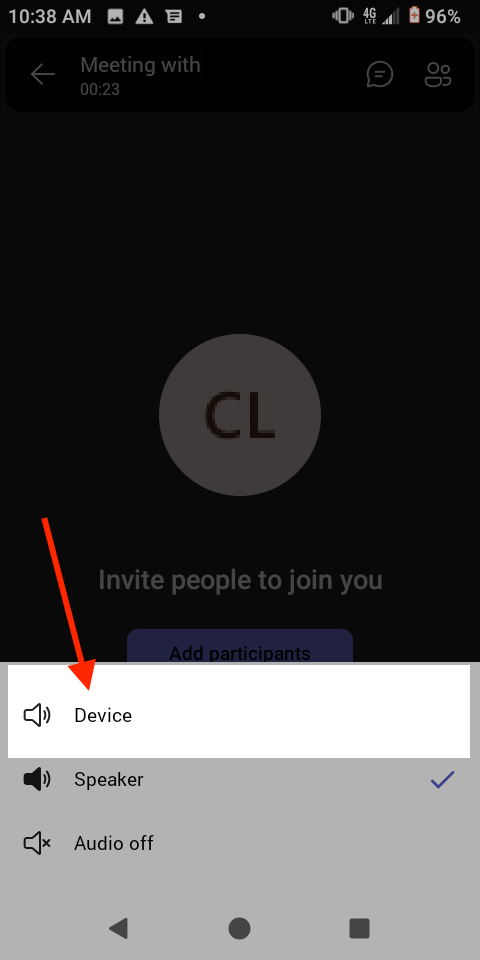
Step 2: Click ‘Device’.
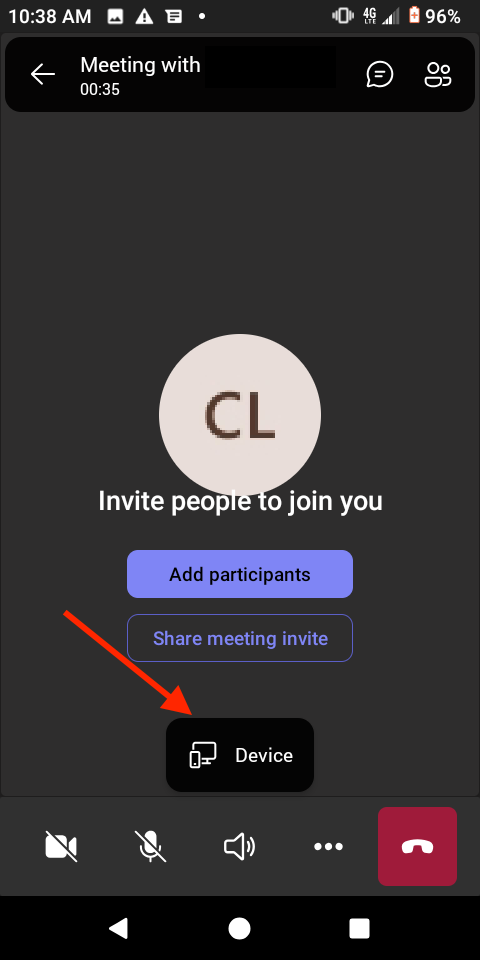
Step 3: You will see a notification that the audio in the meeting is coming from your device.
How to Share Audio on Teams (Mac)
Sharing computer audio on a Mac requires an additional step that Windows users don't need to worry about. Before audio sharing will work, you need to install the Microsoft Teams audio driver on your Mac.
You can download the driver directly from Microsoft at https://aka.ms/macaudiodriver, or follow the install wizard that Teams may prompt you with when you attempt to enable audio sharing for the first time. The installation takes about 10 seconds. After it's complete, restart your Mac before trying again.
Once the driver is installed, the process is the same as on Windows. Click Share in your meeting controls, turn on the Include sound toggle, and then select your screen or window.
After installing the driver, you may see a notification at the top of your meeting controls confirming the driver is active. If audio still isn't working after the restart, try pausing and playing your video content, or toggle the Include sound setting off and back on in the share panel.
How to Share Audio on Teams for Web (Browser)
If you're joining Teams through a web browser rather than the desktop app, the audio sharing options work slightly differently depending on what you choose to share.
Click Share in your meeting controls and select Screen, window, or tab. A browser dialog will appear asking what you want to share. Your options and their audio behavior are:
Tab — Select a specific browser tab to share. You'll see an Also share tab audio toggle. Turn this on to share only the audio from that tab. No other sounds from your computer will be included, which is useful when you want to play a video from a specific website without broadcasting notification sounds or other system audio.
Window — Shares a specific application window. Audio sharing is not supported with this option in the browser version of Teams.
Entire screen — Shares everything visible on your display. Turn on the Also share system audio toggle to broadcast all audio from your computer to meeting participants.
The browser version of Teams gives you more targeted control over what audio participants hear compared to the desktop app, particularly with the tab-only option.
How to Share Audio from a Video in Teams
If you want to play a video clip during a Teams meeting and have everyone hear the audio, the steps are the same as above, but it helps to know which sharing mode works best for this use case.
On desktop (Windows or Mac), share your screen with Include sound enabled, then play the video in whatever application or browser you normally use. All participants will hear the audio from the video as it plays.
On the web version of Teams, the Tab sharing option is often the cleanest choice for video playback. Select the tab containing the video you want to play, enable Also share tab audio, and then play the video. Participants will hear the video audio without any background system sounds bleeding through.
Make sure your video is ready to play before you start sharing, as starting the share and then searching for the file can create unnecessary dead time for participants.
Can You Share Audio on Teams Without Sharing Your Screen?
The short answer is: not with the built-in system audio sharing feature. The Include sound toggle is only available as part of a screen share — it's not a standalone option.
If you need participants to hear audio without seeing your screen, a practical workaround is to share a blank or minimized window alongside the audio. For example, you could open a plain text document, minimize it to show just the taskbar, and share that window while audio plays in the background. Participants will see a relatively blank screen but will hear the audio.
Another option for audio-only sharing is to simply play the audio through your speakers loud enough that your microphone picks it up. This is a low-tech approach and the audio quality will be lower, but it works if the content doesn't require pristine sound quality.
If you're sharing audio with participants in a Teams Room (a meeting room with dedicated Teams hardware), be aware that sharing computer audio through a room cable connection is not currently supported. In that scenario, join the meeting from your personal laptop instead. When joining, select Audio off to prevent echo from the room speakers, then start your screen share with Include sound enabled from your laptop.
Troubleshooting: Audio Sharing Not Working
Include sound toggle is missing or greyed out: On Mac, this usually means the Teams audio driver hasn't been installed. Download it from https://aka.ms/macaudiodriver, install it, and restart your computer. On Windows, make sure your Teams app is up to date.
Participants can't hear the audio: Confirm the Include sound toggle is actually on (it should be highlighted or blue depending on your Teams version). Also check that the audio is playing through your computer's speakers or headphones rather than being routed to a Bluetooth device that Teams isn't capturing.
Echo or feedback when sharing audio: If you're in a meeting room with speakers and a microphone active, your microphone may be picking up and retransmitting the shared audio. Mute your microphone while playing audio-only content, or use headphones to prevent the audio from reaching the room microphone.
Web browser: audio not sharing from a window: The browser version of Teams doesn't support audio sharing when you select the Window option. Switch to Tab sharing (with the tab audio toggle on) or Entire Screen sharing to include audio.
Frequently Asked Questions
Does sharing system audio affect my microphone?
No. Enabling system audio sharing broadcasts what's playing through your computer's audio output. Your microphone remains active and separate. Participants will hear both your voice and the shared audio simultaneously.
Will participants hear my notification sounds too?
Yes. When system audio sharing is enabled on desktop, all audio from your computer is shared, including notification sounds. It's a good idea to enable Do Not Disturb or silence notifications before sharing audio in a professional meeting.
Can I share audio without sharing my screen?
Not directly with the built-in audio sharing feature, which requires a screen share to be active. See the workarounds in the section above if you need audio without a meaningful screen share.
Does audio sharing work on all Teams plans?
Yes. The Include sound feature for screen sharing is available on all Microsoft Teams plans, including the free version.

Run effective team meetings
Notta AI meeting assistant records, transcribes, and summarizes meetings so everyone can stay engaged without missing important details.
Start for Free
Final thoughts
You can make your meetings more engaging by sharing system audio on Microsoft teams. Make sure to get a transcript of your sessions so you can refer to your key points at any time.
To get transcripts, you can use Notta. Notta is a voice-to-text application that will transcribe your meetings to text. It gives you peace of mind in meetings knowing that you have a transcription on hand.
Prefer working with recordings? Transcribe-ms-teams-recording after screen-sharing sessions.

