
Where Do Google Meet Recordings Go? Find and Download Them
Saving time and effort with Notta, starting from today!
Google Meet automatically saves recordings to the meeting organizer’s Google Drive inside a folder called ‘Meet Recordings.’ It also sends a link by email to the organizer and the person who started the recording. If you schedule the meeting through Google Calendar, Google Meet adds the recording link to the calendar event.
Recording your Google Meet meetings is simple, but finding and managing the files is another story.
In this guide, we answer the common question “Where do Google Meet recordings go?”, explain what to do if recordings aren’t working, and show you how to use Notta to get more from your virtual meetings.
Where are Google Meet recordings saved?
Google Meet saves recordings to the meeting organizer’s Google Drive in the ‘Meet Recordings’ folder. You can also access the recording through the Google Calendar event or the email link Google sends after processing.
Pro tip: Make sure you have a stable internet connection and enough storage space before recording. Google Meet recording size depends on meeting length and video quality. In other words, longer video meetings take up significant space, and the recording fails if your Drive is full.
How do you find, download, and share a Google Meet recording?
You can record Google Meet calls and have the recordings at your fingertips in just a few steps. As mentioned, you can access Google Meet recordings from these three locations:
The meeting organizer's Google Drive (Meet Recordings folder)
A notification email
The linked Google Calendar event
Let’s go over the steps and see how you can find, download, and share Google Meet recordings.
1. Find Google Meet Recording in Google Drive
Google will automatically send the meeting recording to your Google Drive account if you’re the meeting organizer. The saved recording lets you review the meeting later or keep it for future reference.
Here is how you can easily access the recording:
Log in to your Google account and open Google Drive.
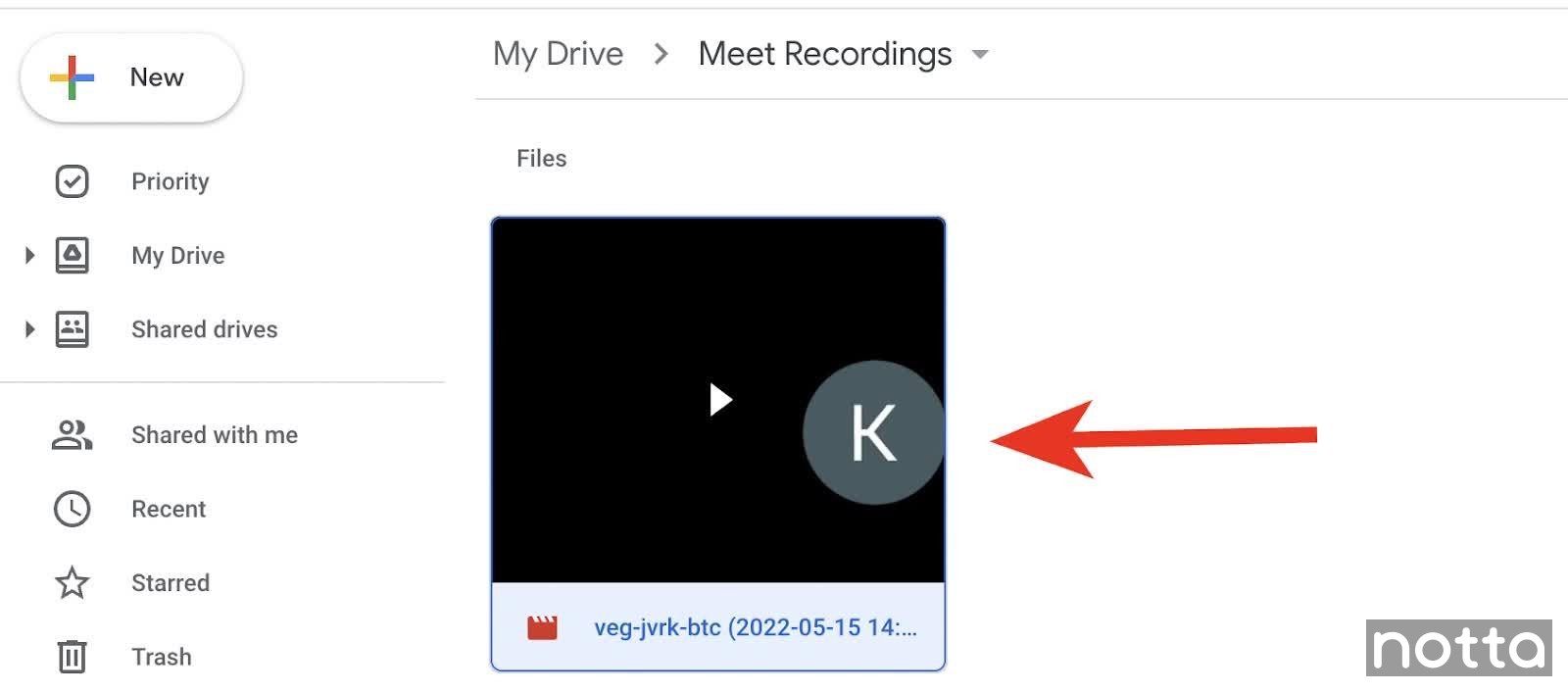
Navigate to ‘My Drive’on the left side and open the ‘Meet Recordings’folder. Your recorded video should appear there. If the meeting just ended and you don’t see the recording yet, Google may still be processing it. Wait 30 minutes and check again.

Download the Recording
Locate the Google Meet meeting recording you want, then click the ‘More actions’ button (the three-dot menu) and select ‘Download’ to save the recording to your computer.
Share the Recording
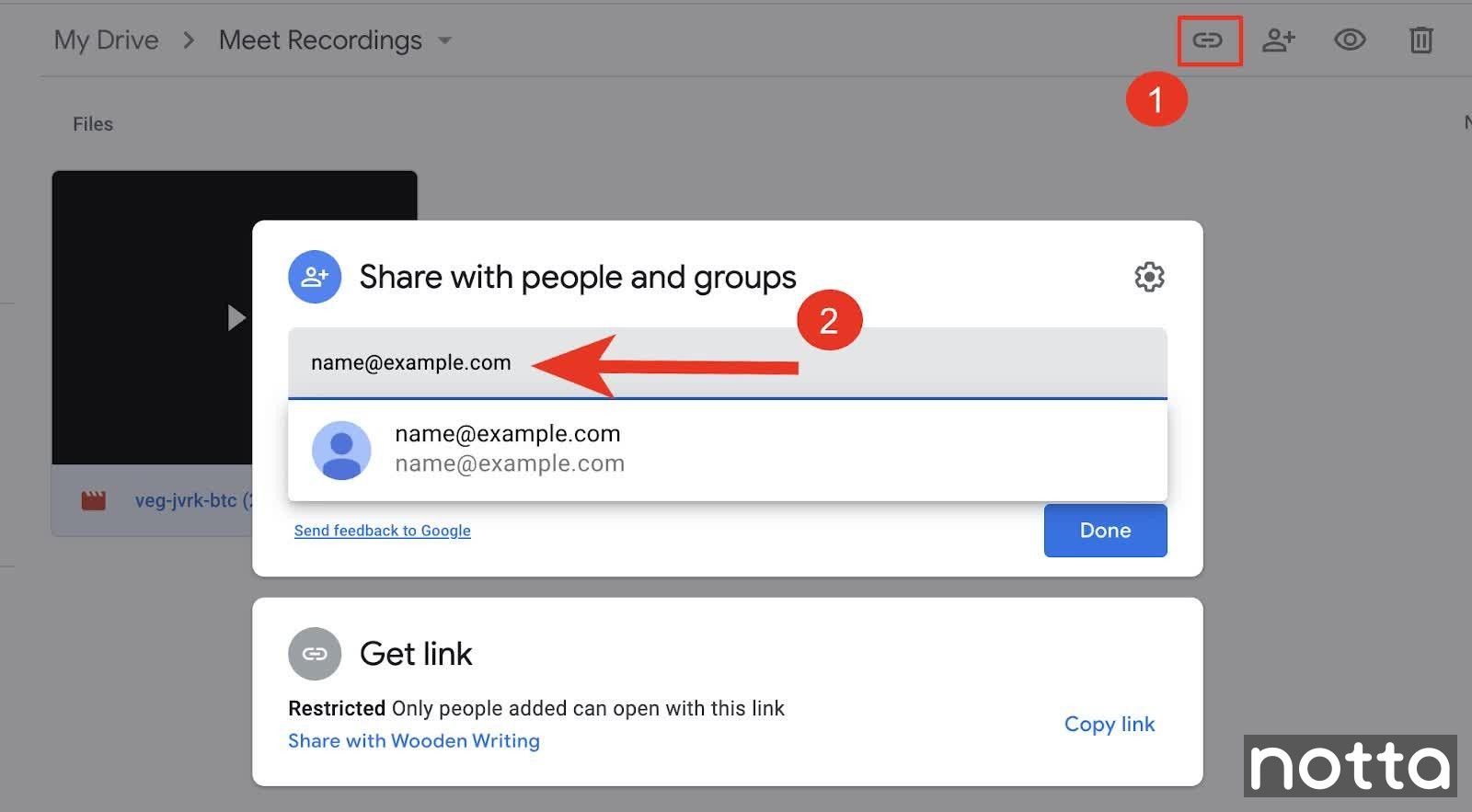
To share a recording, click the ‘Share’ icon and enter the email addresses you want to share it with, or select ‘Copy link’ to share it by URL. Google Drive’s permission controls also support data security by letting you restrict who can access or download the recording.
2. Find Google Meet Recordings in Your Email Inbox
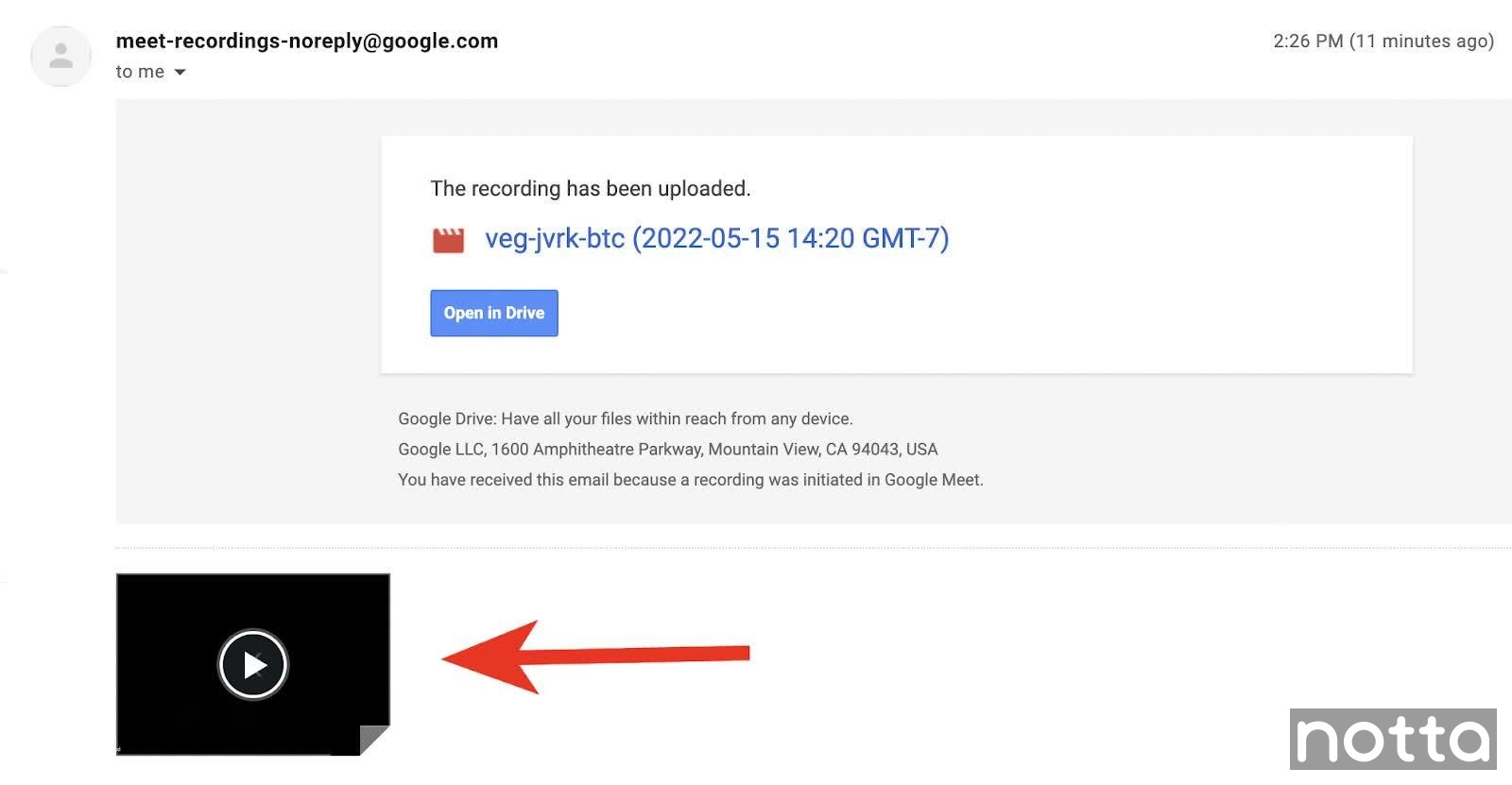
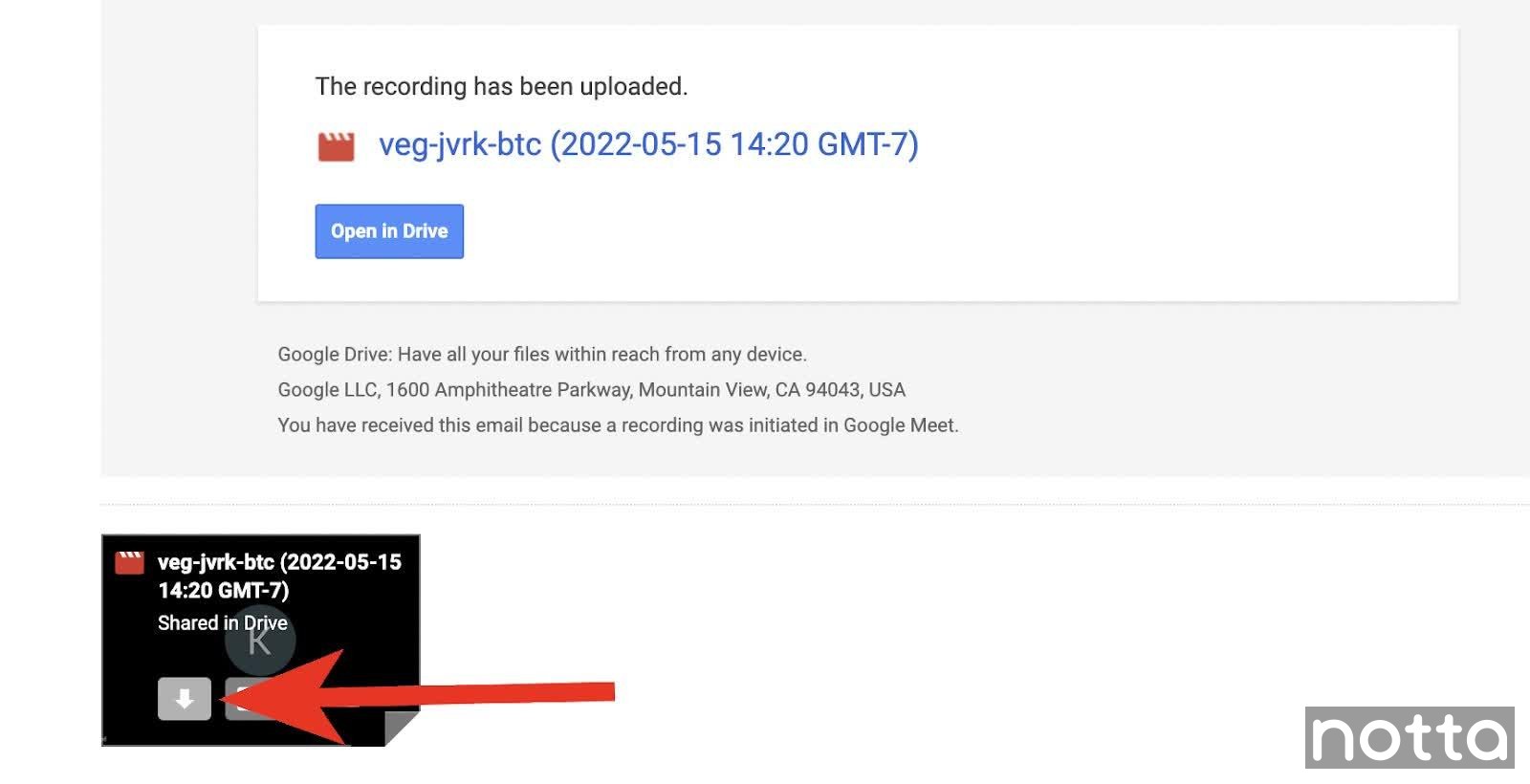
Google also sends a recording link to your email inbox. If you organized the meeting or started the recording, you’ll receive an email with a link to the video after the meeting ends.
The email notification lets you quickly access the recording after the meeting and send it to colleagues or stakeholders who couldn’t join the call.
Click the link in the email to open the recording in Google Drive.
Download the Recording
To download the recording, hover over the video and click the 'Download' icon. The recording will be saved to your computer as a .webm file.
Note: You’ll need a media player that supports .webm files to play the recording. Common options include VLC, Windows Media Player on Windows, and QuickTime on Mac.
Share the Recording
You have two sharing options.
Forward the email to anyone you want to share the recording with, since it already includes the recording link.
Open the recording, click the 'More' icon with three vertical dots, and choose the 'Share' option from the drop-down menu.

Enter the recipients’ email addresses, then click ‘Done.’
3. Find Google Meet Recordings using Google Calendar
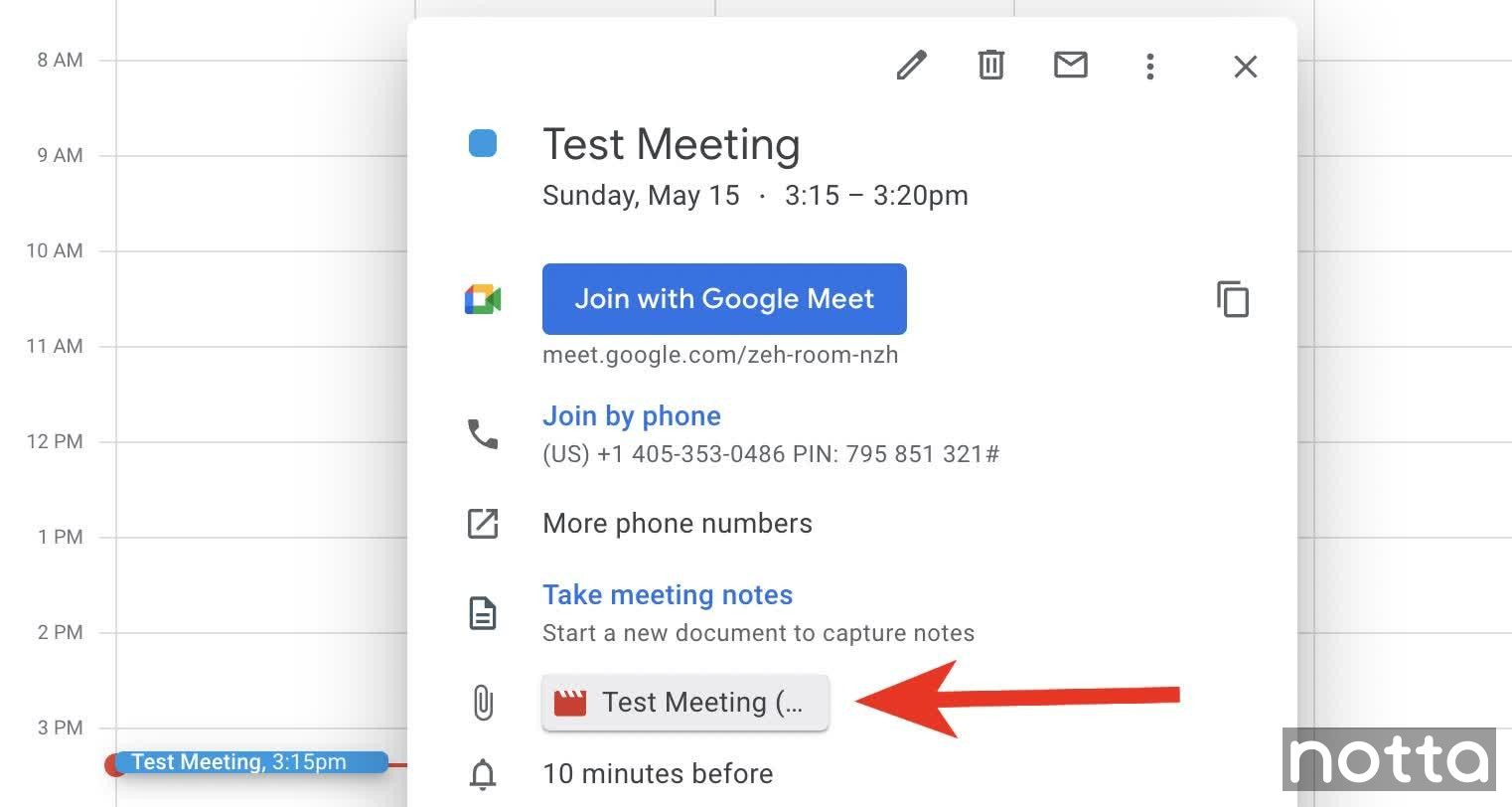
It’s common to schedule Google Meet sessions through Google Calendar, especially for business meetings, interviews, and recurring team check-ins. When you record the meeting, Google adds the recording link directly to the calendar event, so you and your participants can easily access it later (depending on sharing permissions).
To watch the recording, open Google Calendar, expand the event details, and click the recorded file link.
Pro Tip: If you take a lot of meeting notes, check out our full guide on how to take notes in Google Meet meetings.
What does Google Meet include in recordings?
Google Meet’s recording feature includes the active speaker, participant audio, and anything you share on screen. The video conferencing platform also records captions if you enable them, and it saves the meeting chat as a separate .sbv file in the organizer’s Google Drive.
Together, these elements help you review the discussion later and revisit important project details you might’ve missed during the live meeting.
Google Meet does not record:
Other windows or desktop notifications
Changes you make by pinning participants on your screen
Activity outside the meeting view
Note: Google Meet records screen sharing in up to 1080p, depending on settings and admin controls. Google processes captions separately, so they appear later than the video file.
If basic Google Meet recording isn’t enough for your meetings, Notta offers a more complete recording option. The app records audio and video while automatically generating a transcript with speaker identification when you record directly through Notta.
Instead of leaving you with only a video file, Notta turns the recording into a format that’s easier to work with, search, and share.
How Do You Record Google Meet as a Participant (Without Host Permission)?
You won’t be able to use Google Meet's recording feature if you don’t meet the requirements. If you still need to capture an important meeting, use Notta instead.
Notta offers a screen recording function that lets you record Google Meet calls as a participant on both desktop and mobile devices. It also automatically transcribes meeting minutes and generates a full transcript with up to 98.86% accuracy, so you have a text version of the meeting you can review at any time.
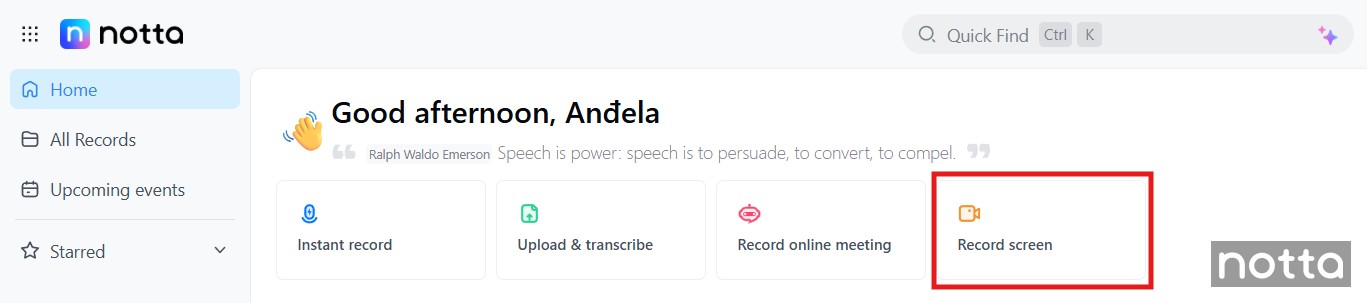
Go to the Notta dashboard and select 'Record screen' in the top action bar (far right option)
Select 'Screen Only' from the options, then click on 'Start Recording'.

Select the tab with your Google Meet session and click 'Share'.
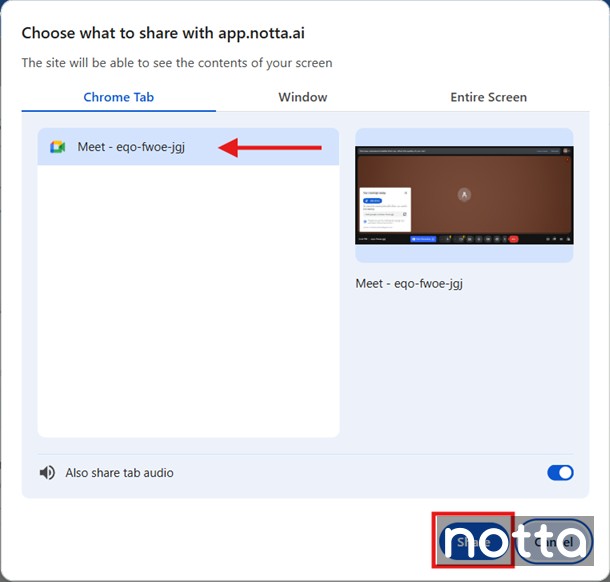
The recording will start immediately, and you can stop it anytime by clicking the 'Stop Recording' button.
Once the recording is complete, you can review, download, or share it directly from the Notta app.
Troubleshoot Common Google Meet Recording Issues
Before you start troubleshooting, check whether your account supports Google Meet meeting recording. Recording is only available on specific Google Workspace plans:
Business Plus
Business Standard
Essentials
Education Plus (Staff or Student license required)
Enterprise Essentials
Enterprise Plus
Enterprise Standard
Enterprise Starter
Google One (2 TB or more storage)
Teaching and Learning Upgrade
Workspace Individual
On top of that, the recording button won’t appear if you don’t have recording privileges, even if you created the meeting. With that out of the way, let’s cover the most common problems and how you can fix them.
Problem: I can’t find the recording button.
Solution:
Check that you’re using a supported Google Workspace account, since recording isn’t available on all plans.
Contact your Google Workspace administrator and ask them to enable recording permissions for your account.
Make sure you’re joining from a desktop, since you can’t use Google Meet's recording feature on mobile devices.
Confirm that you’re the meeting organizer or have permission to record.
Problem: My Google Meet recordings are not showing up in the drive.
Solution:
Check Google Drive for a ‘Still processing…’ status. Google may still be preparing the recording.
Wait a while and refresh Drive, since processing takes time after the meeting ends.
Allow up to 24 hours for processing, especially for longer meetings.
Confirm you’re checking the right folder (called ‘Meet Recordings’).
Problem: Others can’t download the Meet recording.
Solution:
Open Google Drive and locate the recorded file.
Click ‘Share’ to open sharing settings.
Open advanced sharing options and enable download permissions.
Turn off ‘Disable options to download, print, and copy for commenters and viewers,’ then save your changes.
How Does Notta Improve Your Google Meet Recordings?
| Feature | Google Meet Recording | Notta |
|---|---|---|
| Recording availability | Paid plans only | Free plan available |
| Host permission required | Yes | No (screen recording) |
| Native transcript | No | Yes (~98.86% accurate auto transcription) |
| AI summaries/meeting minutes | No | Yes |
| Mobile recording | No | Yes |
Google Meet gives you an easy way to record, but that’s where the benefits end. You still need to wait for processing, search through Google Drive, and rewatch the video to find what you need. Notta takes a different approach.
When you use Notta to record meetings, the recording and transcript are available minutes after the Google Meet session ends, so you don’t have to wait for long processing times or server queues. If you want to transcribe your Google Meet recordings, Notta automatically creates a searchable transcript alongside the recording, so you can skim, search, and jump straight to key moments instead of rewatching the entire video.
The Notta Brain also helps you capture key points by generating AI notes, summaries, and quick answers based on the meeting content.
Notta also helps you stay organized. You can connect it to Google Calendar so it automatically joins meetings at the scheduled meeting time, and you don’t have to dig through Google Drive folders or email links to find recordings later.
No permission? No problem. Notta offers a screen-recording workaround, just make sure you get everyone’s consent. Since Notta works on mobile devices too, you can record or review meetings even when you’re away from your computer.
Try Notta today to get consistent recordings, transcripts, and meeting notes within minutes.
FAQs About Google Meet Recordings
How do you check Google Meet call history?
You can check your Google Meet call history in your Google Admin console. Sign in to the console, then go to ‘Reports,’ open the ‘Audit log,’ and select ‘Google Meet.’ The log shows your complete call history, including meeting details like the date and meeting title, participants, and activity events.
Can you customize the local recording file path?
No, you can’t customize the local recording file path in Google Meet. It automatically saves recordings to Google Drive. However, you can move the recording to another folder after it’s been created.
How do you view Google Meet recordings?
You can view Google Meet recordings in Google Drive. As the meeting host, open Drive, go to the ‘Meet Recordings’ folder, and click the file to play it. You can also access recordings from the meeting event in Google Calendar or from the email notification Google sends after processing finishes.
How long does it take for a Google Meet recording to show up?
It takes ~30 minutes for a Google Meet recording to show up. The exact time depends on the meeting length and system load, so processing can take anywhere from a few minutes to several hours. Google saves the file to Google Drive and sends a link by email when the recording is ready.
This one is written by 'The Notta Editorial Team', and it needs rewriting throughout for word choice/tone/flow. Watch out for tone-switching between 'you' (good') and 'users' (bad). As you know, we want to speak directly to the reader whenever possible. Don't forget to preserve the internal links, including the corresponding anchor text.
Main kw: where do google meet recordings go
Top competitors (discounting G support/forum results):
- https://www.noota.io/en/where-do-google-meet-recordings-go (lol nobody ever answered me about Noota when I asked)
- https://www.usebubbles.com/blog/where-do-google-meet-recordings-go
To Do List:
1. Rewrite the intro in the short how-to/Claude style
2. Check the process steps and update as necessary, incl. screenshots. Revise the text throughout, as you go. I've highlighted a few spots, but there are more.
3. Work through the other highlighted sections, and add the CA notes:
- Detail specific Google Workspace editions that support recording (affects users trying to understand eligibility).
- Explain what exactly is recorded and what is excluded in a Google Meet recording (important for user expectations).
- Add use cases for when recording meetings is beneficial.
(NB: Text copied directly, but I think it means 'when recording Google Meets is beneficial', not 'meetings' as the primary use case. With that in mind, let's try to integrate mentions throughout rather than have a specialized section, e.g., business meetings/interviewers/whoever are more likely to have scheduled meetings with their Google Calendar, so we can mention those use cases in the calendar section.)
4. Run through Claude analysis and improve the score, then run through the SERP prompt and share the results.
5. Surfer optimization may be tough on this one, but let's push for 85+. Take it even higher if you can make it seem natural, since the top competitor is optimized to 84. The original text is 75 before any changes
Surfer score is 84 BARELY, I'll try to push it to 85 after your review.
Claude (I'll run it again after your review and recommendations): https://claude.ai/share/a0035daa-9a4d-42e6-946f-88869079c924
SERP: https://claude.ai/share/c0bef96d-dd28-4705-9b61-ee7c36946e94
https://claude.ai/share/a0035daa-9a4d-42e6-946f-88869079c924 This one is doing well!
https://support.google.com/meet/answer/9308681?hl=en#zippy=%2Clearn-whats-recorded-in-a-video-meeting
In case I need it later

