

15 Best AI Note-Taking Apps in 2026

Notta is my best overall pick for turning conversations into useful notes, documents, and presentations. But the best AI note-taking app depends on what you need to do next. ClickUp suits teams already managing projects there, while Reflect and Mem help you organize and revisit personal notes.
Some apps record meetings. Others help you write, connect ideas, or find information you've saved. Many now do both. Here's how the 15 options compare—and where each one makes the most sense.
The best AI note-taking apps at a glance
| App | Best for | Standout value | Capture methods |
|---|---|---|---|
| Notta | Conversation notes and follow-up work | Multilingual recording plus reports, documents, and presentations | Meeting bot; bot-free desktop; supported Pro Privacy Mode; uploads; web/mobile, Apple Watch, and Notta Memo recording |
| ClickUp | Teams already working in ClickUp | Meeting Docs beside existing project tasks | Meeting bot; typed notes in Docs |
| Otter | Presentation-heavy meetings | Automatic slide images alongside the conversation | Meeting bot; bot-free desktop; voice recording; uploads |
| Rev | Transcripts needing human review | Optional human transcription and caption services | Meeting bot; recording uploads; mobile recording |
| Gong | Sales coaching and deal visibility | Customer conversations connected to pipeline decisions | Meeting bot; connected call recordings; mobile recording |
| Avoma | Live help during customer calls | Prepared answer cards appear when relevant | Meeting bot; bot-free desktop |
| Fathom | Free individual meeting recording | Unlimited recordings and transcripts, with limits on advanced AI | Meeting bot; bot-free recording on Mac in beta |
| Fireflies | Finding recurring meeting topics | Topic trackers and a team conversation dashboard | Meeting bot; bot-free desktop; recording uploads |
| InqScribe | Detailed work with recorded interviews | Local AI transcription with timecodes and playback controls | Existing audio/video files, transcribed locally |
| tl;dv | Regular reports across customer meetings | Scheduled reports from selected conversations | Meeting bot; bot-free desktop |
| Chorus | Sales teams using ZoomInfo | Conversation insights alongside account and contact context | Connected sales-call and meeting recordings |
| Notion AI | Notes inside an existing Notion workspace | Meeting notes alongside team pages and databases | Bot-free desktop; voice recording; audio uploads; typed notes |
| Reflect | Personal notes and reading highlights | Linked ideas, saved passages, and voice notes | Typed notes; voice notes; saved web and reading highlights |
| Mem | Rediscovering useful information | Related notes and past context surfaced automatically | Bot-free desktop; voice recording; typed notes |
| Taskade | Turning notes into visual plans | AI outlines, tasks, mind maps, and automations | Typed notes; uploaded audio recordings |
Capture methods vary by app and device. Bot-free recording does not necessarily mean local or offline transcription. See the product profiles for pricing in USD and important limits.
For any app that records conversations, tell participants, obtain required consent, and follow recording laws and your organization's rules.
The 15 best AI note-taking apps
1. Notta: Best overall for conversation notes and follow-up work
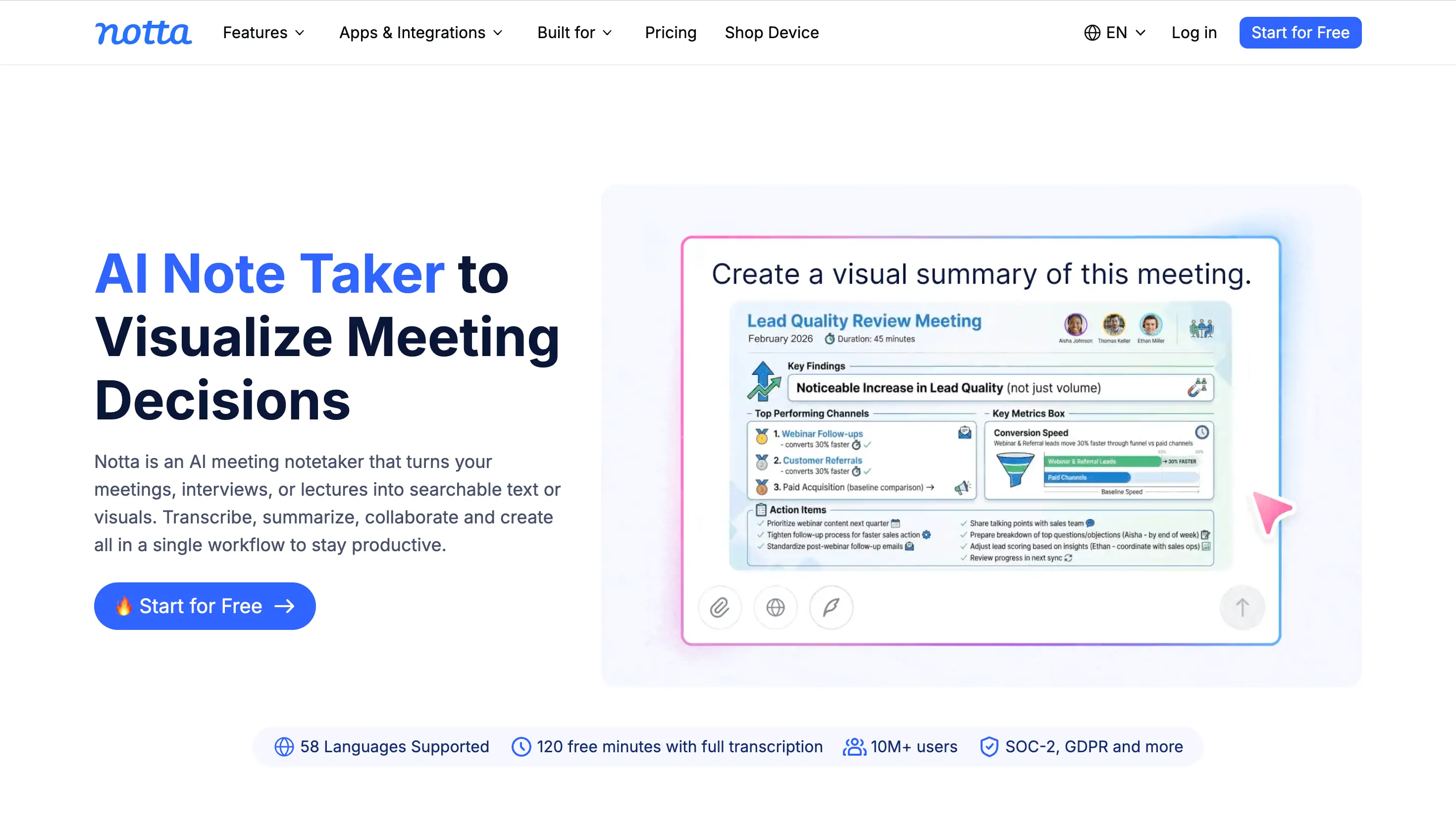
Notta is an AI meeting and transcription platform for people who need to use what was said, not just keep a record. I'd choose it when meetings lead to client reports, research summaries, or presentations.
You can record scheduled calls with a bot, upload existing recordings, or capture conversations using Notta's web and mobile apps. Notta Desktop, its Mac and Windows recording app, adds bot-free meeting recording. Notta also offers Apple Watch recording and Notta Memo, a portable recorder for conversations away from your computer.
Notta supports transcription in 58 languages, with bilingual options for conversations that switch between supported languages. You can edit the transcript, review the summary, and use the discussion as the starting point for more work.
For example, you could combine three client meetings with a project brief and ask Notta to draft a report or PowerPoint presentation. Notta Brain, the AI capability built into Notta, supports this work across meetings and files. Notta can also create tables, infographics, and follow-up drafts you can review and share.
The recording choice matters for privacy. Standard bot-free recording sends encrypted audio to Notta for live transcription. On Pro, Privacy Mode can record on your computer and transcribe afterward without uploading the audio. It requires a compatible device and language, with internet needed for setup and periodic account checks. Local recordings and transcripts stay in your chosen folder; they do not automatically become online summaries or presentations.
Keep in mind: The Free plan's three-minute limit is useful for trying Notta, but not for transcribing a full meeting. Pro includes 1,800 monthly minutes. Translation and advanced AI use have their own allowances.
Price: Free; Pro starts at $8.17/month billed annually. See Notta's plans for the features and allowances you need.
2. ClickUp: Best for teams already managing projects in ClickUp
ClickUp makes sense when your notes need to sit beside a backlog, project plan, or task list your team already uses.
Its AI Notetaker joins supported online meetings and creates a Doc containing the recording, transcript, summary, and next steps. Rather than filing a recap somewhere separate, you can keep the discussion close to the work it affects.
For a sprint-planning meeting, that means reviewing the proposed work in a Doc and turning selected text into tasks. I'd choose ClickUp if it keeps those decisions close to the backlog your team already uses.
Keep in mind: A suggested next step is not necessarily a complete task with the right owner and deadline. Check assignments before treating the meeting notes as your team's work plan.
Price: Limited free Notetaker hours are available, followed by paid access through an add-on or eligible AI bundle. Packaging can vary by workspace.
3. Otter: Best for presentation-heavy meetings
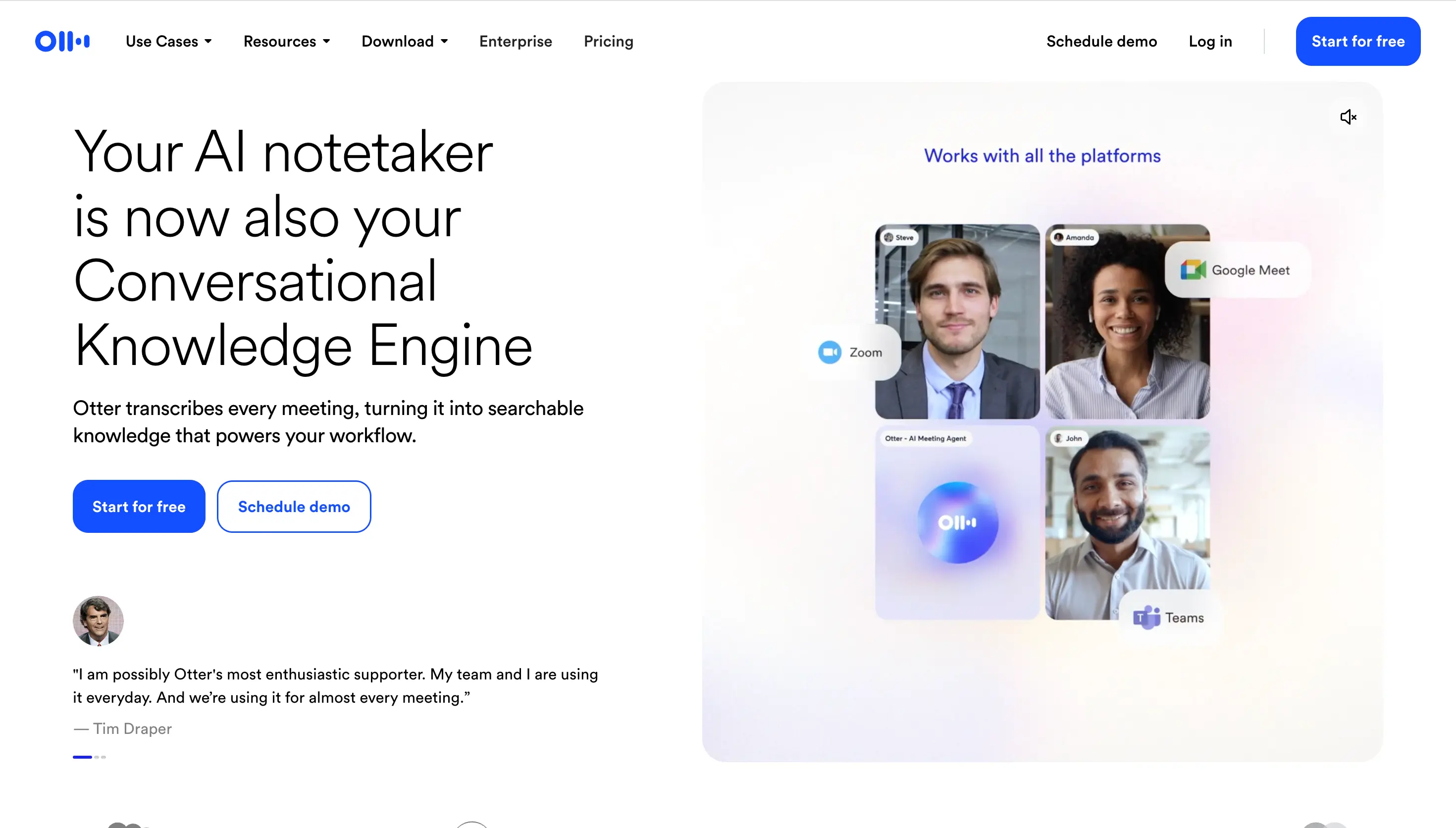
Otter is worth considering when the slide on screen matters as much as the spoken discussion.
Its meeting bot can capture images of slides and shared screens during Zoom, Google Meet, and Microsoft Teams calls. Those images appear alongside the conversation, helping you connect a comment to the chart or design being discussed.
In a presentation review, someone might say, “Let's change this section.” The saved slide makes that comment useful later. Otter also provides live transcripts and summaries, and lets you ask questions about meeting content.
Keep in mind: Automatic slide capture uses Otter's meeting bot; don't assume its bot-free desktop option produces the same visual record. The Free plan also limits each conversation to 30 minutes.
Price: Free includes 300 transcription minutes/month. Pro starts at $8.33/user/month billed annually.
4. Rev: Best for transcripts that need human verification
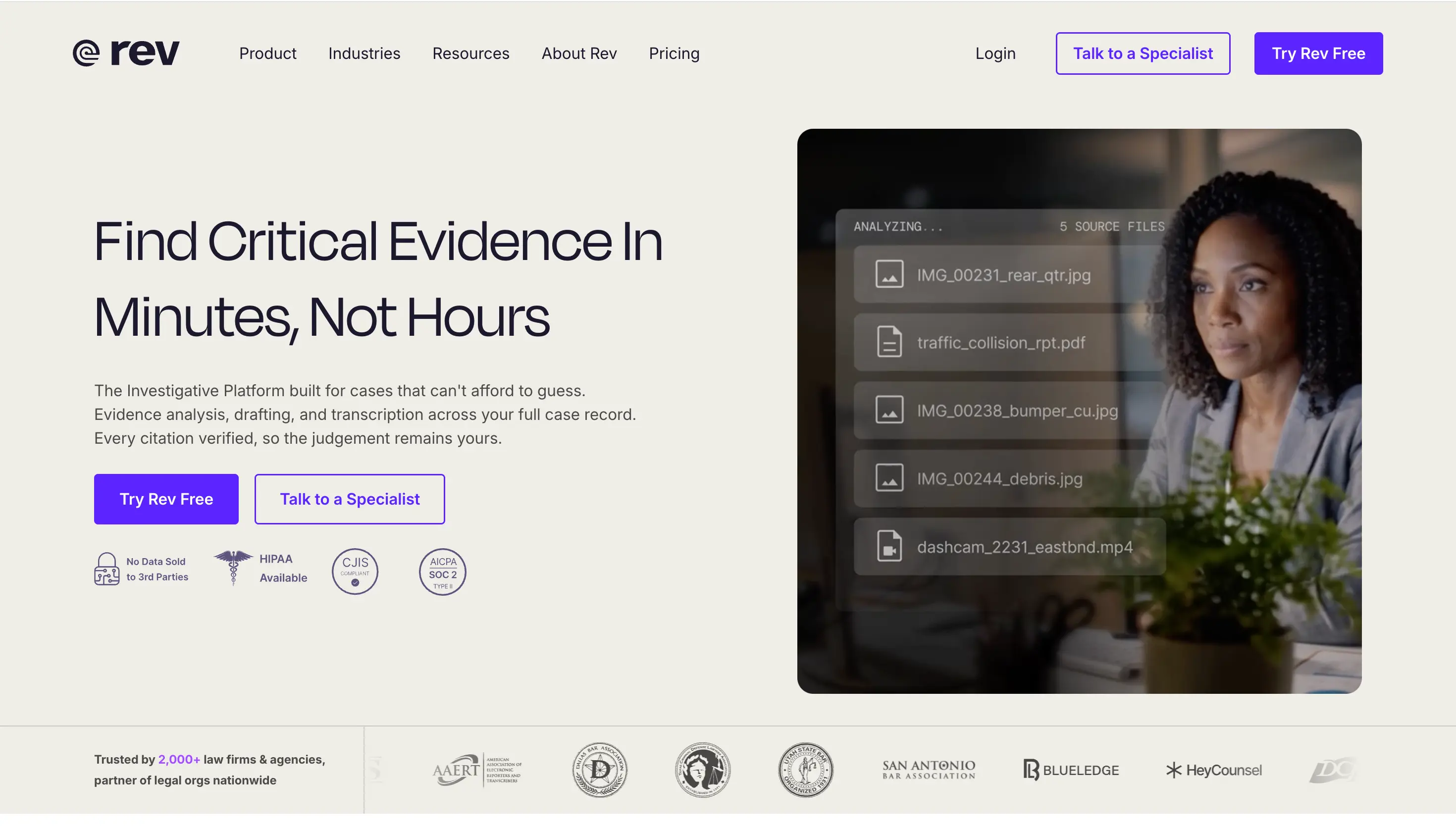
Rev stands out when you want the option of paying a person to transcribe your recording or create captions.
Its AI tools handle transcription and help you work with recorded material. Human services give you another route when an interview, quotation, or published video needs closer attention than an automatic first pass.
For example, a journalist could use AI to find promising passages, then order human transcription for the interview they're preparing to publish. I'd shortlist Rev when that service matters more than automatically attending a busy calendar of meetings.
Keep in mind: Human services cost extra, and delivery is not instant. Human transcription also doesn't replace checking a quotation's context or reviewing captions before publication. Language availability varies across Rev's plans and services.
Price: A free AI option is available. Human transcription starts at $1.99 per audio minute.
5. Gong: Best for sales coaching and deal visibility
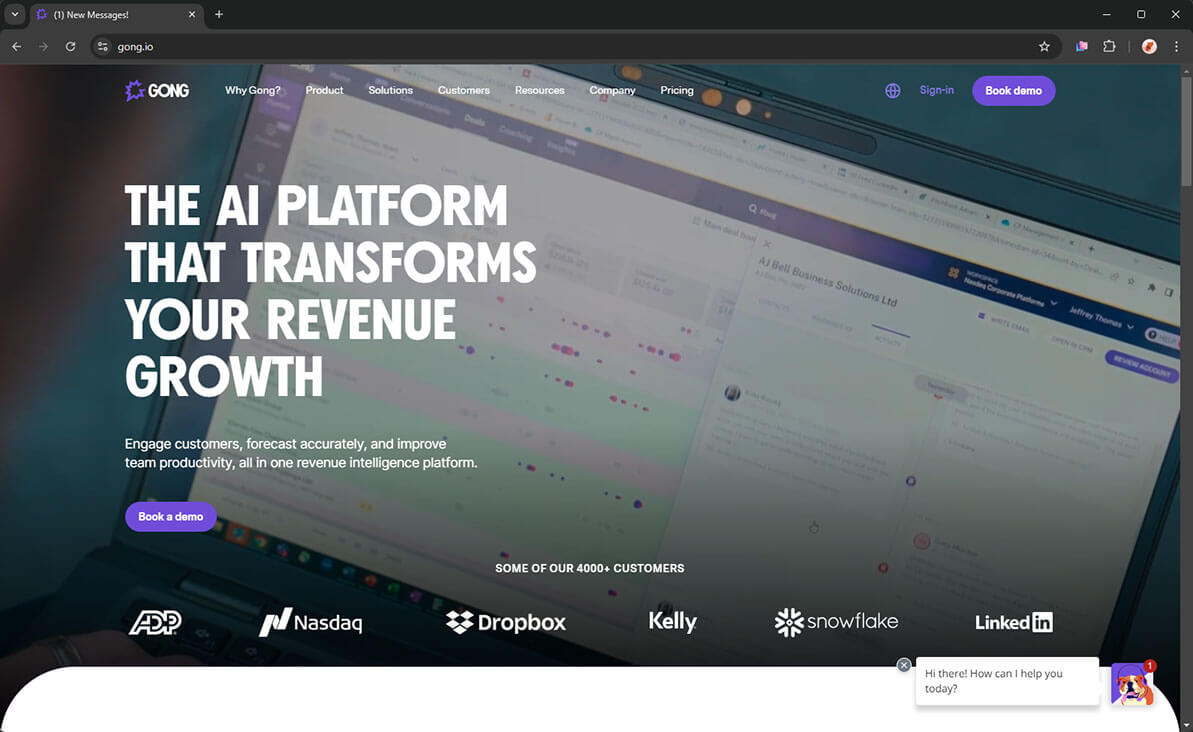
Gong fits sales teams that want to connect customer conversations with coaching and active deals.
The useful difference is the bigger sales picture. Managers can review conversations, identify coaching opportunities, and use deal information to understand where a sales process needs attention. Gong's wider offering also includes forecasting tools.
I'd consider it when a sales leader needs to answer questions such as, “Where are our deals getting stuck?” That is a different job from collecting a neat summary of each call.
Keep in mind: Gong is a broader sales platform, so buying it just for personal meeting notes would mean paying for capabilities you may not need. The value depends on how your team uses its sales tools.
Price: Custom quote. Pricing includes user licenses and a platform fee; the cost depends on your team's setup.
6. Avoma: Best for prepared answers during customer calls
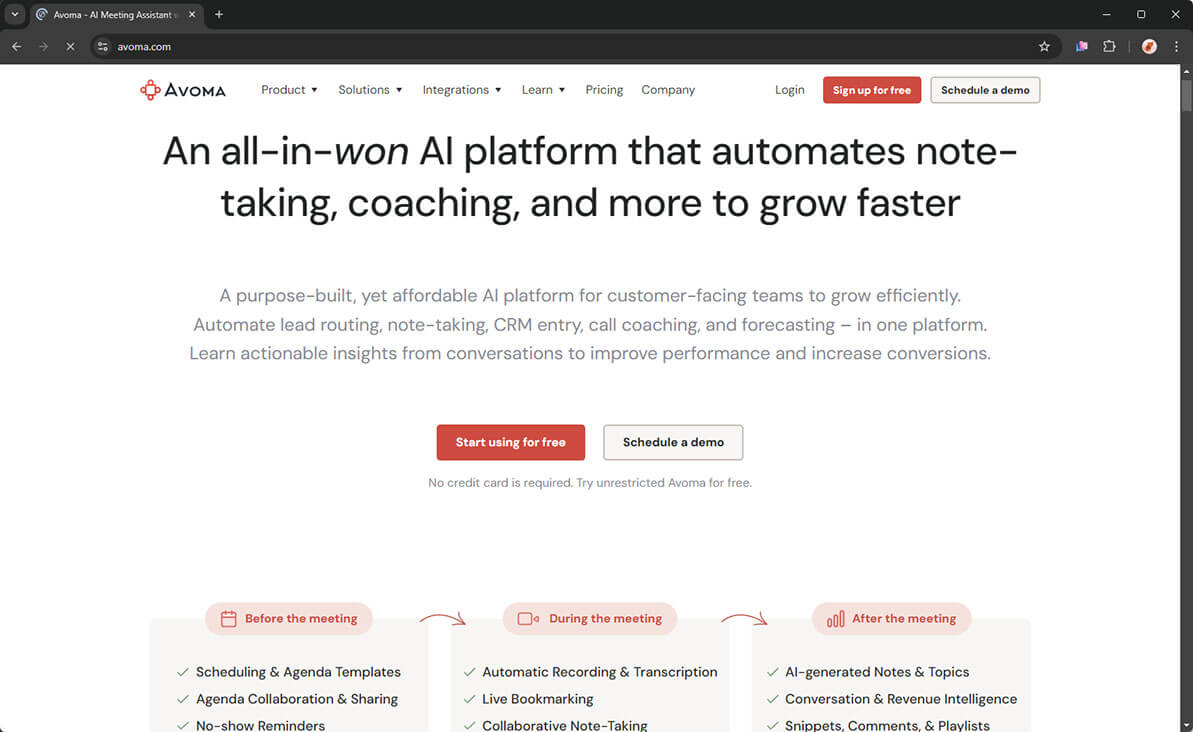
Avoma is a useful option when customer-facing teams need help responding during the conversation, not only a recap afterward.
Its Live Answer Assistant can surface prepared Answer Cards when a relevant question or topic comes up. Your team creates the talking points first. Think answers to common product questions or a reminder about how to explain a service—not an AI making up an answer on the spot.
I'd consider it for a growing sales or customer-success team that wants more consistent responses. Avoma also brings meeting notes, preparation, and customer follow-up into the same service.
Keep in mind: Answer Cards need setup and the Conversation Intelligence add-on. The entry meeting plan does not include every coaching or live-assistance feature.
Price: Meeting plans start at $19/recorder/month billed annually. The Conversation Intelligence add-on is another $29/seat/month billed annually.
7. Fathom: Best for generous free individual meeting recording
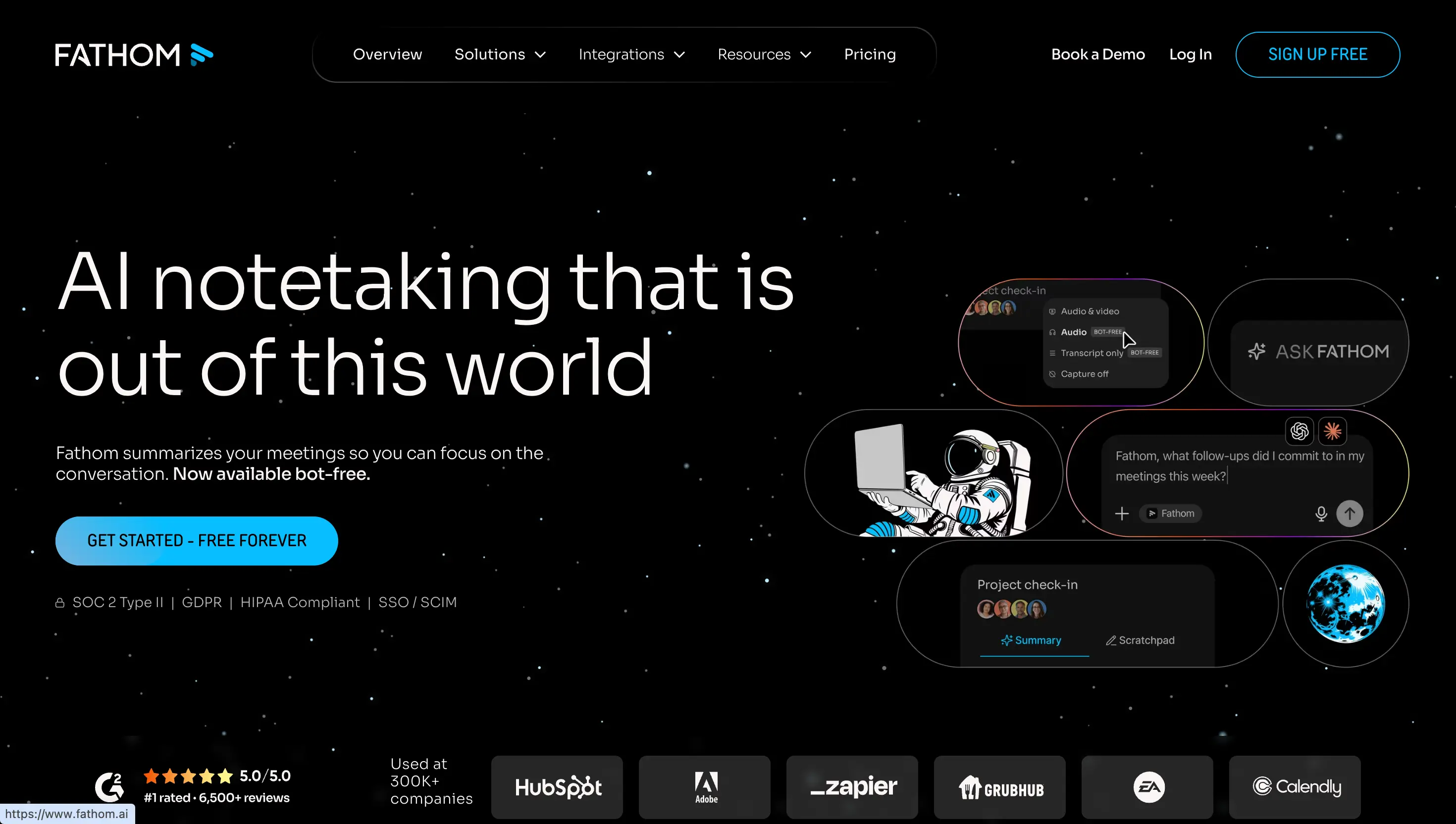
Fathom is a strong starting point if you want to record online meetings without paying for a large monthly transcription allowance.
Its Free plan includes unlimited recordings and transcripts, with support for 38 languages. You can revisit discussions and share useful moments instead of trying to capture every detail yourself.
I'd shortlist it if you attend plenty of calls and mainly need to revisit what was said. You don't have to ration a small monthly transcription allowance.
Keep in mind: Advanced summaries and other Premium AI features have Free-plan limits. Fathom also does not support uploading external recordings, so it won't suit a backlog of interviews recorded elsewhere. Its bot-free option is currently a Mac beta.
Price: Free; individual Premium starts at $16/month billed annually. Team plans are separate.
8. Fireflies: Best for tracking recurring topics across meetings
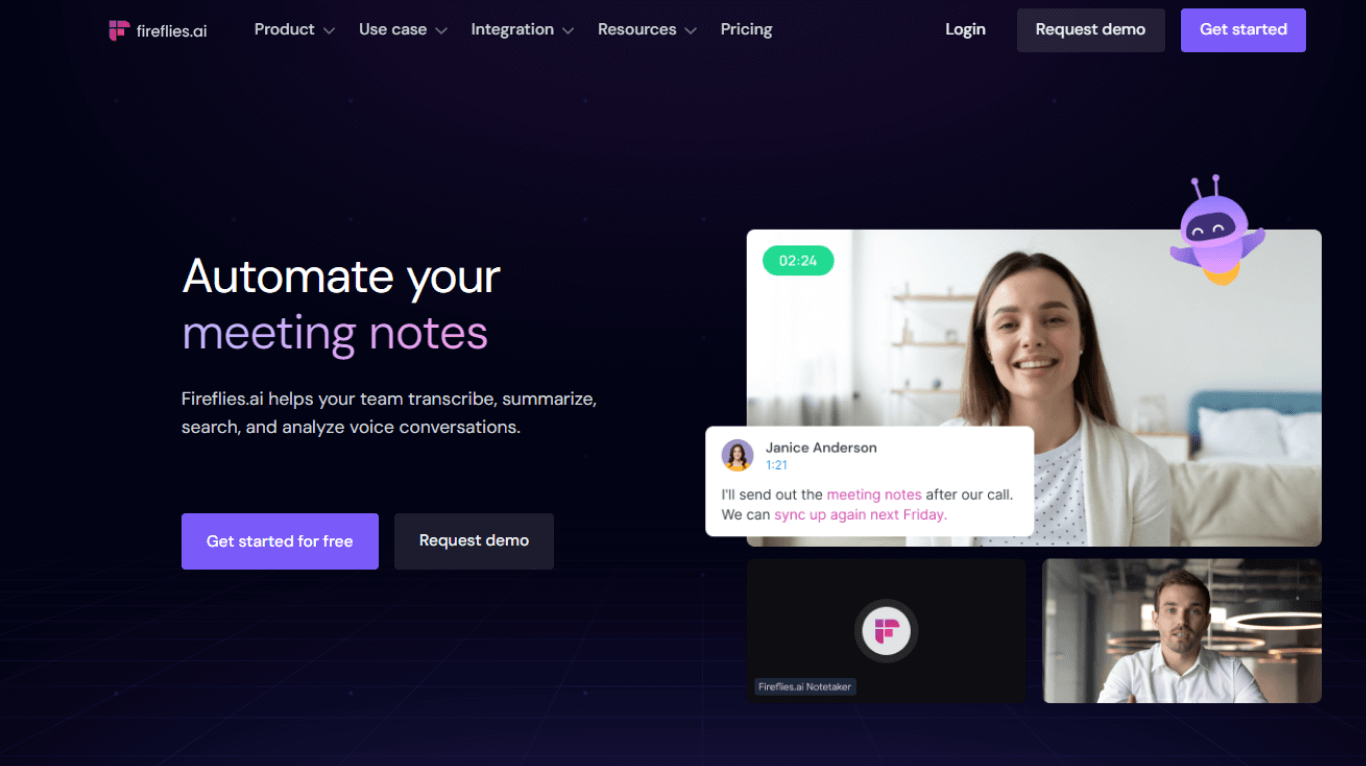
Fireflies is worth considering when you need to spot patterns across a team's conversations.
Its topic trackers and conversation analytics help you find repeated mentions of a competitor, customer concern, or project issue. You can move from a broad pattern to the matching transcript passages to understand the context.
For example, a customer-success manager could track conversations about onboarding, then review the moments where customers describe a problem. That gives you a view across your team's meetings, not just one customer's call.
Keep in mind: Topic counts show what was mentioned, not why it matters. Also, Fireflies' bot-free desktop mode does not save audio or video. Choose a recording option that lets you replay the conversation if that's important.
Price: Free; Pro starts at $10/seat/month billed annually. Conversation analytics requires Business or above, starting at $19/seat/month billed annually.
9. InqScribe: Best for local transcription and recorded interviews
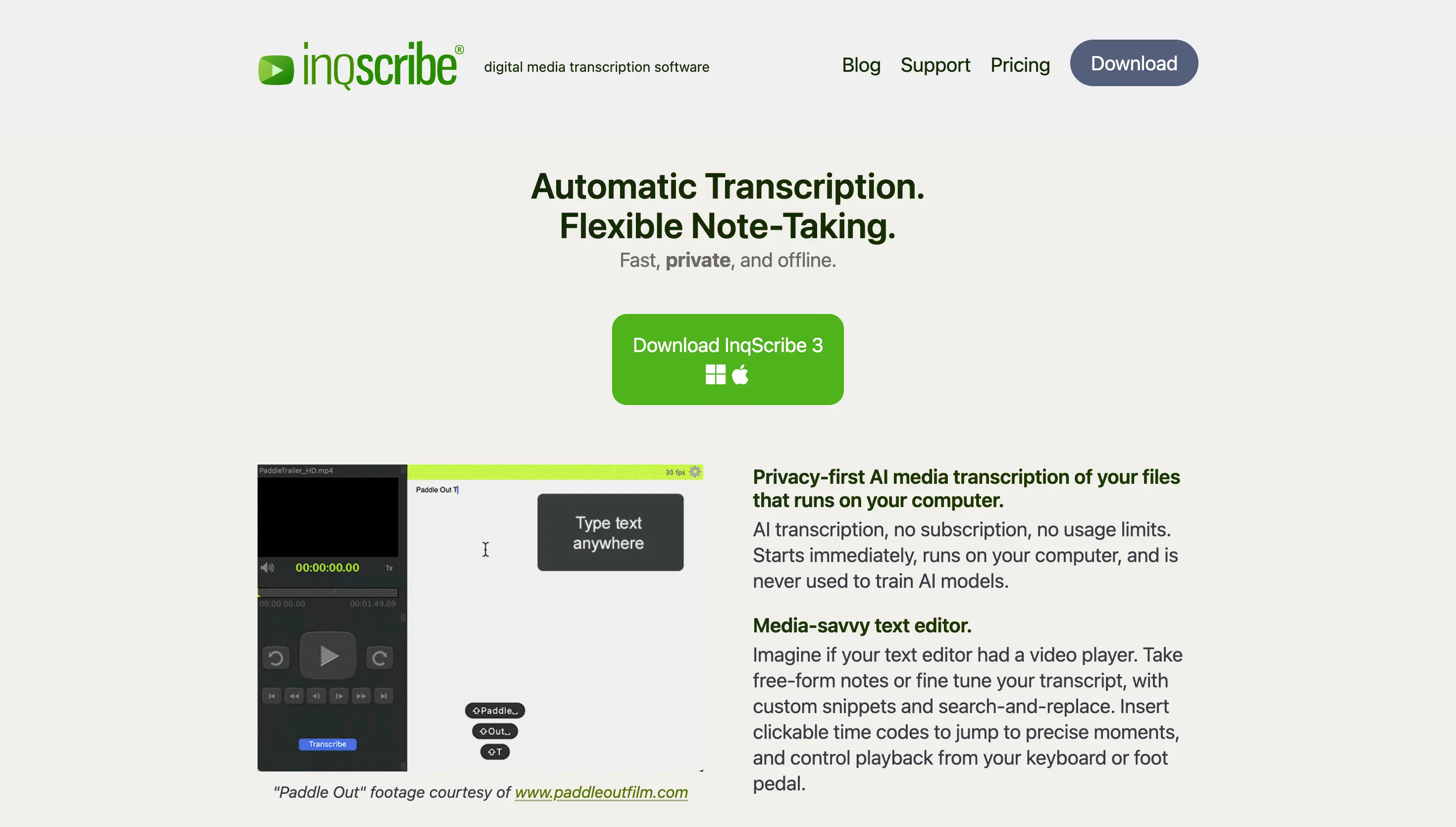
InqScribe suits people who spend time working through recorded interviews, footage, or other source material.
InqScribe 3 can transcribe audio and video files on your computer after you download its transcription model. Its editor lets you mix transcripts with your own notes, add clickable timecodes, and control playback using shortcuts or a foot pedal.
I'd consider it for an interview project where you need to annotate a passage, replay it, and return to it later. The appeal is that combination of local transcription and detailed work with the original recording.
Keep in mind: InqScribe does not automatically identify speakers or create AI summaries. It is a tool for working with media files, not a meeting assistant that joins your calendar calls.
Price: Seven-day trial; a $79 one-time license includes two years of updates.
10. tl;dv: Best for scheduled reports across customer meetings
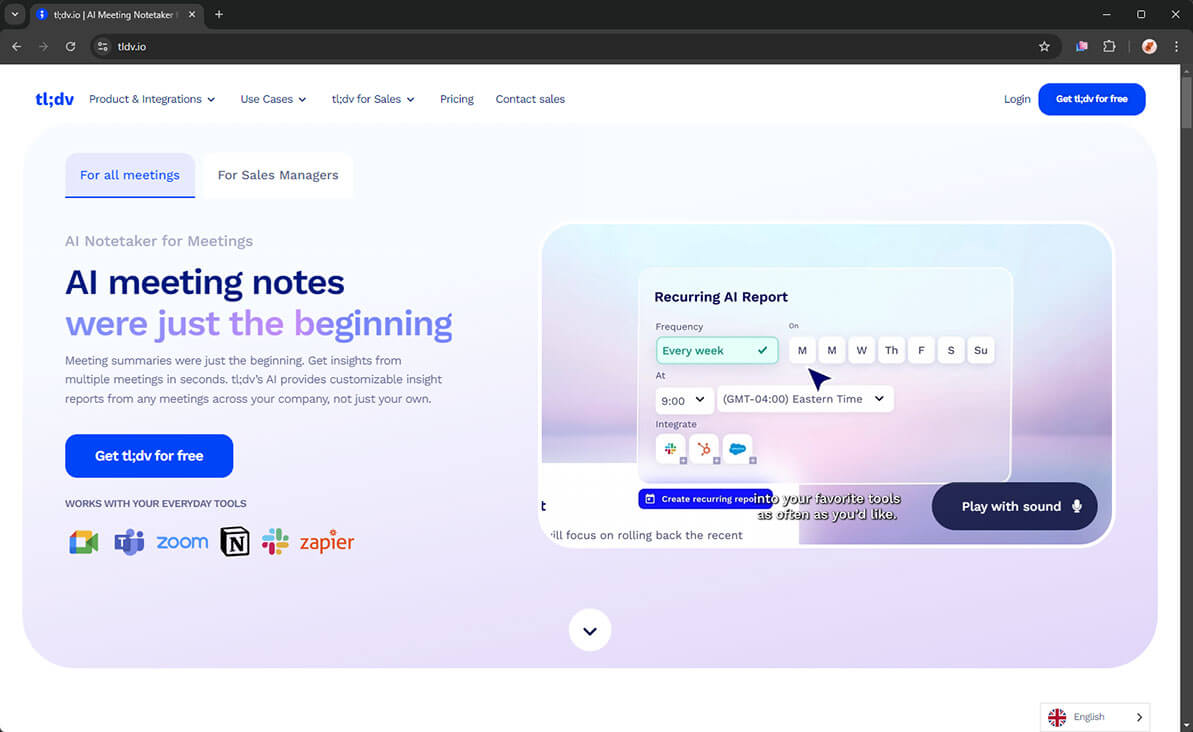
tl;dv fits teams that want a regular report from a selected group of meetings.
Instead of asking the same question after every call, you can set up recurring reports across conversations. That could mean a weekly view of customer objections or repeated feedback about a product.
A weekly report can help you follow customer objections without repeating the same search after every call. It's a useful fit when you already know which questions your team asks regularly.
It offers meeting-bot recording and bot-free desktop audio recording on Mac and Windows. Clips and recorded discussions can also help you share context with colleagues.
Keep in mind: Bot-free recording captures audio, not video. Unlimited scheduled reports require Business; Free and Pro have limited access.
Price: A free plan offers limited AI notes. Paid plans expand AI access, with limited reporting trials below Business.
11. Chorus: Best for sales teams using ZoomInfo
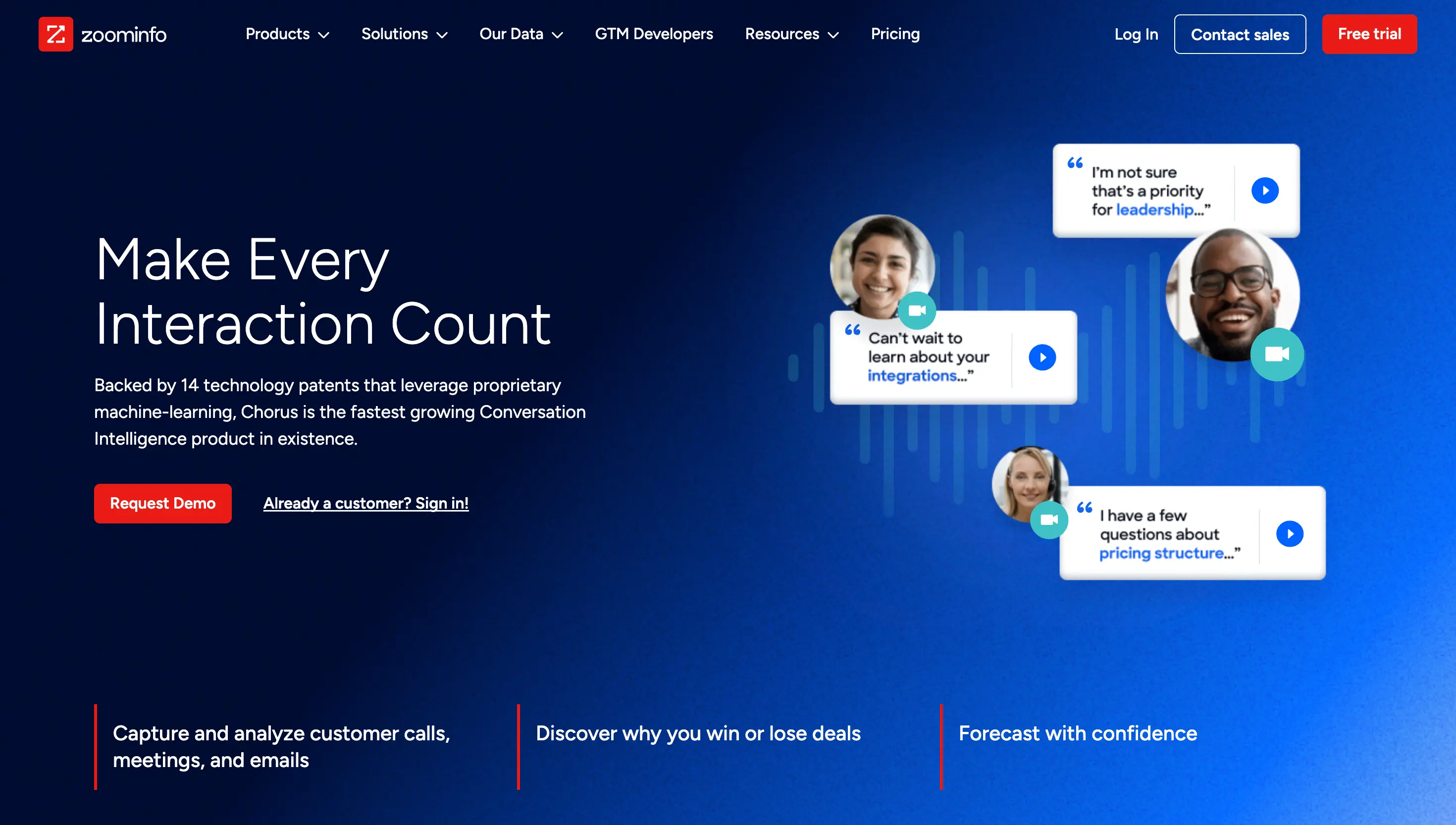
Chorus by ZoomInfo makes the most sense when your sales team wants conversation insights alongside company and contact information.
It records and analyzes customer conversations to support coaching and deal reviews. Its connection with ZoomInfo adds account context, making it more relevant to an existing sales process than to a personal notebook.
I'd consider Chorus when a manager needs to understand a customer discussion alongside what the team knows about that account. Gong also serves sales teams; the choice should reflect the sales tools and information your team already relies on.
Keep in mind: Chorus is more specialized than a general note-taking app. Ask which integrations and capabilities your quote includes rather than assuming all ZoomInfo services come with it.
Price: Contact ZoomInfo for a quote based on your team's requirements.
12. Notion AI: Best for notes inside an existing Notion workspace
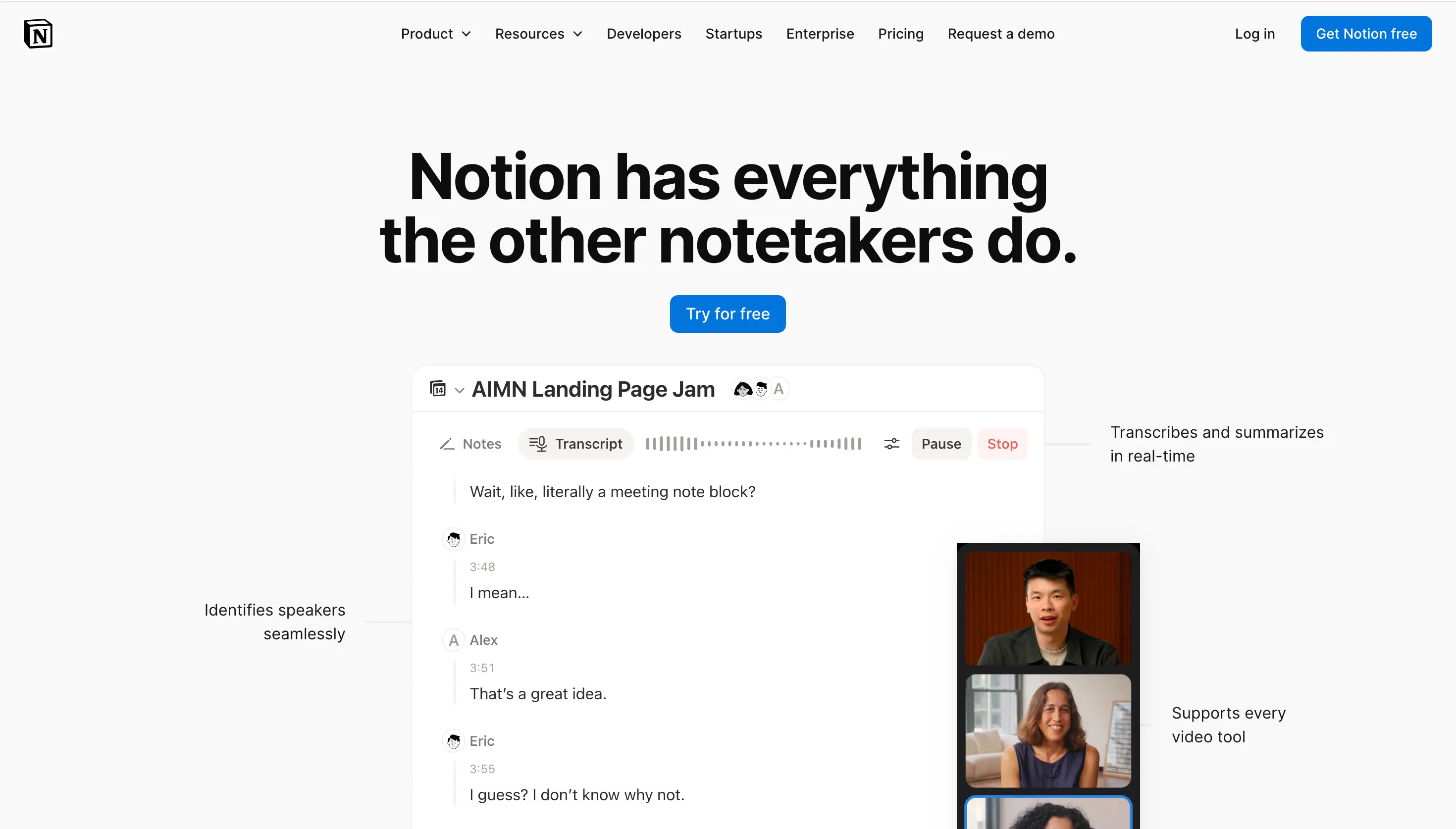
Notion AI is a natural option if your team already keeps its plans, documents, and shared knowledge in Notion.
AI Meeting Notes can transcribe and summarize conversations without a meeting bot. The resulting notes live alongside your existing pages and databases, rather than becoming another set of documents to move later.
A project page can hold both the plan and the discussions behind it. Notion's AI writing and search tools also help you work with notes you've already written.
Keep in mind: The value depends partly on wanting to work in Notion. AI Meeting Notes needs internet access; recording without a bot doesn't mean transcription happens offline. Check the meeting feature's plan access, not just the price of a basic Notion account.
Price: Business starts at $20/member/month billed annually and includes AI Meeting Notes. Lower plans offer limited AI trial access.
13. Reflect: Best for connected personal notes and reading highlights
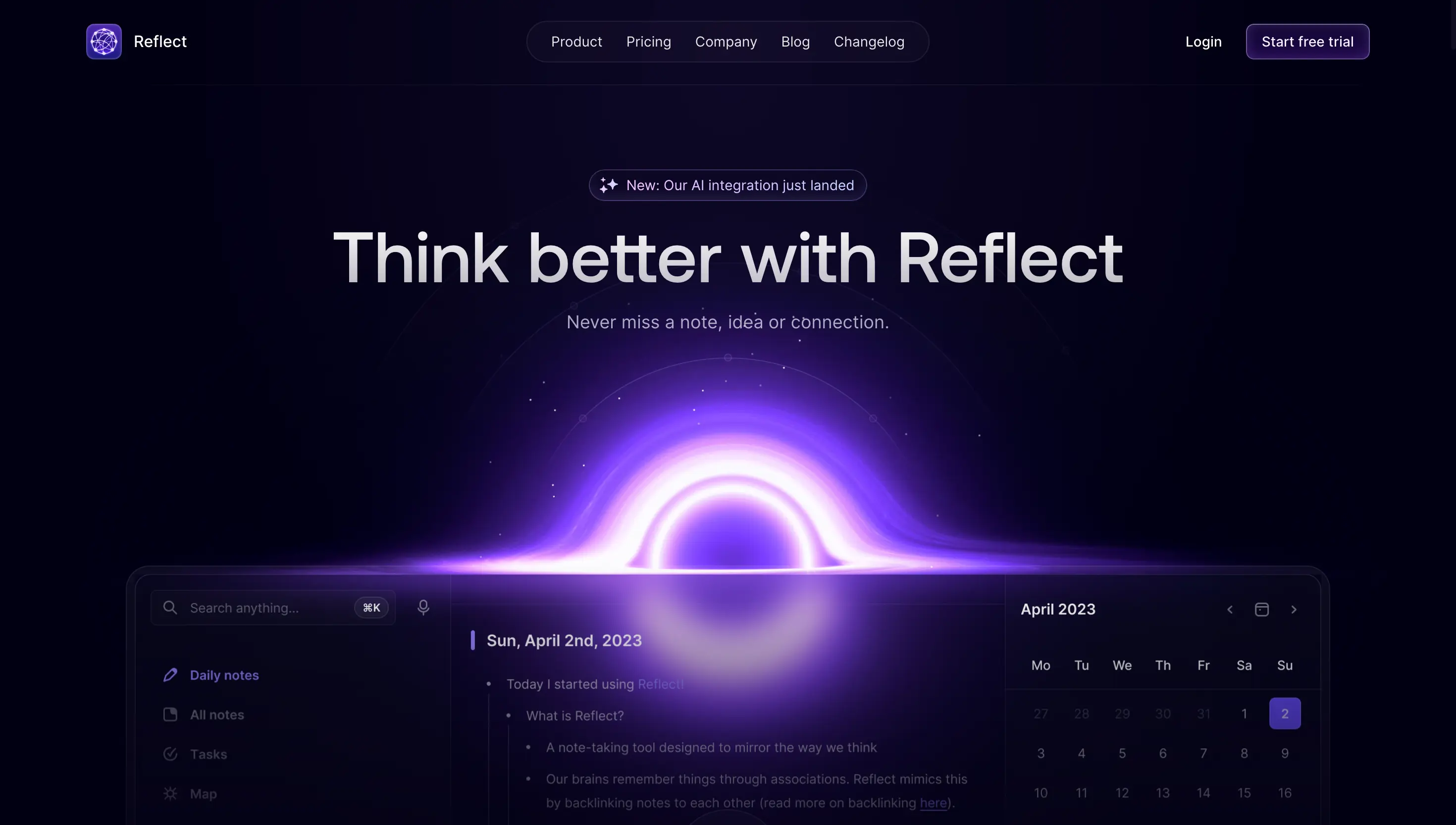
Reflect suits people building a personal collection of ideas, reading notes, and observations.
You can link related notes, save passages from your reading, and use AI to summarize or rework what you've written. Voice transcription gives you another way to capture a thought when typing would interrupt it.
I'd consider Reflect if your notes often start as a book highlight, an idea, or a quick reflection. Its connected-note approach makes more sense for that habit than treating every piece of information as a meeting transcript.
Keep in mind: I'd choose a dedicated meeting tool instead if your main priority is recording a team's scheduled calls. Reflect's appeal is its personal notebook, not managing a shared meeting library.
Price: Fourteen-day trial; $10/month billed annually.
14. Mem: Best for resurfacing useful context from past notes
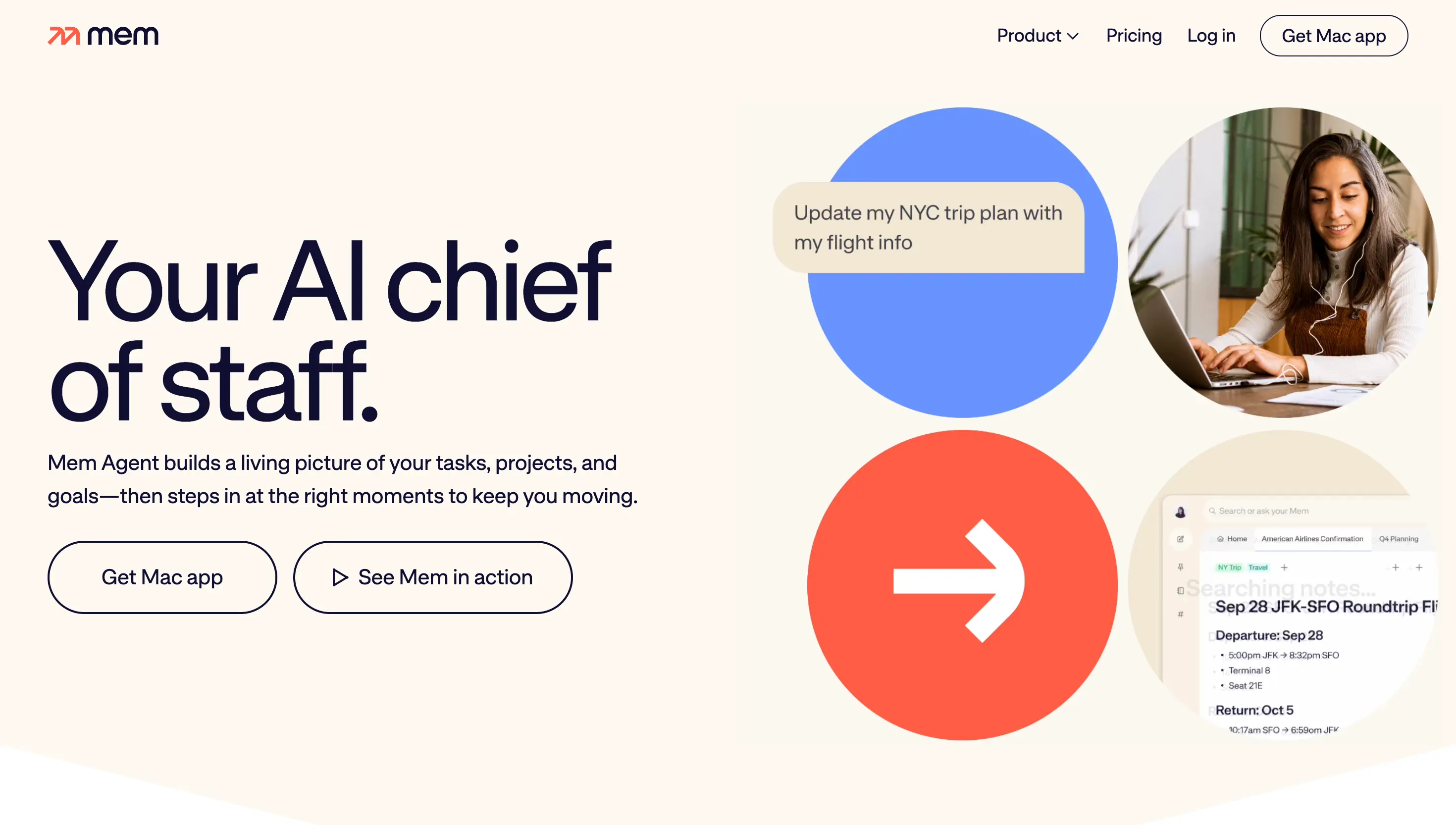
Mem is worth considering when you save plenty of information but forget which notes might help with today's work.
Its Heads Up feature brings related notes and past context back into view. That is a different emphasis from building a network of links yourself: Mem helps surface connections you might not think to search for.
It also offers Voice Mode for recording and organizing spoken notes, including online meetings on supported desktop apps. The recording and transcript can stay attached to the note for reference.
For a recurring client discussion, that could bring an earlier decision back to your attention while you're reviewing your notes.
Keep in mind: Voice transcription is focused on English. Check language support if your conversations are multilingual, and don't assume every live-assistance feature is included in the Free plan.
Price: Free includes three Voice Mode hours and 25 new notes per month. Plus costs $9/month for higher allowances.
15. Taskade: Best for turning notes into visual plans
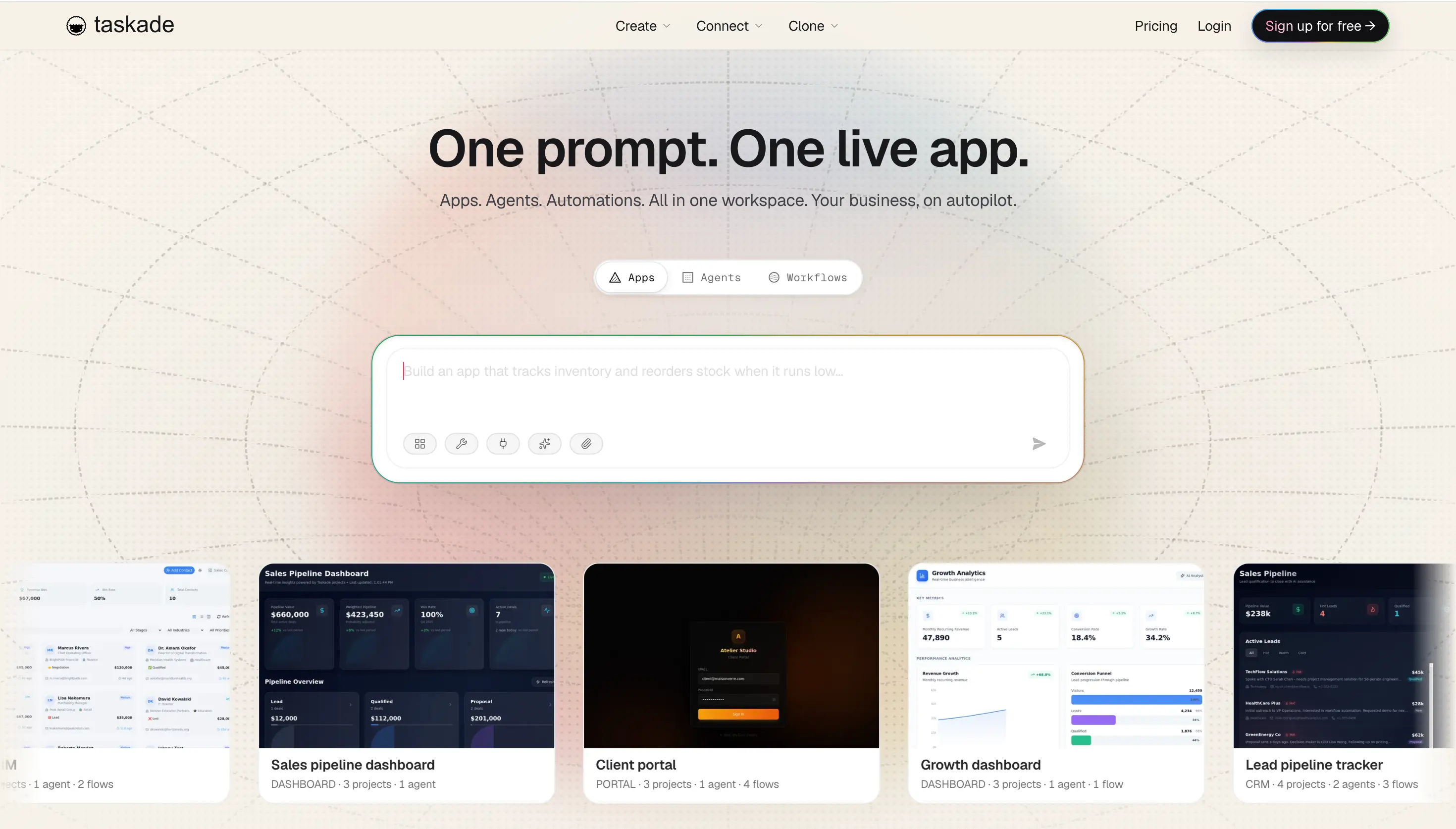
Taskade fits people whose notes usually become an outline, task list, or plan.
Its AI tools can generate and expand notes, summarize material, and organize ideas into tasks. You can work with lists or mind maps, then use automations for repeatable follow-up work.
I'd consider it after a brainstorming session where the next job is to organize ideas into a workable plan. For example, a rough launch outline could become a set of tasks your team reviews and develops together.
Keep in mind: Taskade is broader than a meeting recorder. Its audio-to-notes tools accept uploaded recordings, but don't assume that means an assistant will automatically join your calls. It fits best when organizing and acting on notes is the priority.
Price: Free includes a limited, one-time AI allowance. Pro costs $10/month billed annually and includes 10 users.
How do you choose the right AI note-taking app?
Start with the work you want your notes to help you finish. I'd narrow the list using these five questions:
- Where does the information come from? Choose a meeting recorder for calls, a file-transcription tool for existing interviews, or a personal notes app for writing and reading. Some cover several needs.
- What should the notes become? A searchable transcript, client report, slide deck, and assigned task are different results. Check whether the app helps create the one you actually need.
- Where does your team already work? ClickUp and Notion make sense when your projects already live there. Reflect and Mem put more emphasis on developing and finding personal knowledge.
- What does the useful feature cost? Look beyond the free-plan label. A short recording limit, restricted AI allowance, or paid add-on can change the value for your routine.
- Can you record and share this conversation? Confirm permission, who can access the notes, and whether recordings may leave your device. Our botless recorder comparison explains the recording choices in more detail.
Whatever you choose, check names, quotations, dates, and commitments before sharing. A polished summary can still misread what someone meant.
Turn your notes into the work that comes next.
Choose Notta when you want to bring conversations, recordings, and files together, then turn them into notes, reports, and presentations you can use.
Questions about AI note-taking apps
What is the best free AI note-taking app?
Fathom is a strong free option for individual meeting recording because it includes unlimited recordings and transcripts, with limits on advanced AI features. For short recordings and trying multilingual transcription, Notta offers 120 minutes per month with a three-minute limit per recording. The best free choice depends on which limits affect your work.
Which AI note-taking apps work without a meeting bot?
Notta Desktop, Otter, Fireflies, tl;dv, Notion, and Mem offer bot-free options for supported setups. They differ in what they record and retain. Recording without a bot does not remove consent requirements or mean everything stays on your computer. Check the app's recording method and storage before using it for sensitive conversations.
Can AI note-taking apps transcribe existing recordings?
Yes, but not all of them. Notta, Rev, and InqScribe accept existing audio or video for transcription. InqScribe works on files locally, while Notta offers both standard and supported Privacy Mode options. Fathom does not support uploading external recordings, so check this before choosing an app for an interview archive.
Which AI note-taking app is better for personal notes?
Reflect suits linked ideas and reading highlights; Mem focuses on resurfacing useful context from past notes. Notion can fit if you also want structured pages and databases. I'd start with how you capture and revisit ideas, rather than paying for meeting features you won't use.
Can AI notes become documents, presentations, or tasks?
Yes, depending on the app. Notta can turn meeting content and files into documents, reports, presentations, and other outputs. ClickUp connects meeting Docs with project work, while Taskade helps organize notes into outlines and tasks. Review the result before sharing or assigning it; a suggested action may still need an owner and deadline.
