
Descript Review: Features, Pricing, Pros & Cons (2026)
98% accurate, real-time transcription in just a few clicks. 58 languages and multiple platforms supported.
Descript is worth considering if you edit podcasts or videos and want a text-based workflow instead of a traditional editing timeline. Its strongest features are transcript editing, filler-word removal, Studio Sound, and AI voice tools. The trade-off is that transcript accuracy and plan limits still matter, especially if your main goal is clean meeting notes or interview transcripts.
A few years ago, Descript came onto the scene as a great choice for podcast and video editing. For anyone who's into podcasting, Descript is a new kind of audio editor that works entirely differently from other traditionally complex audio tools. Earlier this year, I started my podcasting channel and tried Descript for all my editing.
At first, I wasn't sure if it was ideal for beginners. But a dozen episodes later, I'm convinced Descript's approach is a much easier and faster way to edit audio. If you've never tried it but are planning to, this Descript review is for you. After months of testing and using Descript, here's everything you'll need to know, including pricing, technical details, and features.
What is Descript?
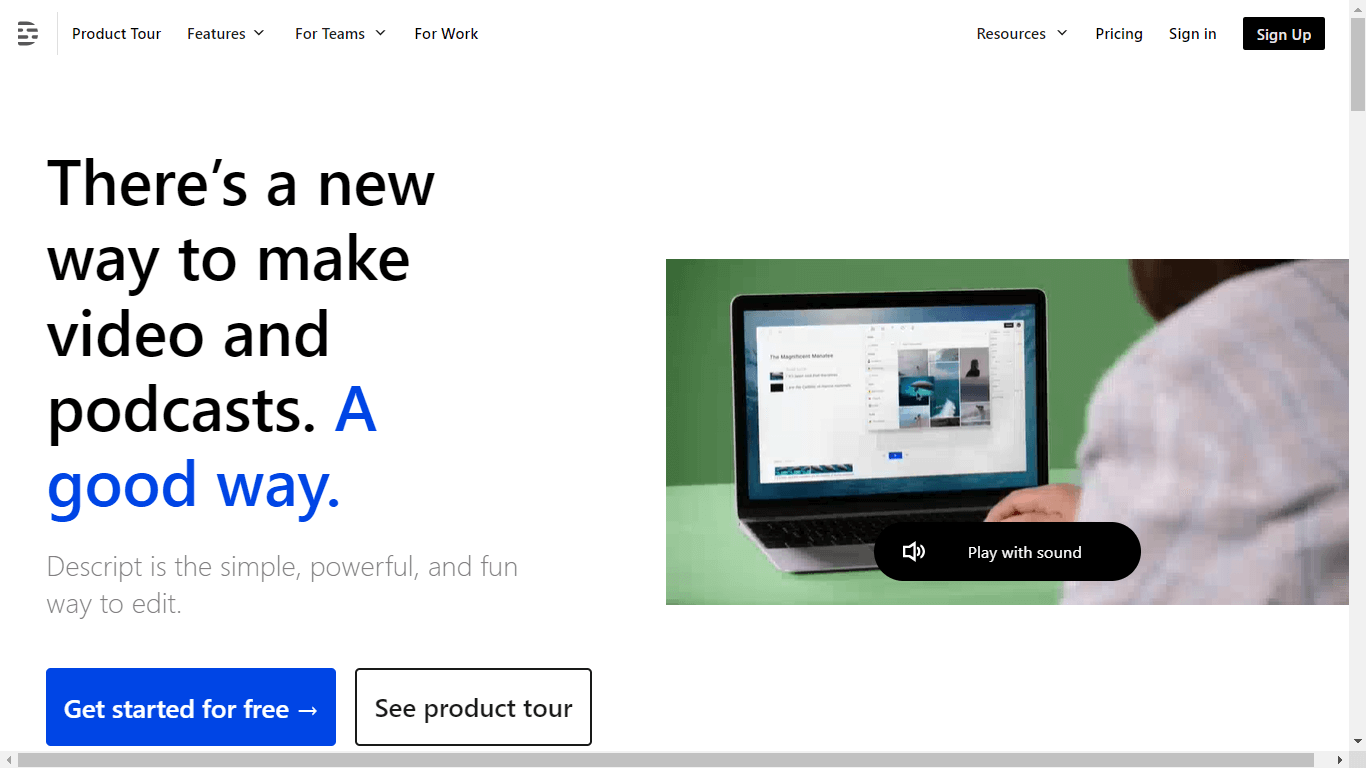 Descript is an AI-powered audio and video editor built around text-based editing. Instead of cutting clips on a complex timeline, you edit the transcript, and Descript applies those edits to the audio or video. That makes it especially useful for podcasters, YouTubers, course creators, and marketing teams that produce spoken content.
It's an audio or video editor that scans the transcripts, highlights hundreds of instances of filler words like um and ah, and removes all of them in a single click. The advanced AI cuts out tons of busy work and adds some entirely new capabilities not seen elsewhere — thereby saving editors a ton of time.
How does Descript work?
How Descript works is pretty simple and a huge time-saver. To begin with, it generates a transcript of everything you say in addition to the scenes, automatically separating the video track. If you have an audio file and are wondering how to transcribe in Descript, there's a feature that lets you automatically transcribe the uploaded audio (all thanks to its advanced artificial intelligence technology).
Then, you can simply highlight and delete (or just move) any words, phrases, or part of the transcripts in a text editor. When you cut the words or sentences in the transcript, they are automatically removed from the uploaded audio or video. I'd say that Descript makes smooth editing an absolute breeze, even if you don't have exceptional video editing skills (like me).

Notta can convert your spoken interviews and conversations into text with 98.86% accuracy in minutes. Focus on conversations, not manual note-taking.
Pricing and plan
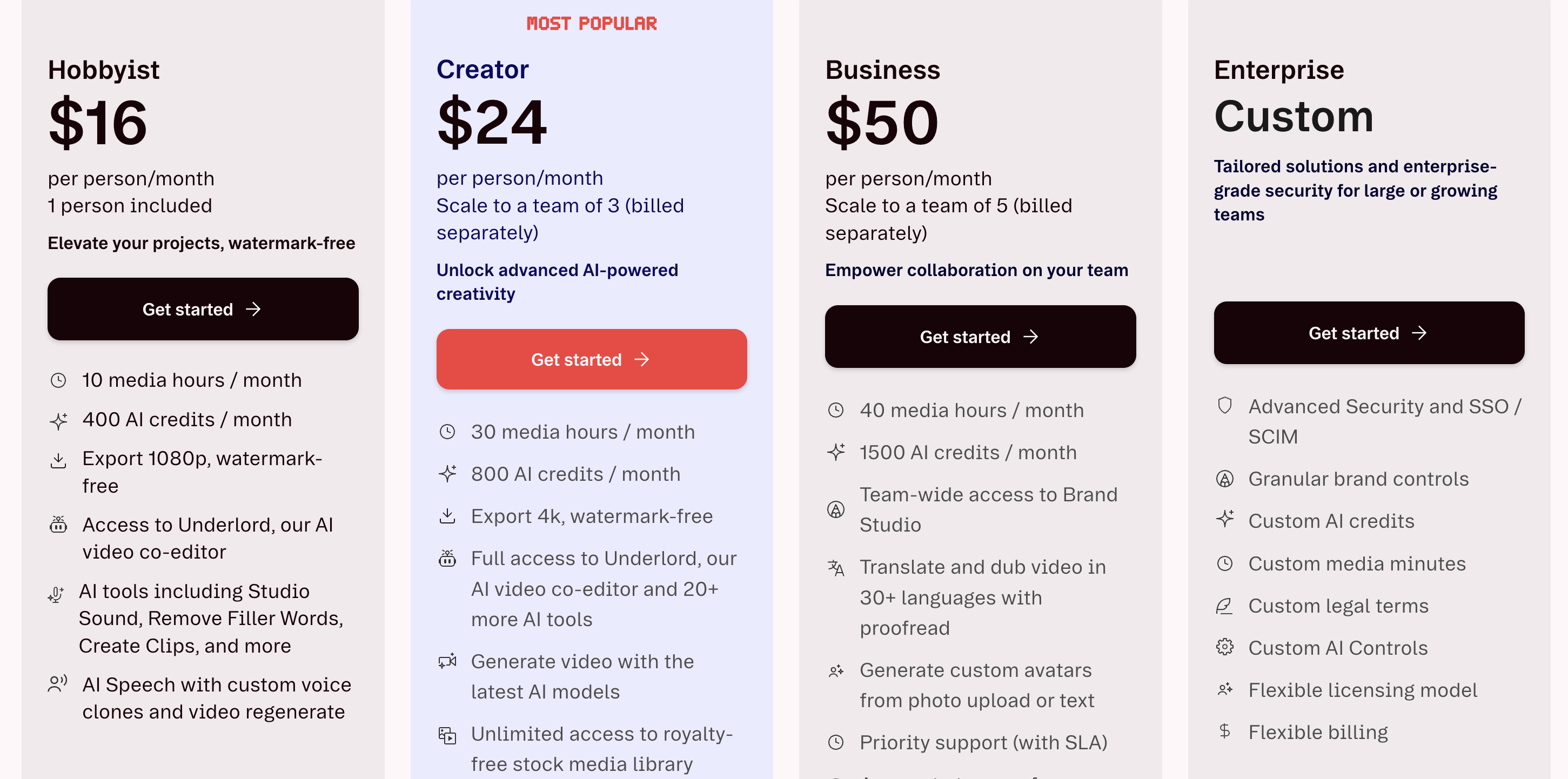
Descript has five plans: Free, Hobbyist, Creator, Business, and Enterprise. The Free plan is useful for testing the editor, but paid plans are where the tool becomes practical for regular podcast or video work. As of July 2026, Descript’s paid plans start at $16 per person/month with annual billing.
Free: $0, 60 media minutes/month, 100 one-time AI credits. Best for trying Descript.
Hobbyist: $16/month annually or $24/month monthly, 10 media hours/month, 400 AI credits/month, 1080p watermark-free export. Best for solo creators.
Creator: $24/month annually or $35/month monthly, 30 media hours/month, 800 AI credits/month, 4K watermark-free export. Best for regular content creators.
Business: $50/month annually or $65/month monthly, 40 media hours/month, 1,500 AI credits/month, Brand Studio, 30+ language translation and dubbing, priority support. Best for teams.
Enterprise: Custom pricing, custom media minutes and AI credits, SSO/SCIM, custom AI controls, and flexible billing. Best for larger teams.
Technical details
Descript is a great AI tool for video and podcast editing — using nothing but a simple transcript. If you're planning to invest in the tool, here are a few technical details you'll need to know.
Supported Platforms: Descript is currently available only on Windows and Mac. It does not have any dedicated mobile application for Android or iOS.
Categories: Descript is a versatile tool that’s designed to write, record, edit, collaborate, transcribe, and even share videos and podcasts on many popular channels.
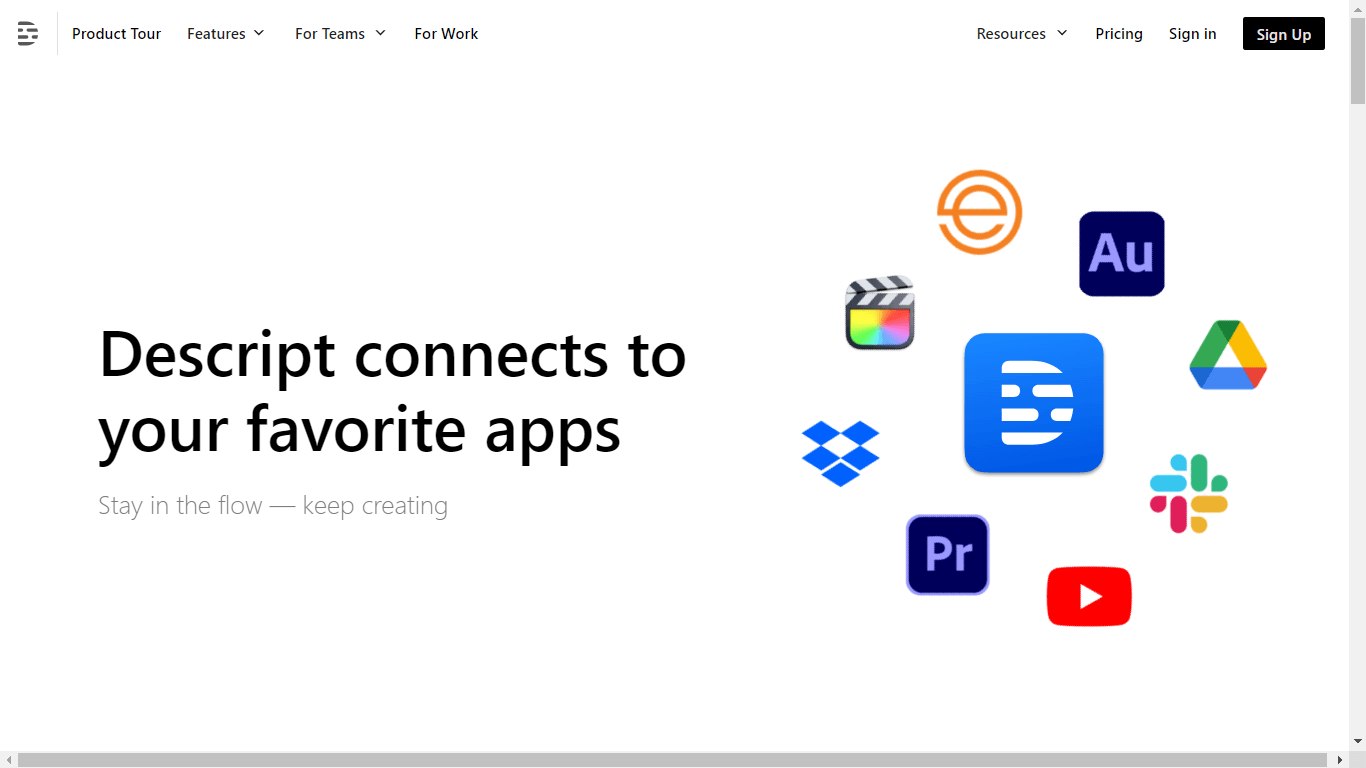
Integrations: The Descript editing tool automates many audio and video editing processes. You can even take the automation a step further by connecting it to other apps. For example, Descript allows you to publish the finished podcasts directly to Blubrry, Castos, Hello Audio, and VideoAsk.
Descript features: what can you do with it?
Descript’s main features help you turn spoken recordings into edited podcasts and videos. Text-based editing connects your transcript to the recording, while audio cleanup, AI voices, and captions help prepare it for publishing. The value is in how these tools work together—not just in generating a transcript.
Edit audio and video through the transcript
Descript lets you cut and rearrange recorded speech by editing its transcript. If an interview includes an off-topic answer, you can remove that passage without searching through the entire recording.
There’s an important distinction: correcting a mistranscribed word is different from changing what the speaker actually said. Descript provides separate controls for transcript corrections and media edits. I’d check names and technical terms before making larger cuts. Learn how text-based editing works.
Remove filler words without losing the speaker’s rhythm
Descript’s filler-word removal identifies expressions such as “um” and “uh” so you can remove them from your recording. This can help tighten a tutorial or a rambling podcast introduction.
I’d review the suggested cuts rather than remove every hesitation automatically. A pause can carry meaning, and the goal is a clearer conversation—not speech that feels rushed. See Descript’s filler-word tools.
Clean up background noise with Studio Sound
Studio Sound reduces background noise and echo while enhancing speech. It’s worth considering when a guest’s recording sounds distracting or a room adds noticeable reverberation.
Treat it as a cleanup option, not a guarantee of studio-quality audio. Listen to the processed version alongside the original before deciding which sounds more natural. Explore Studio Sound.
Create narration with AI voices
Descript supports text-to-speech using stock AI voices or a custom voice clone. You can generate narration from a script, which gives you another option when preparing an introduction or revising a voiceover.
I’d review pronunciation, pacing, and tone before publishing. Use only voices you have permission to reproduce, and don’t present generated speech as an unchanged original recording. Explore Descript’s AI voice features.
Add captions and create shorter clips
Descript also includes captions and tools for turning longer recordings into shorter clips. That makes it useful when one interview needs to become both a full episode and social content.
Check caption wording and make sure each clip preserves the speaker’s meaning. Before choosing a plan, confirm that its export options and AI allowances fit your publishing needs. See Descript’s editing and publishing tools.
Security & customer support
Descript is an app that prioritizes the privacy, security, and data confidentiality of the customers. The app is SOC 2 Type II compliant and keeps all the data saved in an encrypted database. Descript even says that it does not use user data for any kind of marketing, selling, or advertising — thereby making it a safe option.
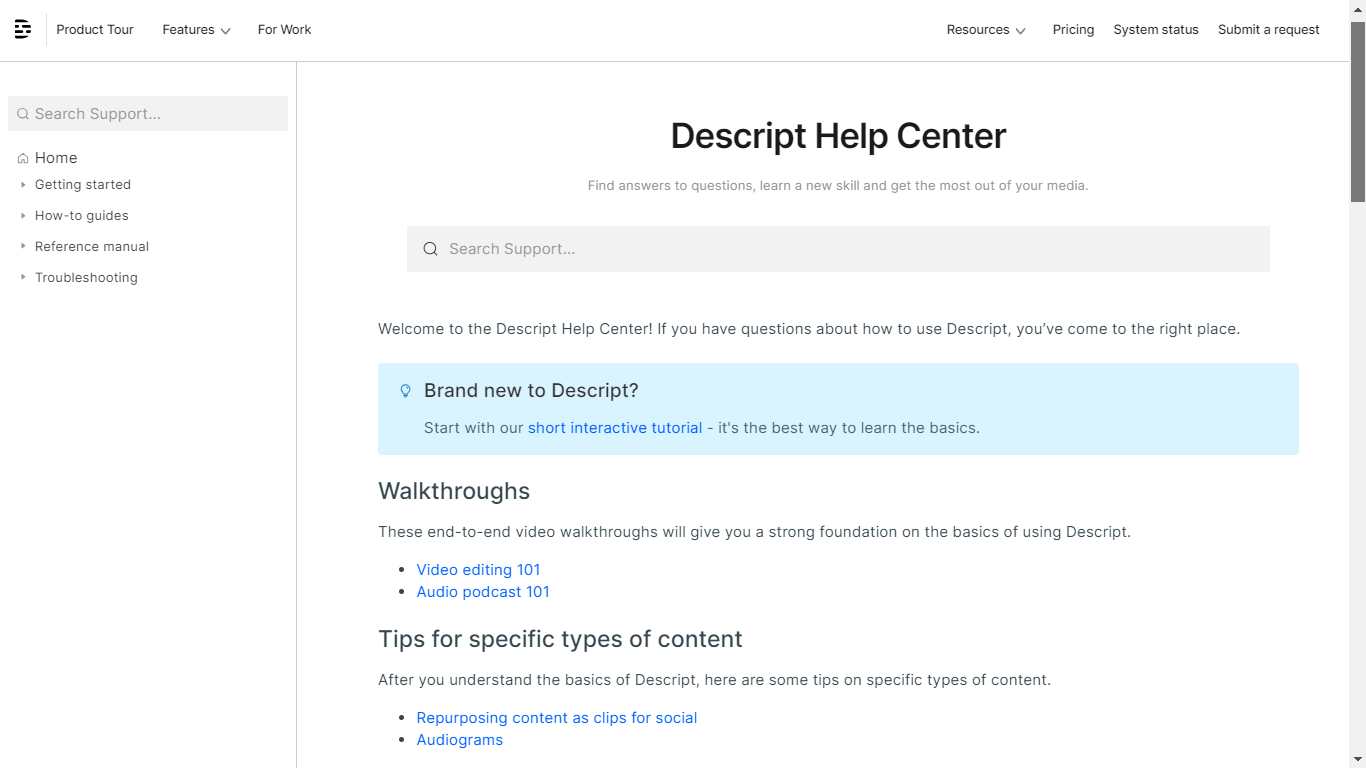
If you have any doubts related to Descript and its usage, you can contact the customer service team via email at press@descript.com. There's a Descript Help Center where you can find answers to common questions and even watch a short, interactive tutorial. The downside, however, is that there's no live chat feature available.
Pros & cons
I've spent over a year testing and using AI apps like Descript. Just like every other app, Descript comes with both advantages and limitations.
Pros
Descript helps you easily edit videos as a Word document.
It has an intuitive interface.
There are many advanced features available, like Overdub and Studio Sound.
Cons
Descript doesn't have any mobile app for editing podcasts or videos on the go.
Descript’s transcription is useful for editing, but it can still make mistakes with names, accents, and technical terms. If transcript accuracy is the priority, plan for manual cleanup or consider a dedicated transcription tool like Notta.
There's a steep learning curve.
How Notta compares for meetings and interviews
Descript is built mainly for podcast and video editing. Notta is built for capturing conversations and turning them into useful meeting records. If you need to record client calls, interviews, team meetings, or in-person conversations, Notta will usually make more sense.
Notta Desktop lets you record meetings on Mac and Windows without a visible meeting bot joining the call. It works with 40+ meeting apps, including Zoom, Google Meet, Microsoft Teams, Slack Huddles, Webex, Discord, and WhatsApp Desktop. Just make sure you tell participants when recording is required by law or company policy.
Notta Memo is useful when the conversation happens away from your laptop. It is a $149 AI recorder for in-person conversations, with 30 hours of continuous recording and automatic sync to your Notta workspace.
Notta Brain, Notta’s AI Meeting Execution Engine, helps turn transcripts into summaries, action items, reports, emails, slides, and other follow-up materials. That is the bigger difference: Descript helps you edit content, while Notta helps you capture conversations and turn them into work you can use.
The final verdict
Descript makes the most sense for creators who edit podcasts, tutorials, or marketing videos from a transcript. If your work starts with a recording and ends with a polished video, Descript gives you a practical editing workflow. But if your main job is turning meetings, interviews, or calls into accurate notes, summaries, and action items, Notta is the better fit. Notta is an AI transcription tool designed for business professionals and teams, with 58+ language transcription, real-time meeting notes, AI summaries, and searchable meeting records.
Want the convenience of automated note-taking and AI summaries? Try Notta for your upcoming meetings.
FAQs
How accurate is Descript transcription?
Descript says its automated transcription is designed for fast editing, but you should still expect to review the transcript for names, accents, and technical terms. If you need a cleaner transcript for meetings or interviews, Notta supports up to 98.86% transcription accuracy and works across 58+ languages.
Is Descript safe to use?
Yes, Descript is a safe video editing option. Whenever the data is in transit, it is encrypted on HTTPS — which is the industry standard for secure Internet connection. It's also SOC 2 Type II compliant to encrypt the data at rest.
Does Descript have a watermark?
Yes, if you're on the free plan, Descript offers one watermark-free video export every month. And if you want to export more videos, you'll see a watermark. In order to remove the watermark from future video exports, you can upgrade to a paid Creator or Pro plan.
Is Descript better than Notta?
Descript is better for editing podcasts and videos from a transcript. Notta is better for meeting transcription, interview notes, summaries, and action items. If you create videos, choose Descript. If you need searchable meeting records and cleaner team workflows, choose Notta.

