

How to Record a Voicemail on iPhone and Android
98% accurate, real-time transcription in just a few clicks. 58 languages and multiple platforms supported.
Recording a voicemail sounds simple until you realize the phrase means two completely different things depending on what you actually need. Sometimes people want to set up or change their outgoing greeting, which is the message callers hear when you don't pick up. Other times, they want to save a voicemail that someone already left them before the carrier deletes it. Both tasks are covered below, broken out by device, so you can skip straight to what applies to you.
Two Things "Record a Voicemail" Can Mean
Getting clear on this distinction upfront will save you a lot of frustration, because the steps are entirely different depending on which task you're trying to do.
Recording a voicemail greeting means creating the outgoing message that plays when you miss a call. It lives in your Phone app settings and callers hear it automatically whenever you don't answer. You control what it says, how long it is, and when it plays.
Recording a voicemail message someone left you means capturing or saving an audio message that a caller already left in your inbox. Carriers typically delete received voicemails after 14 to 30 days, so saving important ones requires its own separate process.
iPhone users will find that native tools handle both tasks reasonably well. Android users tend to have a more varied experience depending on their carrier and device.
How to Record a Voicemail Greeting on iPhone
The iPhone keeps this simple through the built-in recorder. No third-party app is required and there's no account to create.
Using the Native Phone App
Open the Phone app and tap the Voicemail tab in the bottom-right corner. At the top of the screen, tap Greeting, then select Custom. Tap Record to begin speaking your greeting. When you're done, tap Stop, preview it by pressing play, and tap Save once you're happy with how it sounds.
If the Voicemail tab is missing or shows a prompt to complete setup, you'll need to finish first-time voicemail configuration before you can record a custom greeting. For most US carriers, you do this by holding down 1 to call your voicemail inbox, then following the automated prompts to create a PIN. Once that's done, the Greeting option will appear and you can record as normal.
A few things worth knowing: the recording can be as long as you need since there's no enforced time limit on the greeting itself. The file is stored on your carrier's server rather than on the phone, so switching devices won't delete it. You can re-record it as many times as you like by repeating the same steps, and each new recording simply overwrites the previous one.
Using Google Voice on iPhone
If you use Google Voice as your primary phone number, the greeting is managed through the Google Voice app rather than the native Phone app. Open Google Voice, tap your profile icon in the top-right corner, then go to Settings > Voicemail > Voicemail greeting. Tap the microphone icon to record a new greeting, stop when you're done, and save it.
Google Voice also gives you the option to upload a pre-recorded MP3 file as your greeting. This is handy if you want to record and edit the audio on a computer first before setting it live on your number.
Here's how to record a voicemail on an iPhone.
Step 1: First, open the 'Phone' app and then locate the 'Voicemail' tab.
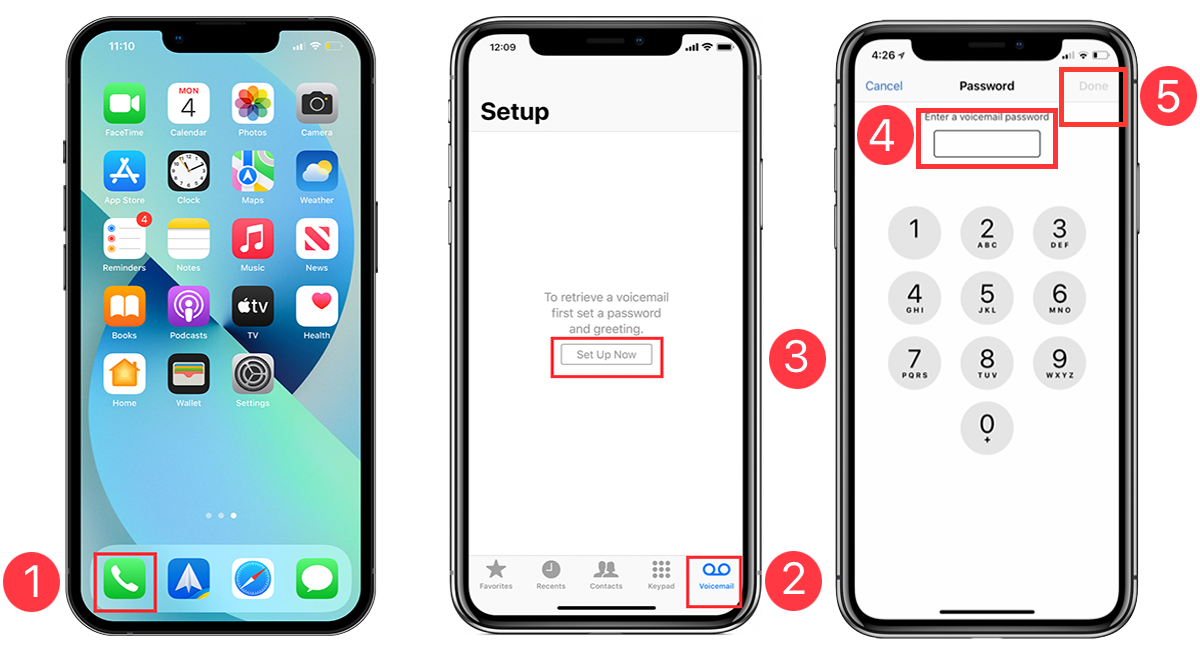
Step 2: In the voicemail screen, you'll find the 'Greeting' option. Tap it. (Note: If you don't see these options, first complete the voicemail setup on your iPhone.)
Step 3: Select Custom > Record to start recording the voicemail greeting on your iPhone.
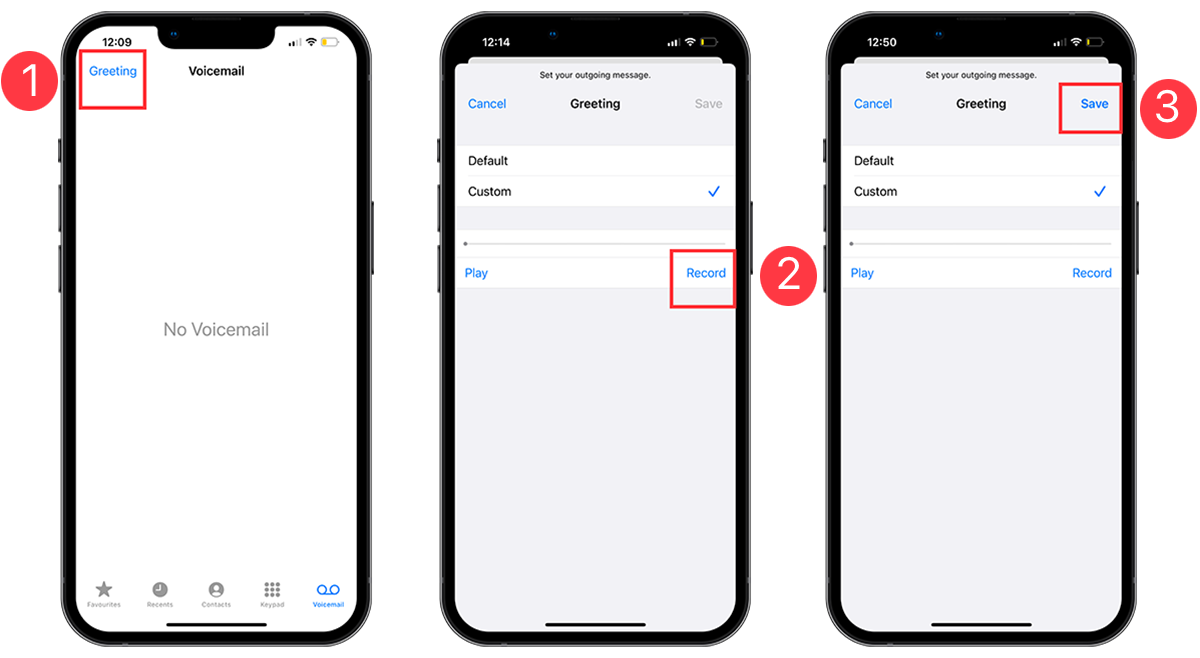
Step 4: Once you're done, select 'Stop' and 'Save' to save the custom voicemail greeting on your device.
You can follow the above steps again to change the voicemail greeting on your iPhone. Given the fact that iPhones have limited capacity, you'll have to save important voicemail messages to a third-party app or move them to a PC — and free up the space on your device.
How to Record a Voicemail Greeting on Android
Android is more fragmented than iPhone when it comes to voicemail management. Your experience will vary based on your carrier and your device manufacturer, but most mainstream Android phones give you at least two workable options.
Using Your Carrier's Built-In Visual Voicemail
On Samsung, Pixel, and most modern Android phones, the native Phone app includes a voicemail section managed directly by your carrier. Open the Phone app and look for a Voicemail tab or a voicemail icon, since the exact location varies slightly by manufacturer. From there you'll typically find a Settings or Greeting option that lets you record a new outgoing message.
On Samsung phones, this is usually found under Phone > More options (three dots) > Settings > Voicemail > Voicemail settings. On Pixel phones running the standard Google Phone app, go to Phone > More options > Settings > Voicemail > Advanced Settings, or look for a dedicated Greeting option if your carrier supports it.
The fastest way to track it down is to search "voicemail" in your Phone app's settings menu. If no voicemail option appears at all, your carrier may require you to dial in directly and record your greeting that way, which typically means calling your own number and pressing a key to reach the greeting options.
Using Google Voice on Android
If your carrier doesn't offer a solid visual voicemail experience, or you want more control over your setup, Google Voice is a capable alternative. Download the Google Voice app from the Play Store, then go to your profile icon > Settings > Voicemail > Voicemail greeting and tap Record a greeting.
Keep in mind that Google Voice requires a Google Voice number and is only available in only a few countries, including the US, Canada, the UK, Germany, France, Spain, and a small number of others. If you're outside those regions, this option won't be available to you.

Notta can record and convert your voicemails into text with 98.86% accuracy in minutes. Focus on conversations, not manual note-taking.
How to record a voicemail on PC
Notta takes the crown as one of the best voicemail recording apps for individuals and teams alike. It'll keep all your recorded files organized so you can listen to or share them with others. You would think the user interface might be a mess — but that's the opposite.
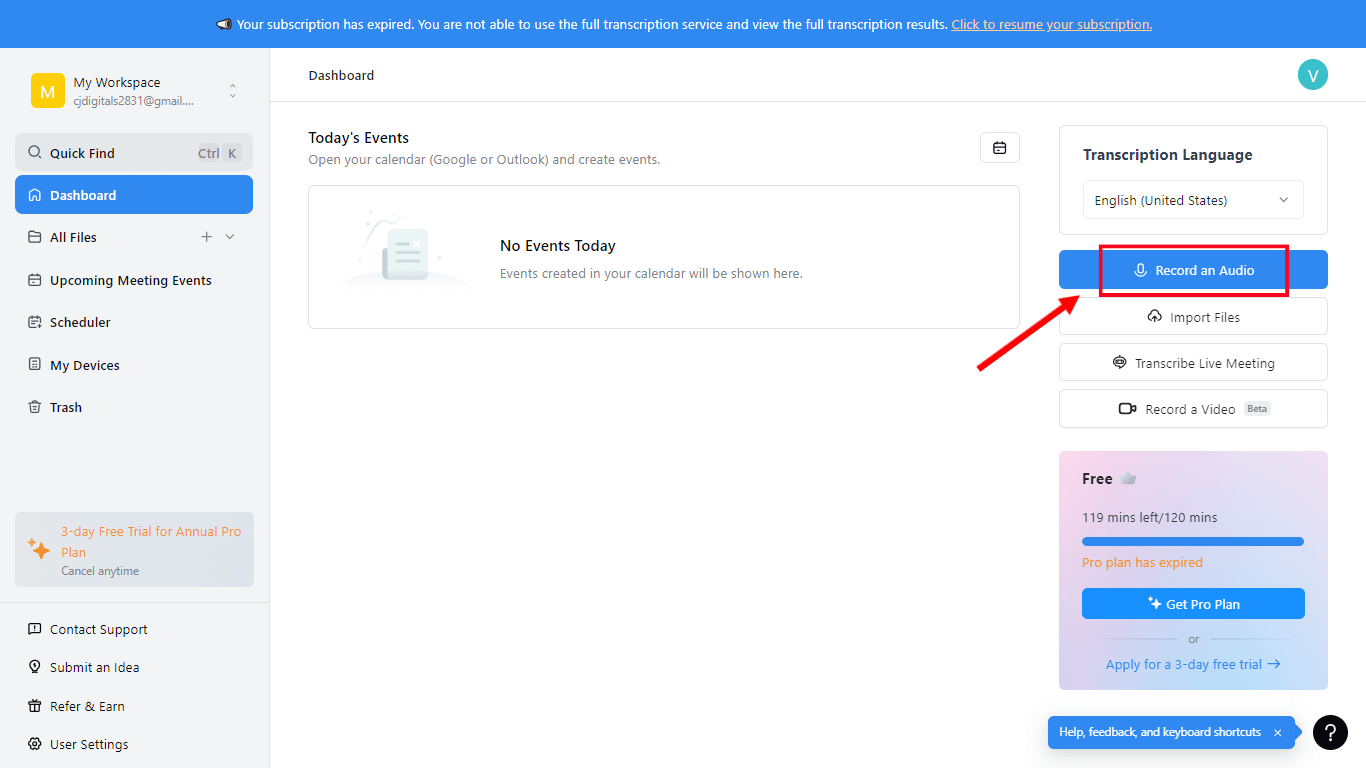
Notta keeps everything clean: there's a dashboard with simple navigation. If you want to record audio, video, or even a live meeting, click the options available in the right navigation panel. Here is a simple answer to how to record voicemail on a PC.
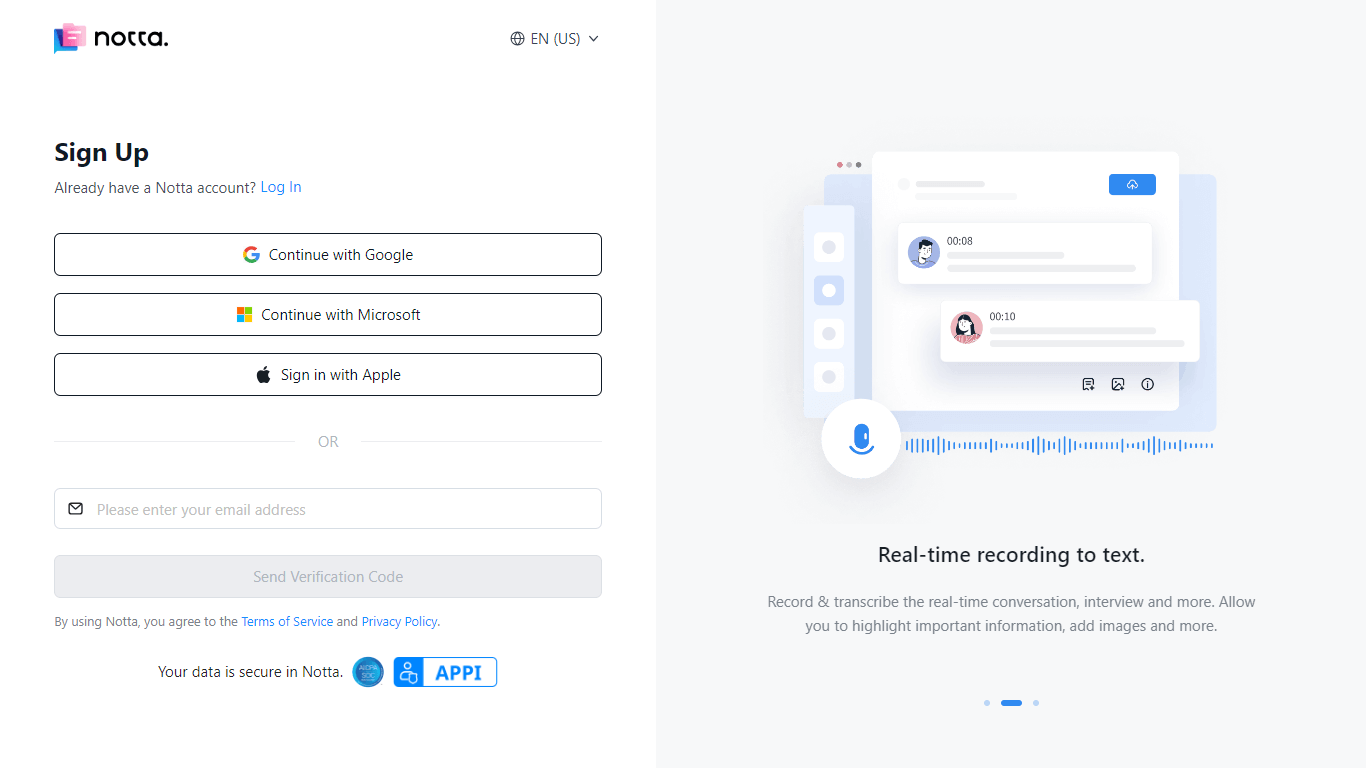
Step 1: Sign up for a free Notta account to record, transcribe, and even summarize audio and video files.
Step 2: Click 'Record an audio' to record a voicemail greeting using a microphone — and that too without any quality loss.
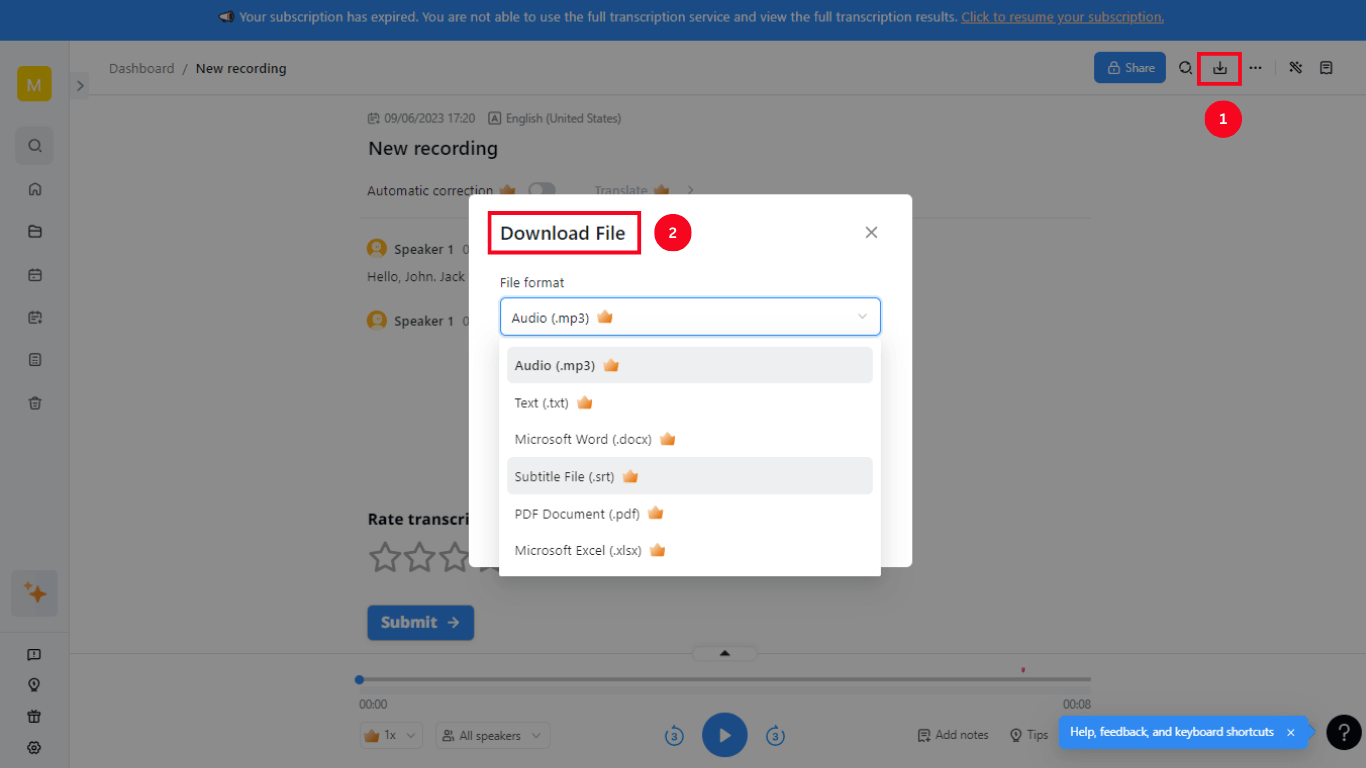
Step 3: Finally, select 'Download' to save the voicemails locally on the PC or use the ‘Share’ option to send them to third-party apps like Notion or Salesforce.
You can even export the voicemail in MP3 format and save the transcript in text formats like SRT, TXT, DOCX, PDF, and EXCEL.
Just because the voicemail greetings are currently stored in the mailbox, it does not mean they'll be there forever. In fact, voicemails are available only for a limited time and are automatically deleted when new messages arrive.
What's even worse is most devices — both Android and iPhone — do not allow you to export voicemail greetings and save them for later reference. That means you might need to record and save important voicemail greetings in a safe place (for example, your PC).
The Notta recording and transcribing tool is straightforward and easy to use. Its built-in automatic editing tool is a different story: There's a list of editing features that make your voicemail greeting look professional.
How to Save a Voicemail Someone Left You
This is the part most guides skip entirely. Saving a received voicemail is a separate task from setting up a greeting, and the steps depend heavily on which device you're using.
Saving a Received Voicemail on iPhone
iPhone's Visual Voicemail makes this easier than most people expect. Open the Phone app, tap Voicemail, and find the message you want to keep. Tap the message to expand it, then tap the Share icon (the box with an arrow pointing upward). iOS will show you options to save the file to your Files app, share it via AirDrop, send it through Messages, email it, or save it to iCloud Drive.
The voicemail exports as an .m4a audio file, which plays natively on any iPhone, Mac, or Windows machine. No third-party app is needed, there's no quality loss, and the file can go anywhere you need it.
On rare occasions, the Share icon won't appear for a specific voicemail. This usually means the carrier has disabled sharing for that message, which isn't common but does happen on certain network configurations.
Saving a Received Voicemail on Android
Android doesn't have a universal equivalent to iPhone's share-from-voicemail feature. Whether you can save a received voicemail depends almost entirely on your carrier and phone model.
If you use Google Voice, received voicemails are stored indefinitely in the app and can be downloaded from the Google Voice website on a computer. Log into voice.google.com, open the voicemail you want, and click the download icon to save it as an .mp3 file.
For carrier voicemail on Android phones without a built-in save option, screen recording is the most reliable workaround.
Using Screen Recording to Capture a Voicemail
Screen recording works as a practical fallback when native save options aren't available, and it works on both iPhone and Android.
On iPhone, first add Screen Recording to your Control Centre if it isn't already there by going to Settings > Control Centre > Screen Recording. Navigate to the voicemail you want to capture inside the Phone app. Pull down the Control Centre, tap the Screen Recording button to start, then play the voicemail. The recording captures both the screen and the audio. When the voicemail finishes, tap the red status bar at the top to stop recording. The video saves to your Camera Roll, and you can extract just the audio using GarageBand or a free online converter.
On Android, swipe down from the top of the screen and look for a Screen Recorder tile in your Quick Settings panel. Before you start, go into the screen recorder settings and enable microphone recording. Play the voicemail and stop the recording once it finishes. The saved video file will contain the voicemail audio.
The audio quality from screen recording is slightly lower than a direct file export since it captures whatever your speaker outputs. For basic reference purposes it works fine. For anything you need to archive at high quality, use the native share methods described above.
How to Re-Record or Change Your Voicemail Greeting
Changing your greeting uses the exact same steps as recording one for the first time. On iPhone, go to Phone > Voicemail > Greeting > Custom, tap Record, and when you save it the new recording replaces the old one automatically. On Android, follow the same path through your carrier's voicemail settings or the Google Voice app.
Something that confuses a lot of people: if you call a contact and hear your own old greeting playing back at you, it means that person's phone is forwarding calls to your number. Your greeting update hasn't failed. It's working correctly. To confirm your new greeting went through, call your own number from a different phone and listen to what plays.
If your carrier uses a dial-in voicemail system rather than an app, you can usually re-record by dialling your voicemail inbox and selecting the option for "Change greeting" or "Personal options" from the main menu.
What to Say in Your Voicemail Greeting
A voicemail greeting doesn't need to be elaborate, but a poorly recorded one creates a bad first impression, especially for professional calls. Here's what to include.
Start with your name, and if it's a work phone, your company name too. Callers need to know immediately that they've reached the right person. Follow that with a brief, honest reason you can't take the call. You don't need specifics, just enough context that the caller doesn't assume something is wrong. Then give a realistic timeframe for when you'll call back. Saying "I'll return calls within one business day" is far more credible and useful than "I'll get back to you as soon as possible."
End with a clear instruction. Tell the caller exactly what you want them to do, whether that's leaving a message, sending an email, or calling a specific alternative number. Without that direction, many callers simply hang up.
Keep the whole greeting under 20 to 30 seconds. Anything longer and people start hanging up before the beep. Speak clearly, at a comfortable pace, and record somewhere quiet. Background noise makes even a well-written greeting sound unprofessional.
A simple format that works in almost any context:
"Hi, you've reached [Name] at [Company]. I can't take your call right now, but leave me a message and I'll get back to you within [timeframe]. You can also reach me at [email or alternative number]."
Use our cutting-edge AI solution to take control of your tasks and optimize your time and focus.
FAQs
Can you have more than one voicemail greeting?
On iPhone, the native Phone app only supports one active voicemail greeting at a time. Google Voice is more flexible and lets you save multiple greetings, switching between them depending on the situation. You could have a standard greeting for regular hours and a separate one for when you're travelling or unavailable for an extended period. If you want to explore this further, you can save up to 10 different voicemail greetings using Google Voice.
How long can a voicemail message be on an iPhone?
The limit is set by your carrier rather than the iPhone itself. Most US carriers cap incoming voicemail messages at 3 minutes per message and allow up to 40 messages stored in your inbox at once. Once the inbox is full, new callers won't be able to leave a message until you delete some older ones.
How long does a voicemail stay before it gets deleted?
Most carriers auto-delete voicemails after 14 to 30 days, though some delete them sooner if your inbox fills up. If there's a message you need to keep, save it as soon as you can using the share method described above rather than leaving it to sit in your inbox.
Can you record a voicemail without a smartphone?
Yes. If you're using a landline or a desk phone, your service provider typically includes a dial-in voicemail system. You call a specific number, enter your PIN, and follow the recorded prompts to set up or re-record your greeting. The exact steps vary by provider, but the core process is the same: authenticate with your PIN, navigate to the greeting menu, and record.
Key takeaways
The best voicemail recorder app is the one that saves you time and streamlines the overall process. Instead of losing clients because of unattended calls, it might be time to switch to a voicemail recording and transcribing tool.
If you are tired of struggling with how to record voicemail greetings, I highly recommend checking the Notta recording tool. This speech-to-text tool can also allow recording with a microphone and webcam.
I really like how Notta makes it easy to record audio on a PC or phone and then turn it into text with far less effort. Plus, there's no signup fee, which makes Notta more competent in the market.

