How to Screen Record on Chromebook in 3 Steps (and Audio)
98% accurate, real-time transcription in just a few clicks. 58 languages and multiple platforms supported.
Yes, Chromebooks have built-in screen recording. No third-party software is required. If your Chromebook is running Chrome OS 89 or later, you can record your screen using the Screen Capture tool in Quick Settings or with a keyboard shortcut. Chrome OS 103 and above also includes the Screencast app, which adds annotation support and automatic transcription.
All three built-in methods support audio recording — you can capture your microphone, your device's internal audio, or both. This guide covers every method, including how to enable audio before you start recording.
How to screen record on Chromebook with the keyboard
The keyboard shortcut method is one great way to quickly record the screen you need — but if you want to customize the size of the screen while recording, you'll have to follow a few more steps.
Step 1: Press Ctrl + Shift + Show all Windows (the rectangle-shaped icon that is typically located on the right side of your Chromebook keyboard and has two lines in it).
Note: If you cannot find the 'Show all Windows' option on the Chromebook keyboard, press Ctrl + Shift + F5 to simply start the recording.
Step 2: In the menu generally located at the bottom of the toolbar, click the 'Screen Record' option.
Step 3: Choose how you want to record the screen: Full Screen, Partial Screen, or Window — and the screen recording will automatically begin.
Step 4: Once done, click the 'Stop Recording' icon to finish the ongoing screen recording.
Chrome OS saves the screen recording to your download folder by default. Also, it shows a notification after you've recorded the screen — click it to open the recording on your Chromebook.

Notta AI meeting assistant records, transcribes, and summarizes meetings so everyone can stay engaged without missing important details.
How to screen record on Chromebook with screen capture
One of the reasons screen recordings are so popular today is that they're easy to share with team members and show them how things work. Screen Capture is one of the default screen recording tools available on Chrome OS 89 or newer versions. Here's how to screen record on Chromebook with audio.
Step 1: Locate and click the clock icon at the lower-right corner of the Chromebook screen. This will quickly open the Quick Settings panel, where you can locate the 'Screen Capture' option.
If you cannot find the 'Screen Capture' tool directly, click the 'arrow' icon to expand the settings panel.
Step 2: Click the 'Video' icon at the bottom of the Chromebook screen to capture the screen recording.
Step 3: The 'Screen Capture' lets you record in different ways: Full Screen, Partial Screen, or a Specific Window.
Step 4: Click the 'Settings' option to modify the audio input, camera settings, and where to save the recording. If you want to record the screen with audio, turn on the microphone.
Step 5: Click anywhere on the screen, and the recording will start. Finally, select the red 'Stop' button to finish the ongoing screen recording.
How to screen record on Chromebook using Notta
When done right, screen recording makes it easy to show what's happening on the screen, including the movement of the cursor. Notta is a powerful recording and transcribing tool that can be used for anything from webinar presentations to tutorials and more.
At its most basic, Notta allows users to record their Chromebook, Windows, or Mac screen and even generate a transcript of the audio. As the video recording feature is still in its beta phase, you can record only up to 2 hours of video. Here's how to screen record on Chromebook with the help of Notta.
Step 1: Go to Notta's website and create a free account. Upon entering the Notta dashboard, locate and select the 'Record a Video' option.
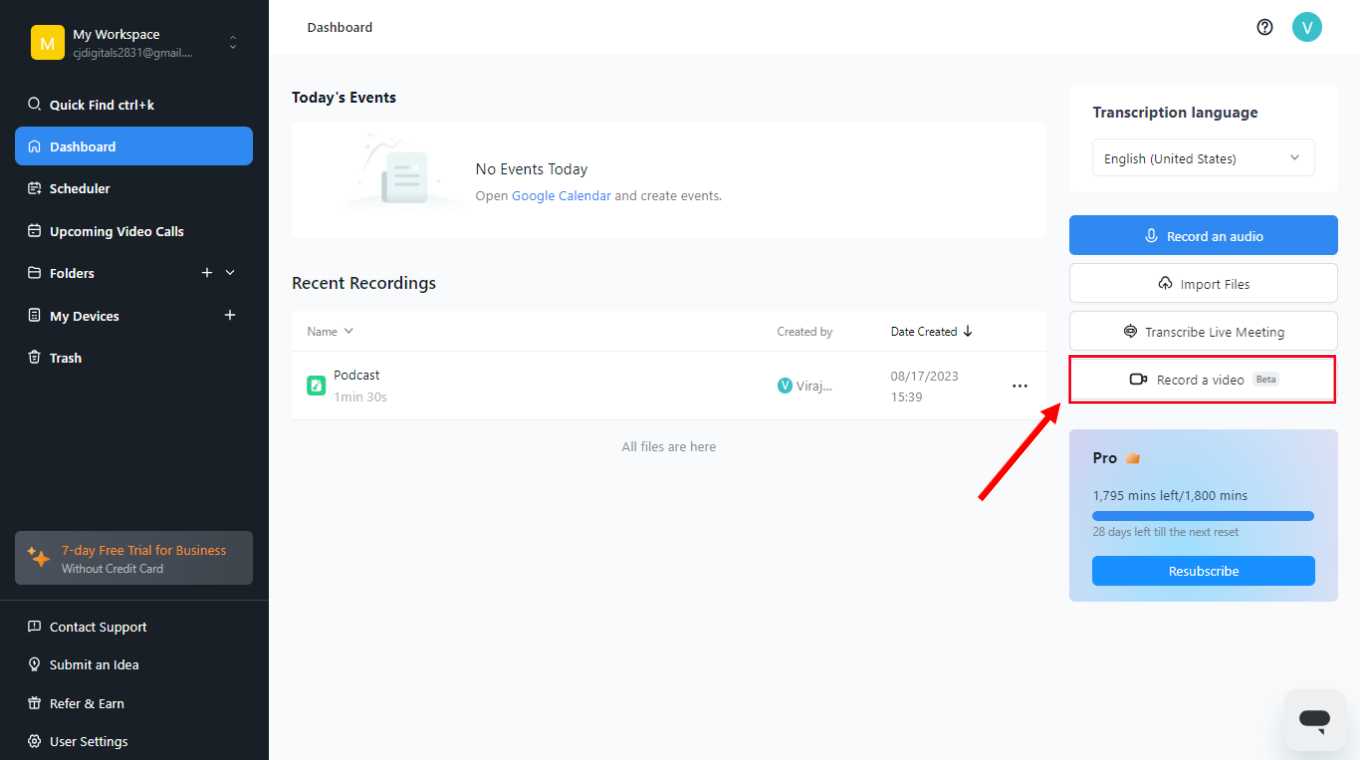
Step 2: You'll see three recording options: Screen Only, Camera Only, and Screen & Camera. To record the screen on Chromebook, click 'Screen Only' and then the blue 'Start Recording' button.
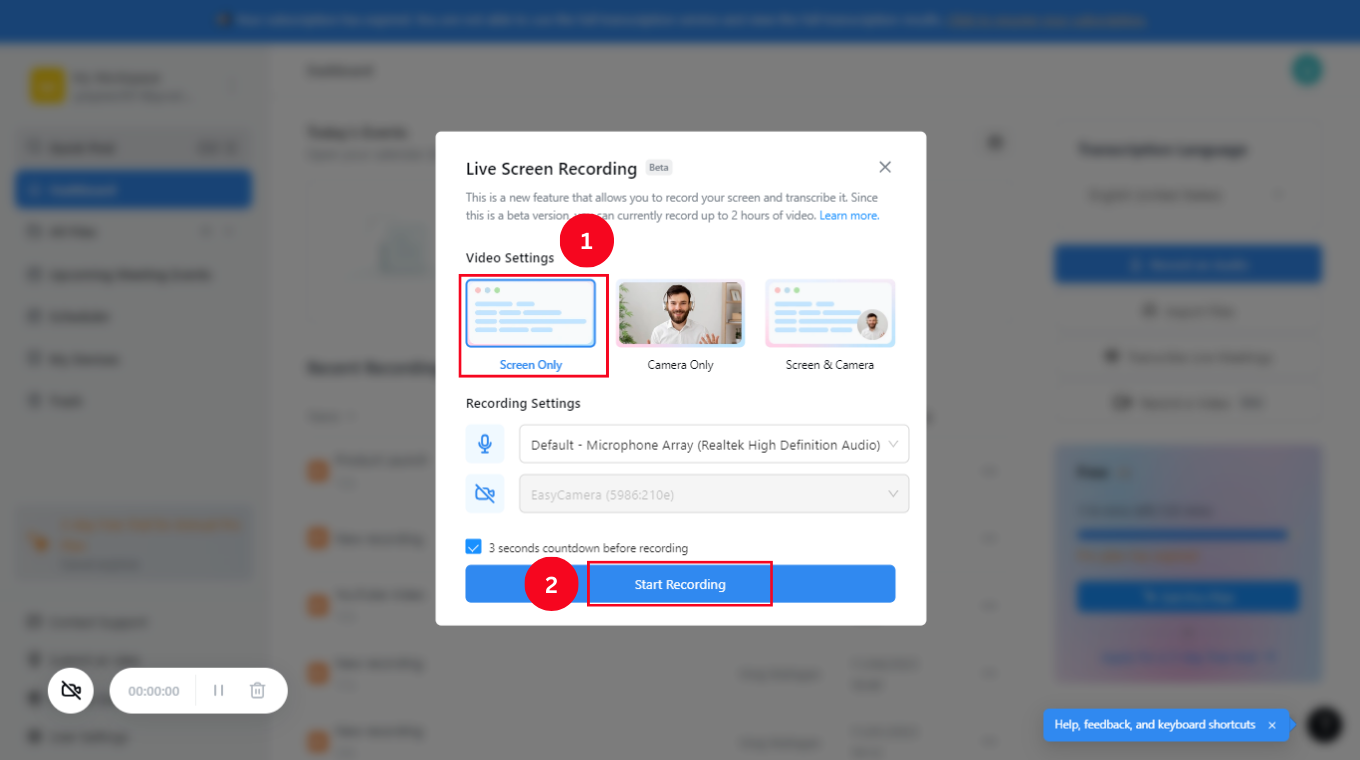
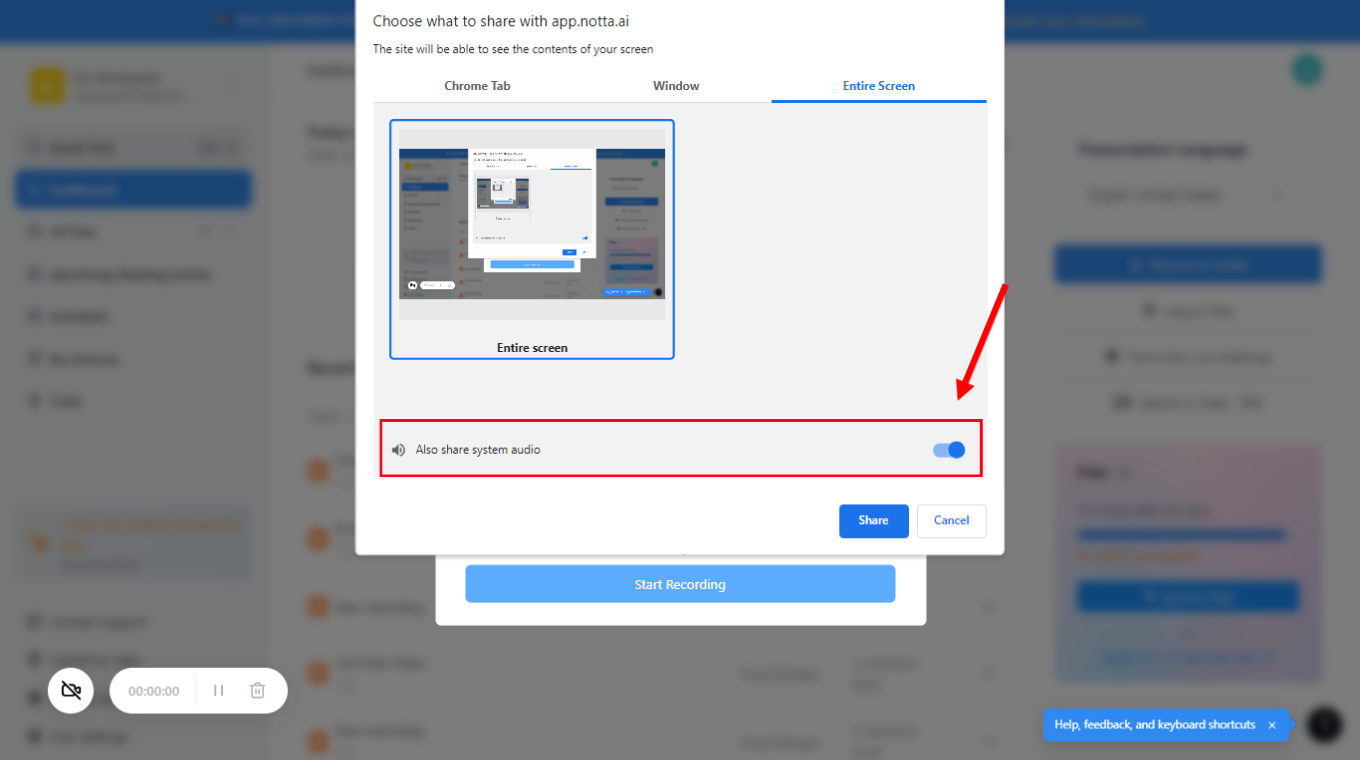
Step 3: Choose what you wish to record from the three options: Entire Screen, Chrome Tab, or Windows. Once done, click the blue 'Share' button, and Notta will start recording the Chromebook screen.
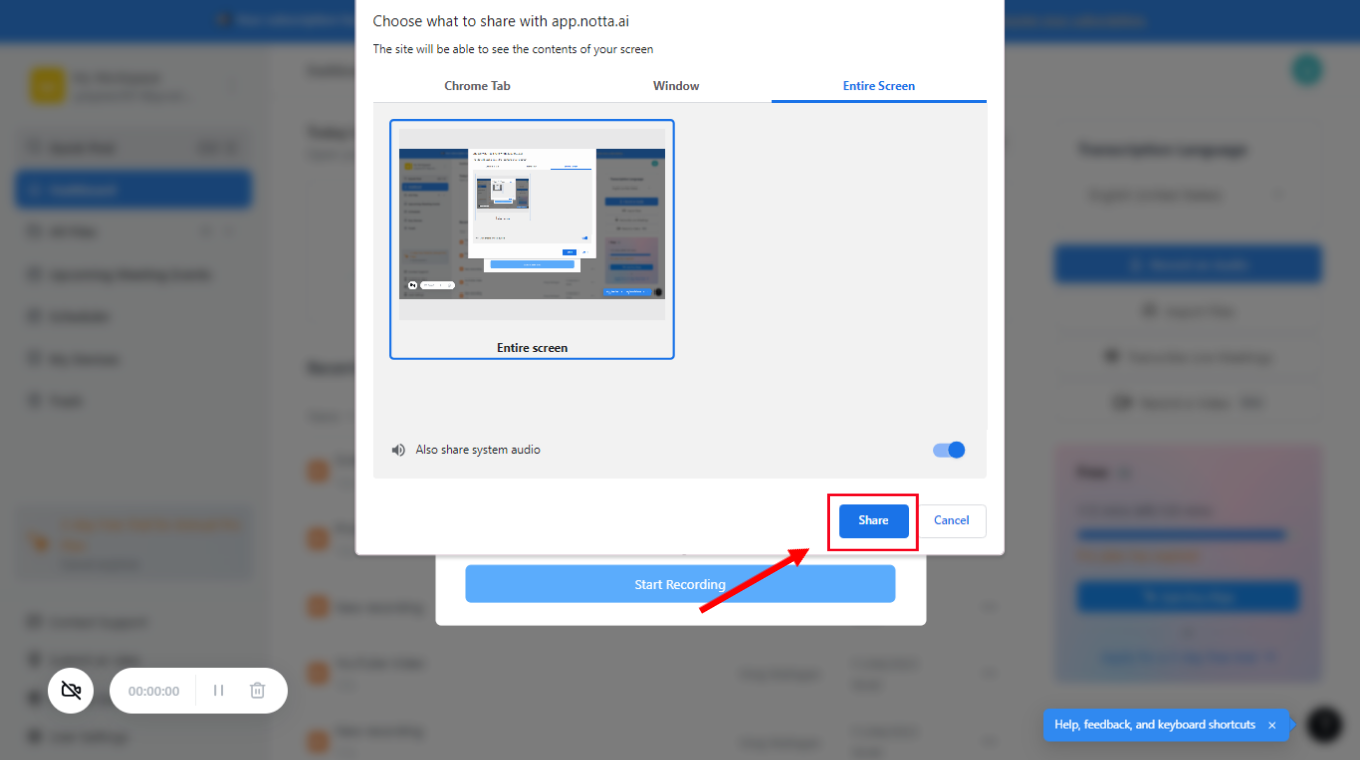
Step 4: Finally, click 'Stop sharing' to finish the recording and save it automatically on the Notta dashboard.
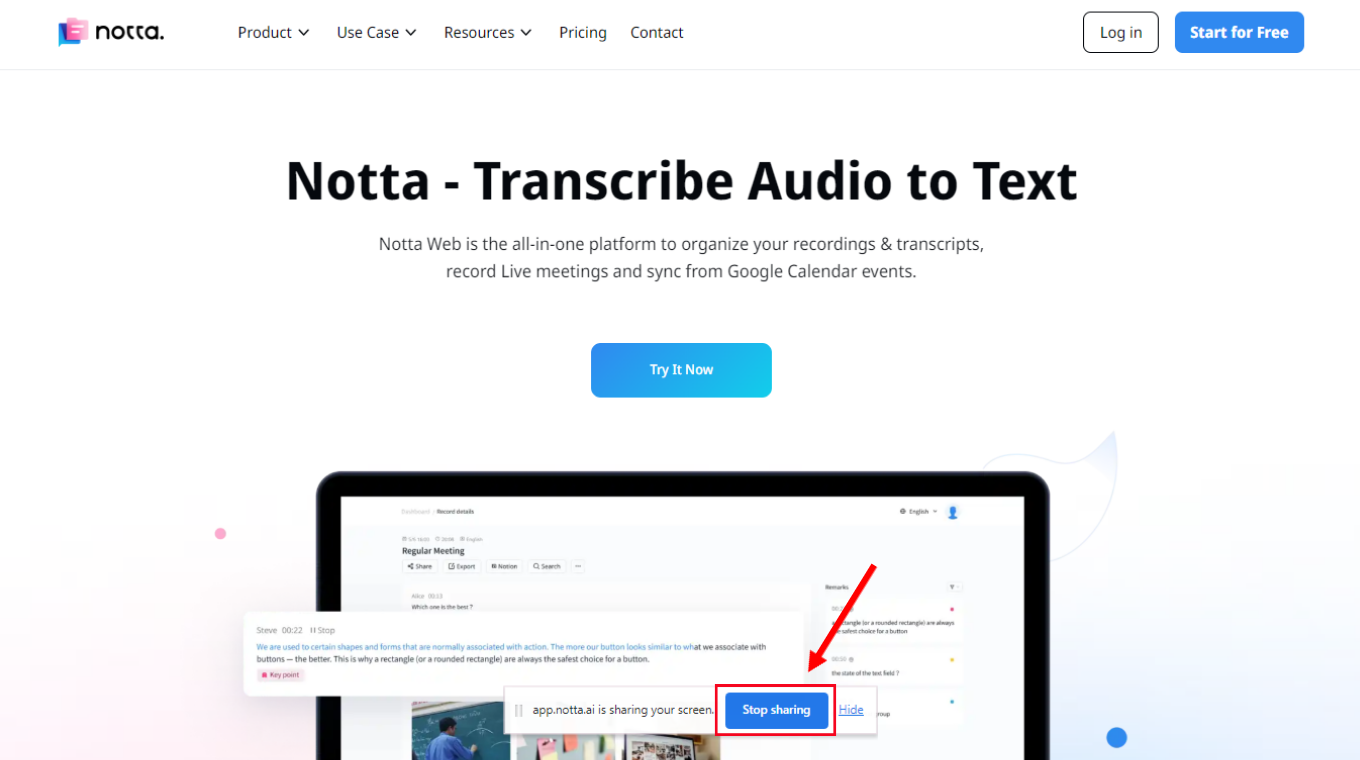
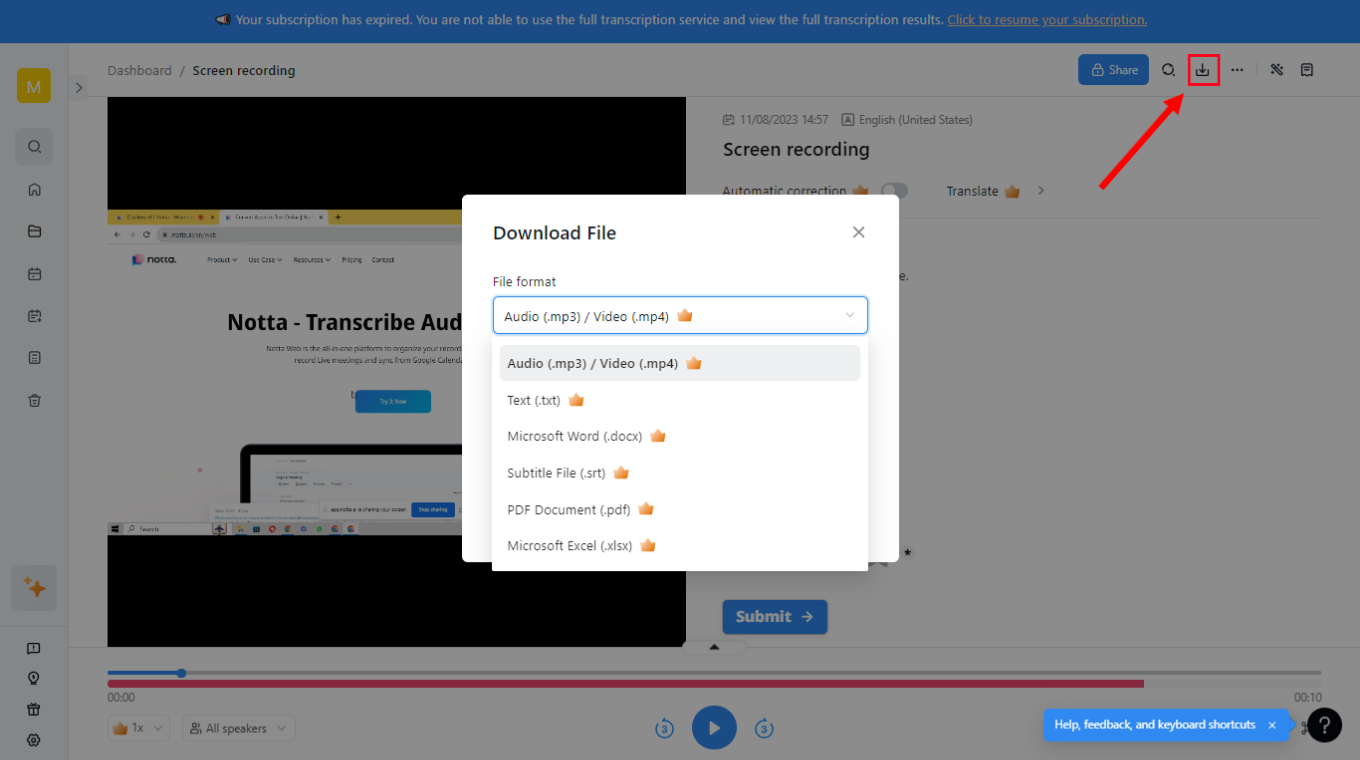
Step 5: Find and open the recently recorded Chromebook file to view the recording and transcript. Click 'Download' and choose how you want to save the file (MP3, MP4, TXT, DOCX, PDF, SRT, and EXCEL) to your Chromebook.
Notta is a powerful meeting assistant that can help transcribe virtual meetings in real time and convert meeting recordings in seconds.
How to screen record on Chromebook using Screencast
Chrome OS 103 or above versions also come with an additional tool called the Screencast app. It's free to use — and comes pre-installed on your Chromebook. It's also a handy tool if you want to record a screen with some quick annotations. Here are the steps on how to screen record on a Chromebook.
Step 1: First, open the app launcher and locate the 'Screencast' application. At the top left corner, you'll see the '+ New Screencast' option, and the toolbar will appear at the bottom of the display.
Step 2: Select how you want to record: Full Screen, Partial Area, or a Specific Window. Next, tap the 'Settings' icon to turn the 'Microphone' on to record audio.
Step 3: Once you've modified the settings, click the red 'Record' icon to start the screen recording on the Chromebook. You can even add annotations by simply selecting the 'Pen' icon.
Step 4: Finally, click the red 'Stop' button to finish the ongoing recording, and then save the recording to the Screencast app or share it directly via the link.
Recording Audio on a Chromebook: Microphone vs Internal Audio
Two audio options appear in the Screen Capture and Screencast settings and it's worth knowing the difference:
Microphone records sound through your Chromebook's built-in microphone or any connected external microphone. This captures your voice, room sounds, or anything you say during the recording. Enable this when you're narrating a tutorial or walkthrough.
Device Audio (also called internal audio or system audio) records audio that's playing through your Chromebook — video audio, music, notification sounds, and anything else coming through the speakers. Enable this when you want to capture the audio in a video you're recording on screen.
You can enable both at the same time to record both your microphone and the system audio simultaneously.
Note: The ability to record Device Audio depends on your Chrome OS version and Chromebook model. If the Device Audio option is greyed out or unavailable, your Chromebook may not support internal audio capture with the built-in tools. In that case, you can use a browser extension like Loom, which captures tab audio directly, or use the Tab sharing method which includes audio from the active tab.
Where Are Chromebook Screen Recordings Saved?
By default, screen recordings made with the Screen Capture tool or keyboard shortcut are saved to your Downloads folder as WEBM files.
Screencast recordings are saved to Google Drive in a folder called Screencast Recordings.
To change the default save location for Screen Capture recordings, open the Screen Capture settings before recording and click Select Folder.
A note on the WEBM format: WEBM is a web-optimised video format that plays fine in Chrome but may not be compatible with all video players or editing software. If you need an MP4 file, you can convert WEBM to MP4 using a free online converter or a tool like HandBrake after recording.
FAQs
How do I screen record on my Chromebook with audio?
If you want to screen record on a Chromebook with audio, Notta is a handy tool. Open the Notta Web App and select 'Record a Video' in the navigation panel. Select Screen Only > Start Recording, and choose what you want to record. Make sure to turn the toggle next to the 'Also share system audio' option, and Notta will begin recording the screen with sound.
How do I screen record on a Chromebook with audio?
Open the Screen Capture tool from Quick Settings or use the keyboard shortcut. Before starting the recording, click the Settings icon in the recording toolbar. Turn on Microphone to capture your voice, or turn on Device Audio to capture internal system sounds (or enable both). Then select your recording area and start recording.
How do I record internal audio (system sound) on a Chromebook?
In the Screen Capture or Screencast settings, enable the Device Audio toggle before starting your recording. This records audio playing through your Chromebook's speakers — such as video or music audio. If the option is greyed out, your Chromebook model may not support it; try using a browser extension like Loom or record via a Tab share to capture tab-specific audio.
How do I stop a screen recording on a Chromebook?
Click the red Stop button in the system tray at the bottom right of your screen. You can also stop recording instantly using the keyboard shortcut Search + Shift + X.
How do I screen record on a Chromebook without the Windows key?
If your Chromebook keyboard doesn't have a dedicated Show Windows key, use Ctrl + Shift + F5 to open the Screen Capture toolbar instead.
What format are Chromebook screen recordings saved in?
Built-in Screen Capture recordings are saved as WEBM files. If you need MP4 format for broader compatibility, convert the file using an online converter or a free tool like HandBrake. Screencast recordings are saved directly to Google Drive and can be accessed or downloaded from there.
Can I record my screen and webcam at the same time on a Chromebook?
Yes. In the Screen Capture or Screencast settings, enable the Front Camera toggle before you start recording. Your webcam feed will appear as a small overlay in the bottom-right corner of the video.
Key takeaways
If you don't want to remember keyboard shortcuts each time you record the screen on Chromebook, the Notta Web App makes more sense. It's one of the best answers to how to screen record on Chromebook with sound and comes with a free plan.
One feature that makes Notta a great tool is its transcription and summarization features. Once the screen video and audio are successfully recorded, Notta turns the voice into text and even generates a summary of the transcript — without any extra effort!

