
The Focused Note-Taking Process Explained (With Examples and Tips)
Saving time and effort with Notta, starting from today!
Focused note-taking is a five-phase learning process that transforms passive note-taking into active learning. Instead of simply recording information, you capture, process, connect, summarize, and apply notes through a systematic method that improves retention.
This article walks you through the focused note-taking process and shows how it turns notes into a valuable learning tool. You’ll learn how the process works, why it improves retention, and how to apply it across subjects, formats, and professional settings.
What Is the Focused Note-Taking Process?
The focused note-taking process is a learning method that helps you turn notes into a valuable learning tool. AVID (Advancement Via Individual Determination), a nonprofit educational organization founded in 1980, formalized the focused note-taking process as part of its framework for improving student engagement and academic success.
Instead of writing everything down and moving on, you work through five intentional phases that guide how you capture, process, reflect on, and use information. You start with a clear purpose, actively engage with the content, and revisit your notes to deepen understanding. This structure helps you focus on important information and the reason you are taking notes in the first place.
How Does the Focused Note-Taking Process Improve Retention?
Focused note-taking improves retention by emphasizing active engagement across five stages. In retrieval-practice research, Karpicke and Roediger (2008) found that students using active retrieval remembered 80% of the material one week later, compared to 36% with passive review, a 44% difference.
Focused note-taking supports the same learning effect. The five-phase process offers multiple encoding and retrieval opportunities, giving you deeper cognitive processing than single-pass note-taking.
What Are the 5 Phases of the Focused Note-Taking Process?
The focused note-taking process consists of five phases that transform passive note-taking into active learning. You start by Taking Notes with an Essential Question, then Processing Notes within 24 hours, Connecting Thinking through inquiry, Summarizing and Reflecting on meaning, and finally Applying Learning to real tasks. This AVID methodology increases retention compared to passive review through systematic engagement at multiple stages.
| Phase | Description |
|---|---|
| 1: Taking Notes | Create the notes. Select a note-taking format, set up the note page, ask the Essential Question, and take notes based on the information source (lecture, book, website, article, video, etc.). Select, paraphrase, and arrange information in a way that meets your note-taking objective. |
| 2: Processing Notes | Think about the notes. Revise notes by underlining, highlighting, circling, chunking, questioning, adding, or deleting information to organize main ideas and details. Evaluate the relative importance of information and ideas. |
| 3. Connecting Thinking | Think beyond the notes. Analyze the notes to make connections and deepen understanding by asking questions and adding your own thinking. Identify gaps or points of confusion and connect new learning to prior knowledge. |
| 4. Summarizing or Reflecting on Learning | Think about the notes as a whole. Combine the most important ideas and thinking to create a summary that captures the meaning and importance of the content. |
| 5. Applying Learning | Use the notes. Save and revisit notes as a resource or learning tool to apply or demonstrate what you’ve learned in discussions, writing, exams, or projects. |
Let's take a closer look at each phase.
Phase 1: Taking Notes
Start by clarifying your purpose for note-taking and defining the Essential Question, which guides what you pay attention to and what you leave out. Define the Essential Question by asking:
What problem does this concept solve, and how does it work?
How and why does this process matter in this context?
Example: How does photosynthesis convert light energy into chemical energy, and why is this process essential for life on Earth?
Next, you choose a note-taking format that fits both the content and your objective. Different formats support different types of information, which is why focused note-taking works across multiple structures, not just one. Some of the most common formats include:
Cornell notes for lecture-based or concept-heavy material
Outlining for clearly structured content with main points and subpoints
Mind mapping for visualizing relationships and connections
Charting for comparing categories, timelines, or variables
AI notetakers like Notta help you streamline Phase 1. Instead of trying to keep up with the speed of a lecture or meeting, you can use Notta to generate a transcript and recording. This lets you work from a primary document that you can read, pause, and revisit at your own pace. That frees you up to focus on understanding and organizing ideas instead of scrambling to write everything down.
Phase 2: Processing Notes
For the processing phase, it's essential to review your notes quickly. You should process your notes within 24 hours of taking them, while the material is still fresh.
Revise your notes by underlining, highlighting, circling, chunking information, and adding questions, clarifications, or missing details. Through this process, you identify main ideas and supporting details by organizing information.
Your notes will look messy during the processing phase, and that is normal (even encouraged). That messiness is part of the learning. As you revise, your notes will become more organized, getting you ready for deeper reflection in the later phases.
Phase 3: Connecting Thinking
In this phase, you return to your notes with curiosity and an eye for inquiry. Ask questions about what you wrote down, look for patterns, and connect new ideas to what you already know. This is where gaps and confusion surface, which is a good thing (even if it may not seem like it). It shows you which ideas you have not fully grasped yet, and where you can improve.
Connecting thinking adds your original thinking to the notes and helps learning make sense in context. For example, after taking notes on a historical event, you might ask how it connects to another period you studied or how similar patterns show up today.
Phase 4: Summarizing and Reflecting
Step back and look at your notes as a whole. This phase focuses on summarizing what you learned and reflecting on how that learning connects to your original purpose.
Summarizing means asking yourself, “What did I learn?” It involves:
Capturing the most important ideas from your notes
Summarizing information into a concise explanation
Answering the Essential Question in your own words
Reflecting means asking yourself, “How will this be useful?” and involves:
Considering how well your notes helped you answer the Essential Question
Identifying what you understand now that you did not before
Deciding where you need to go next with the material
Together, summarizing and reflecting give your notes direction and closure before moving into the final phase.
Phase 5: Applying Learning
The final phase closes the loop. Return to your notes to use them for their intended purpose, whether that means preparing for a debate, writing an assignment, studying for an exam, or completing a project.
This phase also feeds back into the first. Once you know what you’re using the information for, you can take better notes next time. For example, if you’re studying for an exam, you’ll focus on key terms and likely questions, but if you’re preparing a presentation, you’ll note the main ideas and supporting examples.
This feedback loop is what makes focused note-taking a portable skill you can use in any learning context.
Cornell Notes vs. Focused Note-Taking: What Is the Difference?
Cornell notes are a note-taking format, while focused note-taking is a learning process. The Cornell format structures how notes look on the page, while focused note-taking guides what you do before, during, and after taking notes. You can use focused note-taking with Cornell notes or with many other formats.
A 2025 study in the Asian-Pacific Journal of Second and Foreign Language Education found that students using the Cornell method improved reading comprehension more than students who used their regular method, with an average score of 20 points vs. 8 points. The format you use helps, but the process is what really moves the needle. Focused note-taking works with any format because you’re actively processing, questioning, and summarizing your notes.
Can You Use Notta with the Focused Note-taking Process?
Yes, Notta fits naturally into the focused note-taking process, especially in lectures or meetings where people share information verbally. It supports the early phases through recording and transcription, and strengthens later phases by making notes easier to review, process, and apply.
Record and Transcribe Lectures or Meetings
Notta records your lectures and meetings, whether they're online or in person, converting them into searchable transcripts with up to 98.86% accuracy. Instead of trying to write everything down at speaking speed, you can work from text that you review at your own pace. If you prefer listening over reading, you can also replay the recording and adjust the playback speed.
As a result, Notta directly supports Phase 1 of the focused note-taking process by creating a strong starting point you can turn into structured notes.
On top of that, Notta supports transcription in 58 languages and translation in 42 languages, which makes it easier to follow lectures and meetings that aren’t in your native language.
Use AI Summaries and Notion Integration to Process and Apply Notes
Once you have a transcript, Notta’s AI summary tool highlights the key points. You can use these summaries as a starting point for processing your notes or compare them against your own notes to check whether you missed anything important. This approach supports the processing and summarizing phases of focused note-taking without doing the thinking for you.
Notta integrates with other popular note-taking tools like Notion and OneNote to send transcripts and summaries directly into your workspace. From there, you can organize and rearrange your notes and attach them to specific projects or assignments, so it’s easier to apply what you’ve learned.
Which Note-taking Formats Work with the Focused Note-taking Process?
Four primary note-taking formats support the focused note-taking process, each optimized for different content types. Cornell notes work best for lectures and concept-heavy material with built-in review space. Outlining suits clearly structured content with hierarchical relationships. Mind mapping visualizes connections between ideas for creative subjects. Charting enables systematic comparison across categories, variables, or timelines.
Your format choice should match both your content type and learning objective.
Each format below includes a visual template showing how to structure your notes for optimal processing and review. These templates demonstrate the layout, key sections, and how to organize information within each format during Phase 1 of focused note-taking.
What is the Cornell Note-taking Format?
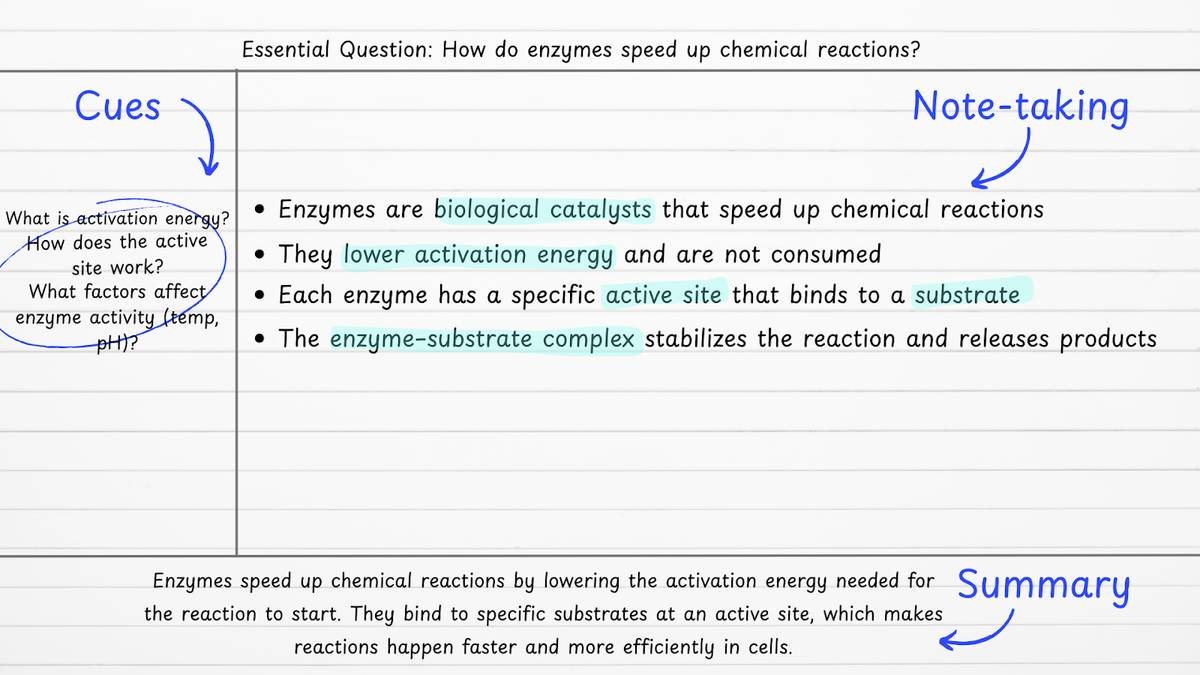
The Cornell format divides your page into sections for main notes, cues or questions, and a summary. It works well for verbal information and builds around key ideas. For example, in a biology lecture, your Essential Question might be How do enzymes speed up chemical reactions? You record explanations in the main notes, add review questions like What affects enzyme activity? in the cue column, and summarize the process at the bottom.
Cornell notes are especially effective for lectures, presentations, and reading-based subjects like biology, psychology, or economics. The main drawback is that it requires a linear content structure, so it can be restrictive with highly visual topics or fast-moving discussions where ideas jump around.
The template below shows a Cornell note setup with the cue column (left), main notes (right), and summary section (bottom), demonstrating how to structure information for the focused note-taking process.
When Should You Use the Outlining Format?
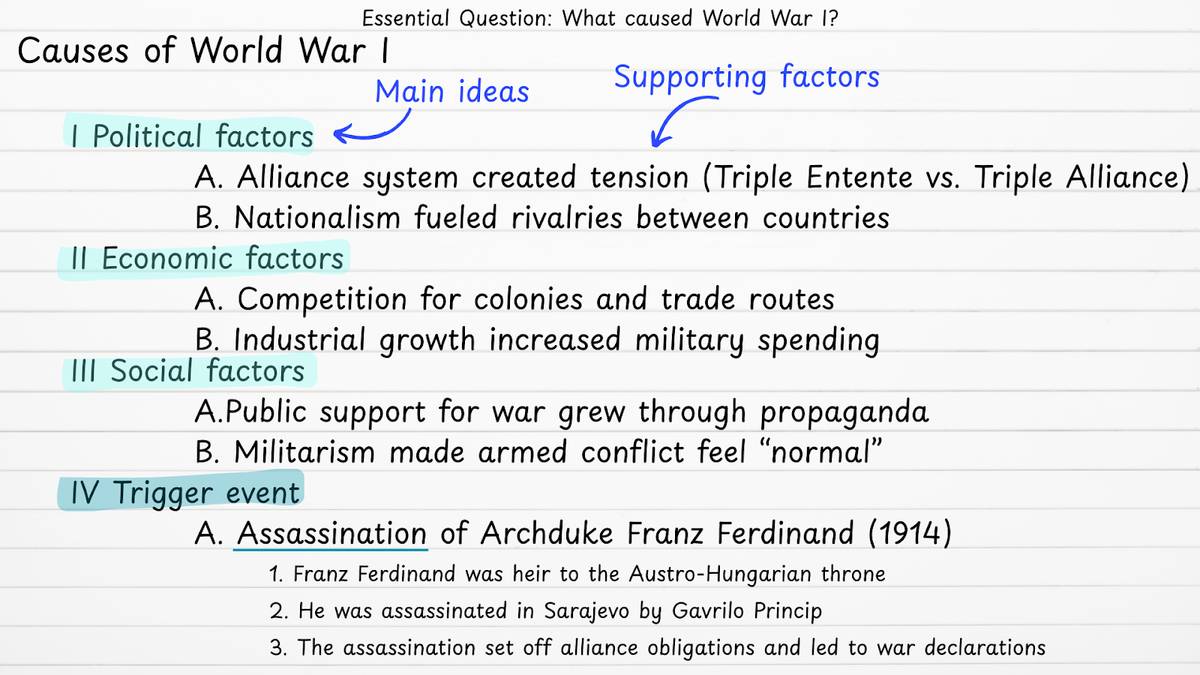
The outlining format organizes notes by hierarchy, with main ideas on the left and supporting details indented underneath. It works best when the material is clearly structured. For example, in a history class, you might outline causes of World War I, with political, economic, and social factors under each main heading.
Outlining is well-suited for textbooks, structured lectures, and theory-heavy subjects where the hierarchy of ideas is clear. The drawback is that it requires real-time judgment. If a lecture moves quickly or lacks a clear structure, outlining can become confusing or incomplete.
This outlining template shows hierarchical organization in action, with main topics on the left and supporting details indented underneath. Use the outlining method to efficiently capture structured information.
https://www.canva.com/design/DAG7yWB7Ydw/7JXJTbs-OmDXQ8e3_ml1RQ/edit?utm_content=DAG7yWB7Ydw&utm_campaign=designshare&utm_medium=link2&utm_source=sharebutton
When Should You Use the Mind Mapping Format?
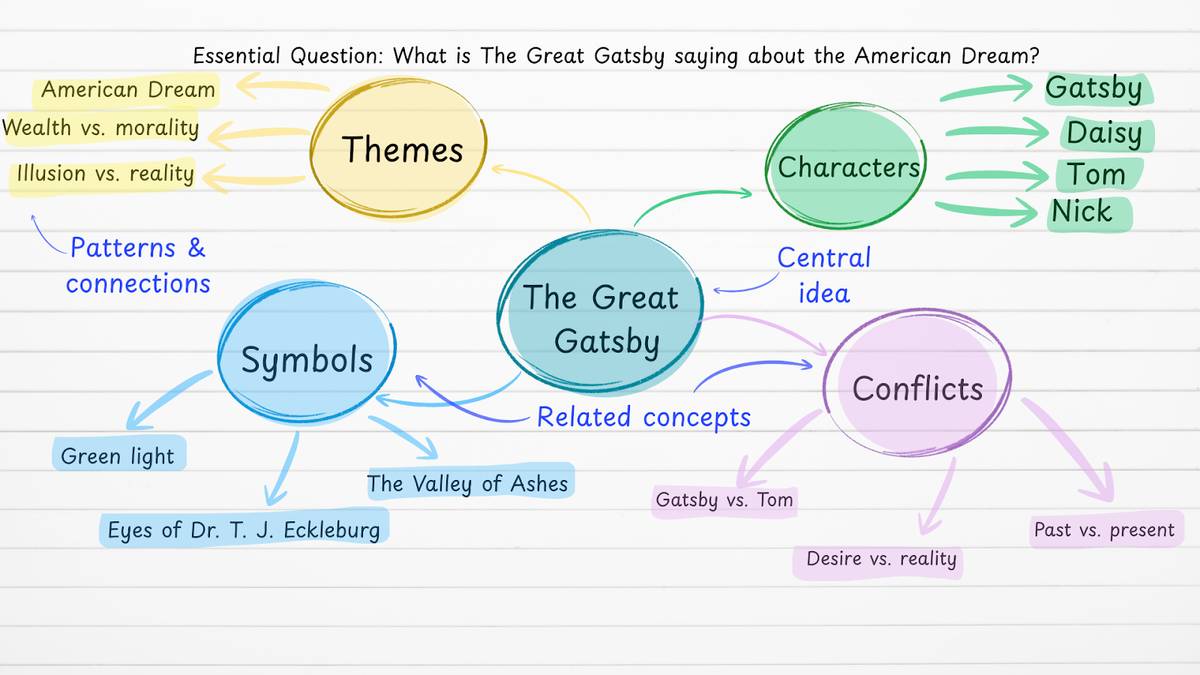
Mind mapping places a central idea in the middle of the page and branches related concepts outward. It emphasizes relationships over order. For example, in a literature class, you might place a novel in the center and branch out themes, characters, symbols, and conflicts, connecting them visually as patterns emerge.
This format works well for creative subjects, brainstorming, and conceptual learning, such as literature, psychology, or project planning. The downside is that mind maps are harder to review for detail-heavy exams and may feel overwhelming if you add too much information.
The mind mapping template places the central concept in the middle with related ideas branching outward, illustrating how to visualize relationships and connections between concepts.
https://www.canva.com/design/DAG7yWB7Ydw/7JXJTbs-OmDXQ8e3_ml1RQ/edit?utm_content=DAG7yWB7Ydw&utm_campaign=designshare&utm_medium=link2&utm_source=sharebutton
What is the Charting Format for Comparison?
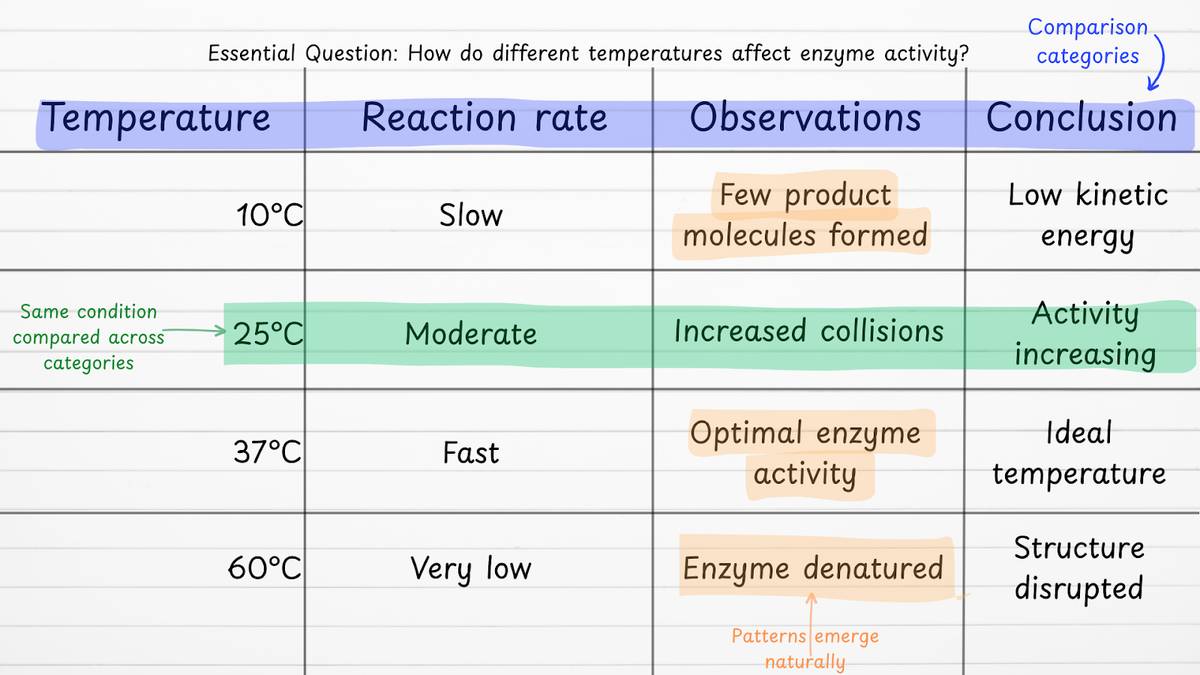
The charting format uses rows and columns to organize information by category. It is ideal for comparing variables side by side. For example, in a science class, you might compare experimental conditions by listing variables like temperature, reaction time, and results across different trials.
This charting template shows a comparison matrix with categories in columns and items in rows, demonstrating how to organize information for systematic side-by-side analysis.
https://www.canva.com/design/DAG7yWB7Ydw/7JXJTbs-OmDXQ8e3_ml1RQ/edit?utm_content=DAG7yWB7Ydw&utm_campaign=designshare&utm_medium=link2&utm_source=sharebutton
Charting works best for comparison-heavy subjects such as history, science labs, business case studies, or exam prep. The main limitation is that it requires you to identify categories in advance, which is difficult if you don’t understand the material yet.
What Are Some Examples of Focused Note-Taking by Subject?
Naturally, you shouldn't use the same approach for all subjects. The best way to apply the focused note-taking process depends on the type of information you are working with. Below are examples of how focused note-taking works across different subjects and settings.
How Do You Use Focused Note-taking in Mathematics and Science?
Focused note-taking in math and science classes requires a different approach than other subjects because you're often dealing with data, formulas, and diagrams.
Start by writing down the core concepts and formulas as your instructor explains them, but don't try to copy every single step of every example problem. Instead, focus on understanding the logic behind each step. When your professor solves a sample problem, note the strategy they're using and any common mistakes they mention (because those will probably show up on your exam).
A 2016 study by Jeffrey D. Wammes et al. on the drawing effect shows that drawing improves recall more than writing alone because it activates visual, motor, and meaning-based processing. To support this in your own focused note-taking:
Use visual cues to organize your notes.
Box important formulas so they stand out when you review later.
Draw quick diagrams or graphs as they're explained rather than trying to recreate perfect copies.
Strategies for Focused Note-Taking in Literature and History
Literature and history classes throw a lot of information at you, from dates and names to themes and interpretations. Focused note-taking helps you capture what matters without drowning in details.
In literature classes, concentrate on major themes, character motivations, and symbolic elements rather than plot summaries. Your professor assumes you've read the book, so they're highlighting deeper meanings that are worth remembering. Note specific quotes only when they directly support important interpretations. Remember: you can always find the full text later if you need to.
For history courses, focus on cause-and-effect relationships and connections between events rather than trying to write down every single date and name. Understanding why something happened and what it led to matters more than memorizing isolated facts. Pay special attention when your professor says phrases like "this led to" or "as a result" because they're showing you the throughlines and central themes that actually matter.
Create a simple system for marking different types of information. Underline main ideas, use stars for potential exam questions, and brackets for your own observations.
Can Professionals Use Focused Note-Taking in Business Meetings?
Professionals can use focused note-taking in business settings because it provides a structured way to process and apply information from meetings and conversations. An Essential Question focuses on outcomes, such as What decisions were made, and What are the next steps?
An AI notetaker like Notta will record your meetings and create a transcript, making it easy to review who said what, highlight decisions, and identify action items, owners, and deadlines. You can then connect those notes to ongoing projects or past discussions and summarize what matters most for next steps.
With an accurate record in place, you can focus on applying the information instead of reconstructing the conversation from memory. Since Notta handles the recording and transcription, you can focus on the later phases of focused note-taking: processing meaning, connecting information, and applying it to real work.
Advanced Tips for Mastering the Focused Note-Taking Process
Advanced strategies for focused note-taking help you get more value from the process over time. Techniques like spaced review, structured recall, and intentional reflection strengthen retention and make notes easier to apply in real situations. Combined with the core phases, these tips help you turn focused note-taking into a sustainable learning habit.
What is the 10-24-7 Rule in Note-taking?
The 10-24-7 rule is a review strategy designed to improve long-term retention. You review your notes once within 10 minutes of taking them, again within 24 hours, and a final time within 7 days. This spaced review reinforces learning and aligns naturally with the processing, summarizing, and applying phases of focused note-taking.
What are the 5 R's of Note-taking?
The 5 R’s of note-taking stand for Record, Reduce, Recite, Reflect, and Review. You first record information, then reduce it to key ideas, recite or recall it in your own words, reflect on meaning and connections, and review it over time. These steps closely mirror the focused note-taking process and emphasize active engagement over passive rereading.
How Can You Adapt Focused Note-Taking for Digital Tools?
You can adapt focused note-taking for digital tools by separating capture from processing. Use Notta to record and transcribe lectures or meetings, then import key sections into Notion or OneNote to organize and apply your notes using the remaining four phases. This workflow saves time, reduces cognitive load, and makes your notes searchable and shareable.
Try Notta today and make the most of your focused note-taking, from first capture to final review!
Frequently Asked Questions (FAQs)
How long should the processing phase take?
The processing phase takes 5-10 minutes for most note-taking sessions. This includes underlining key ideas, highlighting important concepts, adding questions, and identifying gaps in understanding. What matters most is actively engaging with notes while the material is fresh (within 24 hours), not the exact duration.
Is AVID focused note-taking only for high school students?
No, AVID focused note-taking is not only for high school students. You can use the process effectively in post-secondary education, professional training, and workplace settings where you need to review, apply, and revisit your notes over time.
What are the best apps for digital note-taking?
The best apps for digital note-taking are Notta, Notion, and OneNote because they support the full focused note-taking process. Notta records and transcribes with 98.86% accuracy across 58 languages and integrates directly with Notion and OneNote. You can organize, rearrange, and work with your notes visually, making it easier to process and apply what you learned.
How often should I review my focused notes?
You should review your focused notes soon after you take them and again before you need to use the information. Reviewing notes within 24 hours and revisiting them regularly improves retention and makes it easier to apply what you learned.

