
Bilingual Transcription Accuracy for Consultants: Names, Terms, and Decisions

For accurate bilingual client notes, start with the right language pair and permission to record. An AI tool such as Notta can transcribe both languages, provide translated text when needed, and help organize the main points. You get a useful starting point for your client follow-up without writing everything down yourself.
The goal is simple: stay focused on the client, then leave with notes that help you explain what they need, what was agreed, and what comes next.
What does accuracy mean for your client notes?
Accurate notes help you leave a bilingual meeting with the same understanding as your client. They explain the client's needs, the ideas discussed, and the next steps, even when people move between two languages. You can use them to prepare a follow-up without trying to piece the conversation together from memory.
That is where bilingual transcription helps. It keeps a written record of both spoken languages, while translation helps you understand the parts spoken in the other language. AI can then turn the long conversation into a shorter recap, so you have something useful to work with afterward.
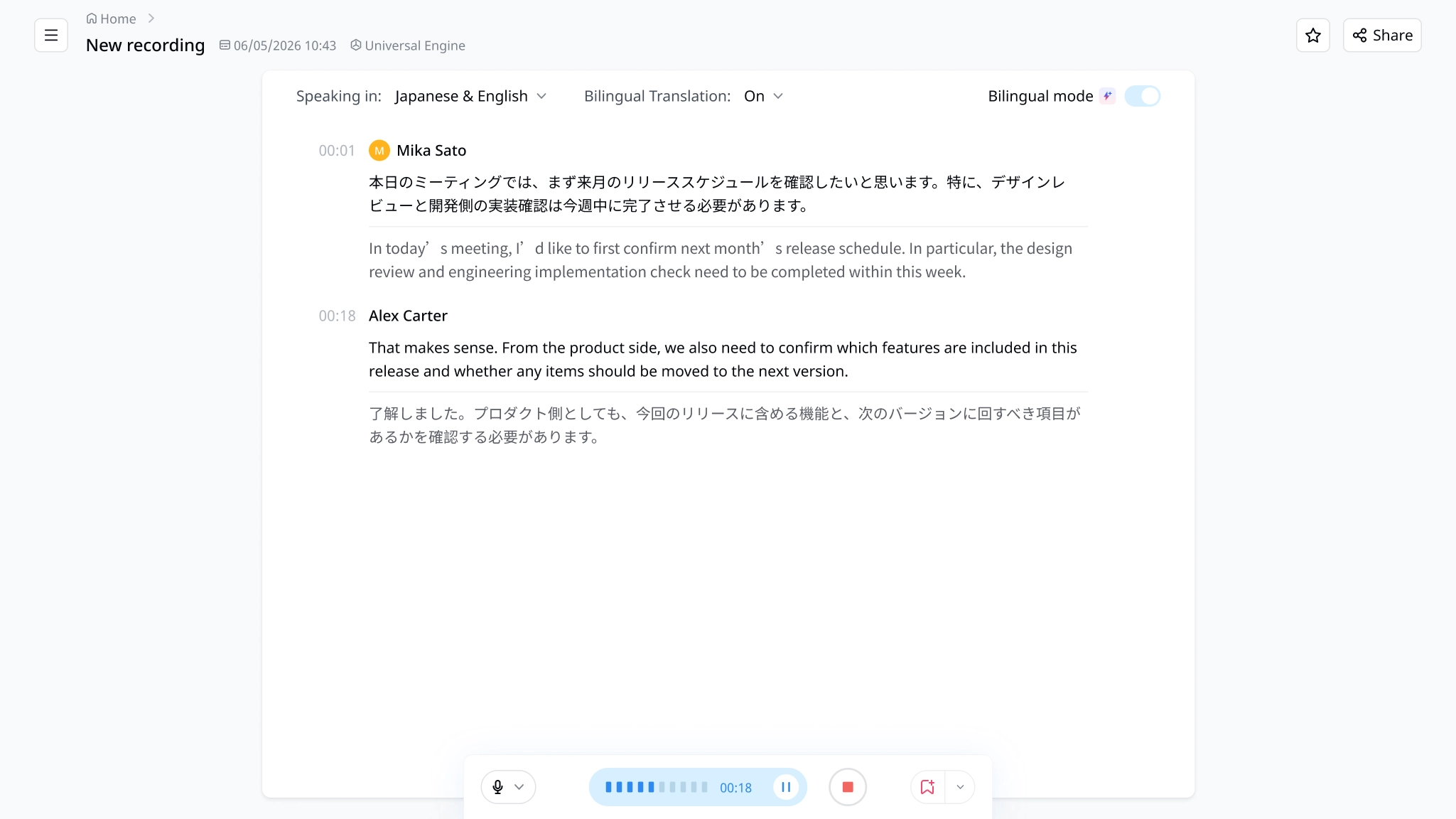
The important thing is that the recap keeps the client's meaning. A suggestion should still read as a suggestion, and a budget that needs approval should not become an agreed amount.
If you are still planning the conversation, the guide to bilingual client discovery meetings covers how to explore the client's needs.
Which details make bilingual client notes useful?
Useful bilingual notes bring together the people, terms, decisions, and explanations that matter for your client work. These are details you want AI to help organize, not a list of things you need to hunt down yourself.
| Detail | What it gives you | How AI can help |
|---|---|---|
| Names and speakers | A clearer picture of who raised an idea and who it affects. | Speaker labels, where available, help connect comments to participants. |
| Specialist terms and figures | The client's terminology and important numbers alongside their explanation. | You can ask AI to pull together relevant terms and figures from the meeting. |
| Language switching | One useful account of the conversation, rather than separate notes for each language. | Bilingual transcription captures both languages, and translated text makes contributions easier to follow. |
| Decisions and conditions | A recap that separates agreements from ideas and open questions. | Ask AI to organize the discussion into those groups and retain conditions mentioned by the client. |
| Quotes and examples | The client's own wording available alongside a short summary. | Ask for relevant transcript excerpts to accompany the recap. |
For example, you might ask AI to bring together everything the client said about pricing, including the figures, concerns, and questions still open. That is more useful than a broad summary that mentions pricing only in passing.
How can AI turn a bilingual call into useful client notes?
Let AI prepare the first recap, then ask for the details your follow-up needs. You do not have to start by rereading the whole transcript or collecting statements one by one.
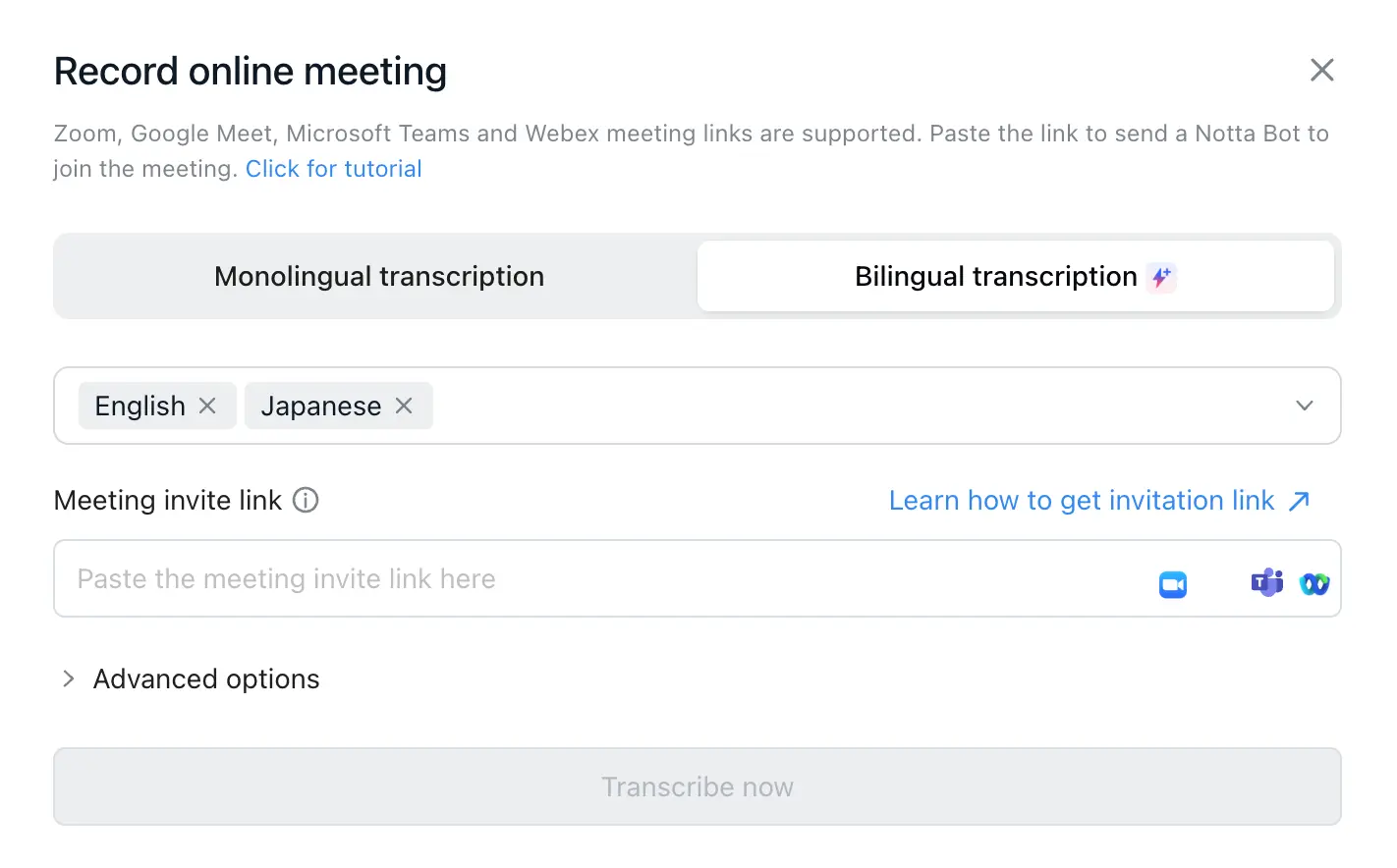
Capture both spoken languages. Choose the language pair before recording. If you also need help following the discussion, use bilingual translation for translated text during the call. Get the required consent and follow applicable recording laws and client policies.
Let AI organize the conversation. Generate a summary of the completed meeting with the main points, decisions, and action items. This gives you a short overview instead of a blank page or a long transcript to sort through.
Ask for the client details you need. Select the meeting in Notta Brain, which lets you ask questions about your meeting content. Request a recap that separates proposals, agreements, and open questions, with relevant figures and transcript passages.
Use the recap for your follow-up. Shape the draft for your client rather than writing it from scratch. If an important phrase or commitment is unclear, confirm that point before sending.
I would start with a focused request: "Summarize this client's requirements and agreed next steps. Keep ideas still under discussion separate, and include any budget conditions."
What should a useful AI recap keep?
In a fictional English-German call, a client discusses a possible pilot budget of up to €25,000. They then explain in German that it still needs finance approval.
A useful recap would say: "The client is considering a pilot budget of up to €25,000, subject to finance approval."
That keeps the figure and its condition together. It gives you a better starting point for the follow-up than simply saying the budget was approved.
How can different consultants benefit from bilingual meeting notes?
The benefit is having the meeting information organized around your work, rather than around the order or language in which people spoke. Here is what that can look like in different consulting fields.
Financial consultants
A bilingual budget discussion may spread figures, assumptions, and concerns across different parts of the call. AI can pull those points into a recap for your report, with the relevant currencies and explanations. You get a starting point for discussing the client's options without collecting every figure from the transcript yourself.
Business consultants
A client may describe a problem in English, then explain the team's day-to-day experience in Japanese. Bilingual notes keep both parts available. An AI recap can bring the problem, supporting examples, and proposed changes together, giving you a clearer basis for your recommendation without writing a second set of notes.
Medical consultants
For consultants working with healthcare organizations, a bilingual call might cover staffing, appointment scheduling, or service changes. AI can organize the concerns and next steps into an operations recap. That makes it easier to prepare an update while keeping the client's explanation of each service or process close at hand.
Legal consultants
Bilingual client discussions can involve several parties, proposals, and questions that remain open. An AI recap can organize those topics for your follow-up, while the transcript keeps the original wording available. You spend less effort rebuilding the conversation and have more room to focus on the client's situation.
For material that informs medical or legal advice, use appropriate professional review. AI-generated transcripts and notes are not a substitute for that advice or qualified interpretation when required.
How can Notta help you reuse bilingual meeting information?
Notta helps you move from a bilingual conversation to organized notes and a useful client follow-up. Its bilingual transcription records both spoken languages, so you can stay with the client instead of taking parallel notes.
You can choose two spoken languages from 23 options. For live recordings or online meetings recorded with a bot, turn on Bilingual Translation when you also want translated text during the discussion. This helps you follow contributions in the other language; it provides text, not a spoken interpreter.
Once the meeting is transcribed, Notta can summarize the main points, decisions, and action items. With Notta Brain, you can ask about the meeting and bring together the client details your follow-up needs. AI handles the first round of organizing, while you focus on what the conversation means for your work.
When a short recap needs to become a report or presentation, Notta Brain can help draft documents and slides from your selected meeting content. You can refine and export the result rather than assembling everything yourself.
You can also upload an existing recording for bilingual transcription. That option does not include live bilingual translation. AI works from the captured conversation, so clear audio helps; it cannot reliably recover a detail that was never recorded.
That gives you a path from the conversation to something useful for the client, rather than another transcript to organize. Explore Notta for consulting for more ways to use meeting information in client work.
Frequently asked questions
What should consultants check before using bilingual transcription or live translation?
Choose a tool that supports the two spoken languages and the output you need, whether that is a transcript, translated text, or a meeting recap. Get permission to record and follow your client's information-sharing policies. AI can then capture and organize the discussion, with a brief clarification if an important detail remains unclear.
Do I need to review every line of a bilingual transcript?
No, an AI summary can give you the main points without reading the entire transcript. You can then ask for specific client details or a follow-up draft. Keep the recording available for an unclear statement or exact quotation, rather than treating every line as an editing task. Medical or legal material may require appropriate professional review.
Can Notta transcribe and translate two languages together?
Yes, Notta can transcribe two selected spoken languages and provide optional bilingual translation during live recordings or bot-recorded online meetings.
Can I use translated text as a direct client quote?
AI can help find relevant transcript excerpts, but a direct quote needs to match the original meaning and be identified as translated when appropriate. For a routine client recap, a clear summary is often more useful than quoting every statement. Follow any quotation permissions required for your engagement.
How accurate is bilingual transcription for consulting meetings?
Accuracy varies with the languages, audio quality, and terminology in the conversation. Clear audio and the right language settings give AI a better starting point. Tools such as Notta can help turn that record into useful notes, but neither transcription nor translation is guaranteed error-free. Clarify an important uncertainty rather than checking every sentence.
