
13 Top Otter.ai Alternatives & Competitors to Try in 2026

Thomas Boldt
If Otter.ai isn't quite fitting your day, I'd start with what you want to do differently. Do you need to capture phone calls as well as online meetings? Edit an interview into a video? Or turn a conversation into a report you can send to a client?
Those are different jobs, and the best Otter.ai alternative depends on which one matters to you. Notta is where I'd start for conversations across different devices, live bilingual transcription and useful work after the meeting. Descript makes more sense for media editing, while Rev and HappyScribe give you human transcription or proofreading options.
Below, I'll walk you through 13 tools and the situations where I'd choose each one.
Otter.ai competitor breakdown
Use this table to narrow the list, then head to the profiles that match your work. Prices below are in US dollars unless marked otherwise. Annual prices are monthly equivalents paid yearly.
| Tool | Best fit | Main workflow | Relevant starting price |
|---|---|---|---|
| Notta | Meetings across devices and work after the call | Software recording, Memo, live bilingual text and Brain deliverables | Free software plan; Pro $8.17/month annually or $13.49 monthly |
| Descript | Podcasts, videos and interview clips | Edit audio or video by editing its transcript | Free; Hobbyist $16/person/month annually or $24 monthly |
| HappyScribe | Transcripts and subtitles with a human-review option | Meeting recording, uploads and subtitle editing | Free; Basic $8.50/month annually or $17 monthly |
| Rev | Interview and evidence review | AI or human transcription, clips and cross-file analysis | Free; AI $0.25/minute; human from $1.99/minute |
| Sonix | A searchable recording archive | Uploads, subtitles and AI analysis; live meeting bot on Pro | $10/audio hour; live meeting capture on Pro at $80/month |
| Amberscript | Research interviews and subtitle projects | Uploads with AI or human transcription | AI credits from €10/audio hour; Starter €19/month |
| tl;dv | Patterns across customer conversations | Meeting recording, cross-meeting questions and recurring reports | Free; paid team plans available |
| Fireflies | AI help while a meeting is happening | Live Assist, meeting notes and connected team workflows | Free; Pro $10/seat/month annually or $18 monthly |
| Grain | Sharing the customer's own words | Recording, highlight clips and CRM follow-up | Free; Pro $15/seat/month annually |
| Dialpad | Business phone calls and communication | Calling, messaging, meetings and AI recaps | Connect Standard $15/user/month annually or $27 monthly |
| Avoma | Sales teams managing calls and follow-up | Meeting notes, CRM updates and paid sales analysis | 14-day trial; Startup $19/recorder/month annually or $29 monthly |
| Tactiq | A written meeting record without saved audio | Live browser transcription and AI follow-up | Free; Pro $8/user/month annually |
| Sembly | Consulting and agency client work | Client workspaces, meeting analysis and editable deliverables | Free trial; Basic $10/user/month annually |
Why you might need an alternative to Otter
Otter already records meetings, creates summaries and lets you ask questions about past conversations. A useful reason to switch is a specific gap in your workflow, such as:
- You need a different language experience. Otter transcribes six languages and can handle French and English together. You may need another language pair or translated text while people speak, rather than asking Chat to translate afterwards.
- You want a dedicated recorder. If you take phone calls and meet clients in person, you may prefer a physical recorder such as Notta Memo alongside your software.
- Your recording is becoming published content. Transcript-based media editing, subtitles and human proofreading can matter more than another meeting summary.
- Your team needs a particular handoff. Look at what reaches your CRM, client workspace or team chat, and whether you can edit the result before sharing it.
I'd stay with Otter if your team already uses it comfortably and its supported languages cover your meetings. You can record with a meeting bot or without one on desktop, get summaries, and ask questions across meetings. Where Otter Work is available, it can also create Word documents and PowerPoint presentations. You don't need to switch just to get AI summaries or a desktop recorder.
For a closer look, read our Otter.ai review. If cost is your main concern, the Otter.ai pricing guide compares its plans in more detail.
13 best Otter.ai competitors
1. Notta: Best for capturing conversations and finishing follow-up work
Notta is where I'd start if your conversations move between online meetings, phone calls and face-to-face discussions. You can keep those recordings together, find what was said and turn the useful parts into work you can share.
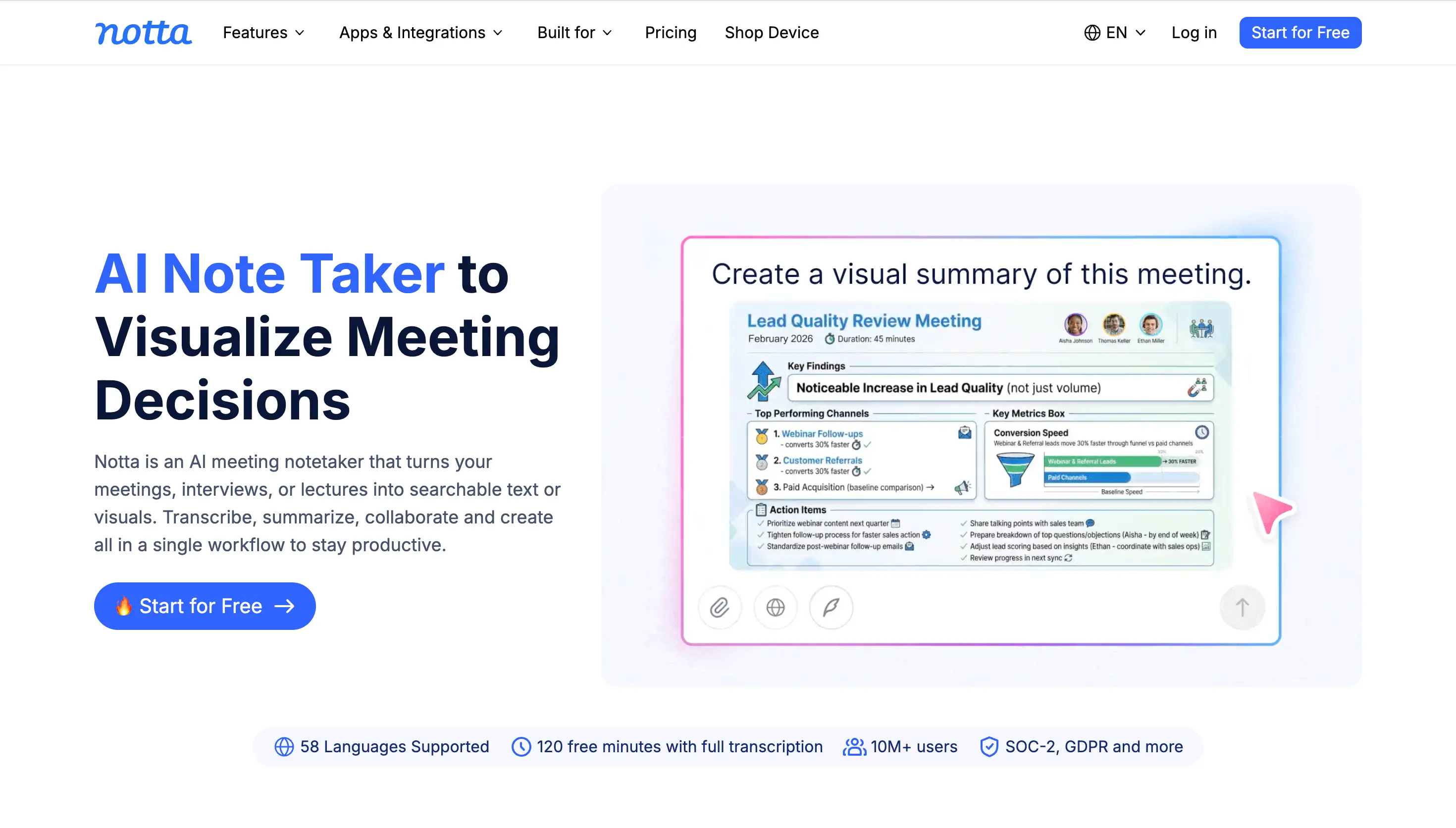
For online meetings, you can use a meeting bot or record through the desktop app. There are also web, mobile, Apple Watch, Chrome extension and screen-recording options. The bot can automatically join scheduled Zoom, Google Meet and Microsoft Teams calls. You can import existing recordings and supported links too.
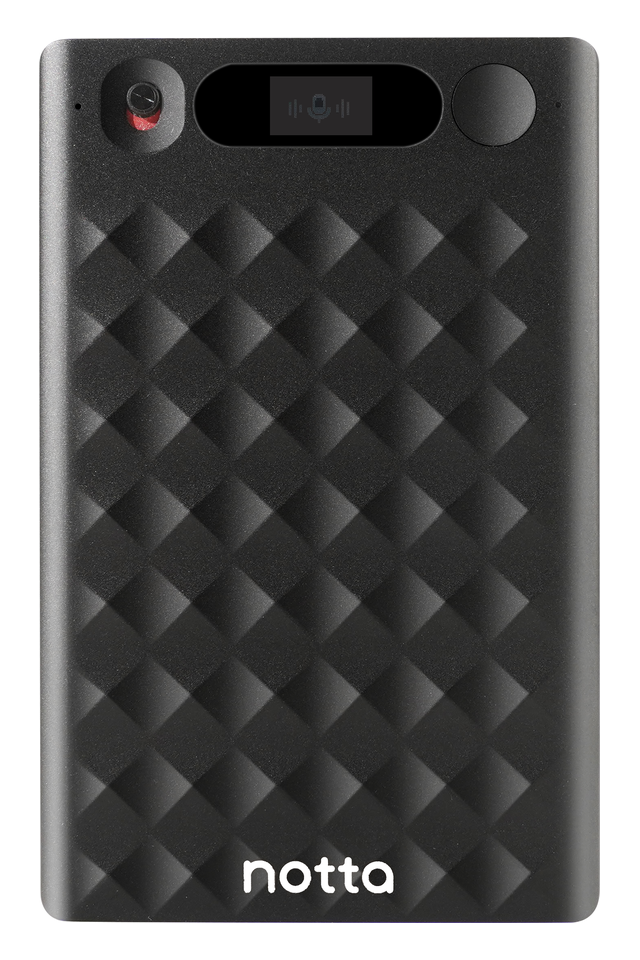
Notta Memo is the dedicated recorder I'd consider for phone calls and in-person meetings. Connect it to the mobile app for live transcription and translation, or record without a connection and sync the audio later.
The next step is where Notta Brain becomes useful. Say you've finished a client call and need a project update. You can bring the meeting together with a brief, spreadsheet or image, then ask Brain for a report or PowerPoint presentation. You can edit the output, save it to Google Drive or share it in Slack. It also creates Word documents, Excel spreadsheets and infographics.
For conversations in two languages, live bilingual transcription puts both spoken languages into text as people talk. Live translation shows translated text during the conversation, so you can follow along without waiting for a translated recap.
Useful features
- Capture online meetings, phone calls and face-to-face conversations through software, Apple Watch and Memo.
- Combine meeting content with other files in Brain to create editable documents, PowerPoint presentations and visual summaries.
- Use live bilingual transcription and live translated text, with transcription across 58 languages overall.
If you need to keep a desktop recording and its transcript on your computer, Pro's Privacy Mode provides local transcription after you download the model.
Pricing: The Free plan includes 120 transcription minutes per month, with up to three minutes transcribed per recording. Pro costs $13.49 monthly or $8.17 per month billed annually. Memo is purchased separately. Brain includes a free monthly credit allowance, with Brain Pro available for more use.
For a direct comparison, see Notta vs. Otter.ai.
2. Descript: Best for turning interviews into videos and podcasts
Descript is the one I'd look at when your interview or meeting recording is going to become a podcast, video, or set of clips. You edit the transcript, and those changes update the audio or video. That makes it useful when you want to do something with the recording beyond keeping meeting notes.
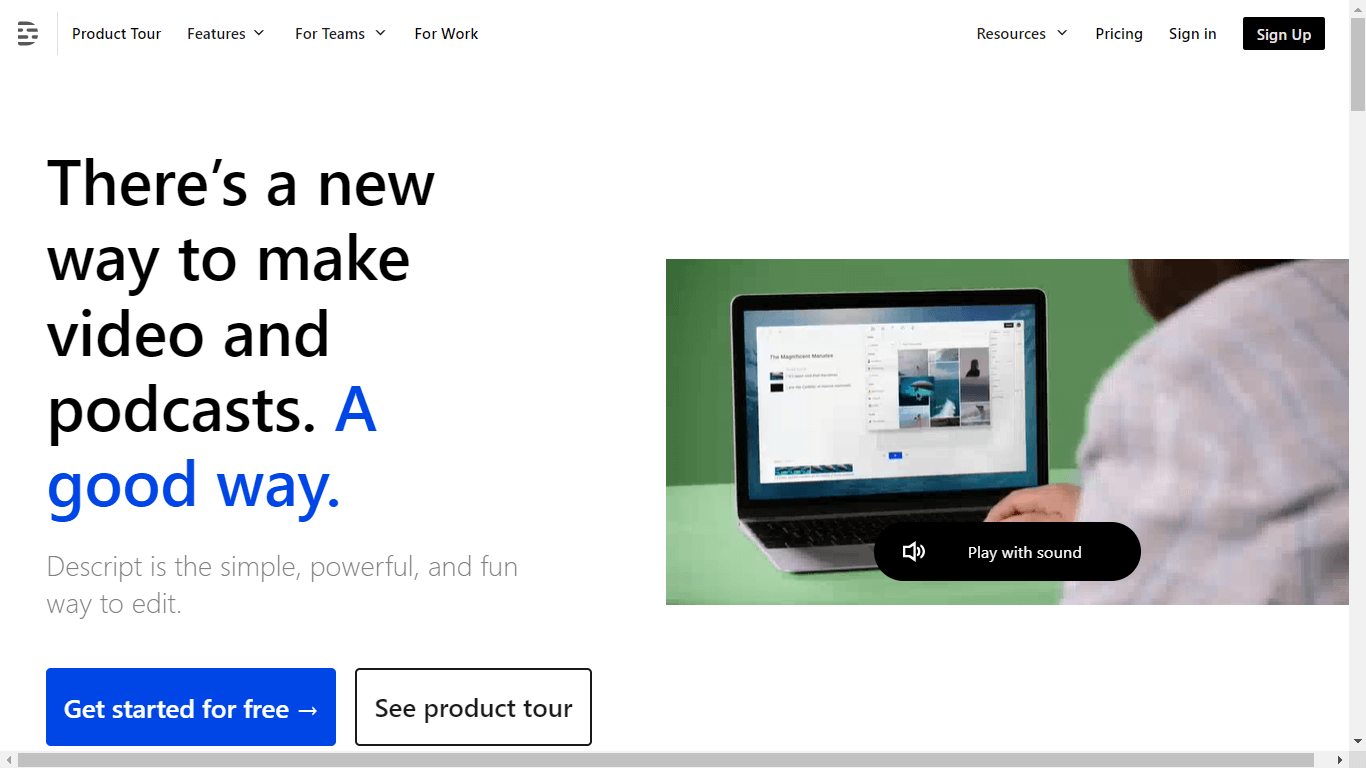
You can record remote interviews with Rooms or bring in existing files. Automatic speaker detection helps you label the participants, while the editing tools let you rearrange a conversation and remove sections you don't need.
Useful features
- Edit audio and video by changing the transcript.
- Clean up filler words and improve sound with Studio Sound.
- Create captioned clips and use Underlord to help edit your content.
Pricing: Free plan with one media hour per month. Hobbyist starts at $16 per person per month billed annually, or $24 with monthly billing.
For a closer comparison, read Otter.ai vs. Descript.
3. HappyScribe: Best for meeting notes and subtitle production
HappyScribe is worth a look if you need meeting notes, interview transcripts, and subtitles from the same service. Its notetaker can join Zoom, Google Meet, and Microsoft Teams calls. You can also record conversations with the mobile app or upload files you already have.
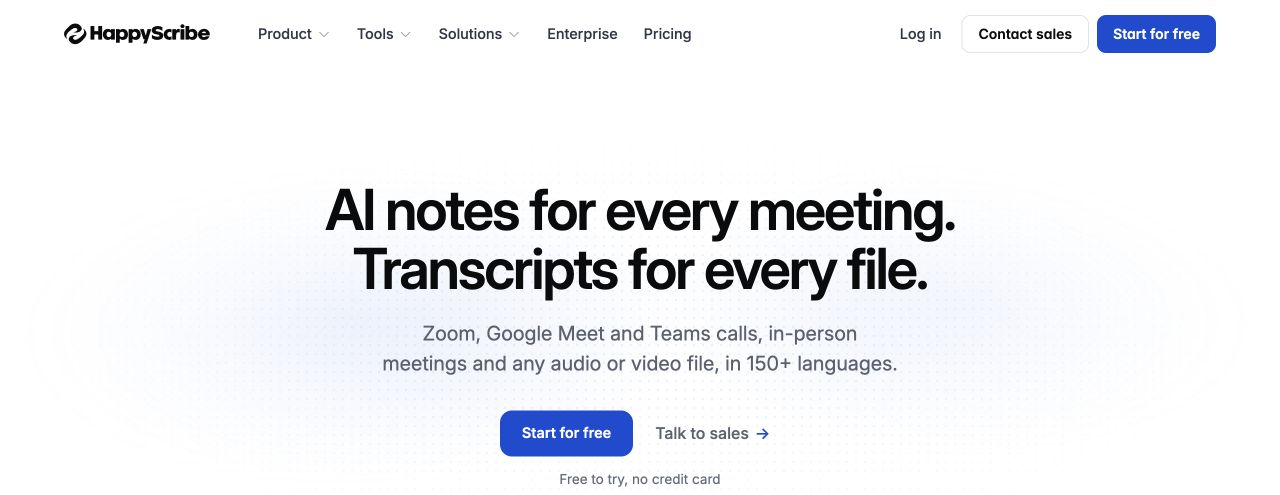
I'd consider it when your next step is publishing an interview or preparing a captioned video for a client. You can work with the AI transcript yourself or pay for human proofreading where the project calls for it. That gives you a choice between handling the editing in your team and ordering a reviewed version.
Useful features
- Edit transcripts and subtitles in a shared workspace.
- Ask AI Chat questions about your files and draft recaps.
- Order human proofreading, transcription, and subtitle services.
Pricing: Free plan available. Basic starts at $8.50 per month billed annually, or $17 monthly. Human proofreading starts at $2 per minute.
See Happy Scribe vs. Otter.ai for a direct comparison.
4. Rev: Best for reviewing interviews and evidence
Rev suits you when a transcript is part of a larger interview, reporting, or evidence review project. You can record on your phone, upload existing files, and work through the recording alongside the text. Speaker labels, bookmarks, and highlights help you organize the passages you want to revisit.
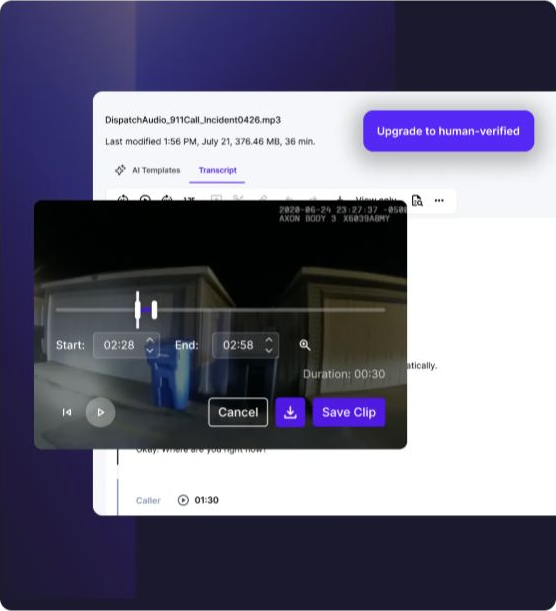
I'd consider Rev when the option to order human transcription matters to the project. You can choose AI transcription for an editable record, or pay for a human-reviewed transcript. Its broader review tools also help you work across several files rather than treating every recording as a separate job.
Useful features
- Search transcripts and review passages against the recording.
- Create clips from important audio or video moments.
- Use AI to analyze multiple files and find relevant information.
Pricing: Free plan available. AI transcription costs $0.25 per minute; human transcription starts at $1.99 per minute. Essentials costs $29.99 per seat monthly, or $25.49 per month billed annually.
Our Otter.ai vs. Rev comparison looks at the two approaches side by side.
5. Sonix: Best for organizing a transcript and subtitle library
Sonix makes sense if you have interviews, training sessions, and videos scattered across different projects. You can bring those recordings into a searchable library, edit the transcripts, and turn them into subtitles or translated text.
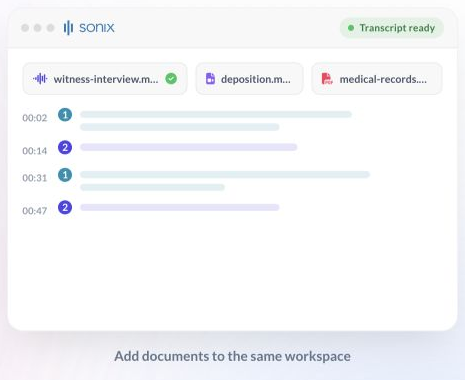
I'd look at Sonix when you want to revisit earlier recordings and reuse what was said. With a subscription, AI Workspaces also lets you ask questions across files and look for recurring topics.
Sonix can capture live Zoom, Google Meet, and Microsoft Teams calls through its meeting bot, including Spanish and English together. That feature comes with Pro and Enterprise, so Pro is the relevant starting point if you want Sonix to join your calls.
Useful features
- Search and edit transcripts with speaker labels and timestamps.
- Export subtitle files or add captions to video.
- Analyze recordings together in AI Workspaces.
Pricing: Pay as you go costs $10 per audio hour. Core costs $25 monthly with five hours; Pro costs $80 monthly and includes live meeting capture.
6. Amberscript: Best for multilingual research transcripts and subtitles
Amberscript is a good fit for recorded research interviews, lectures, and subtitle projects when you want a choice of AI or human transcription. Upload your recording, review the text in the browser editor, and export it for the research or production tools you already use.
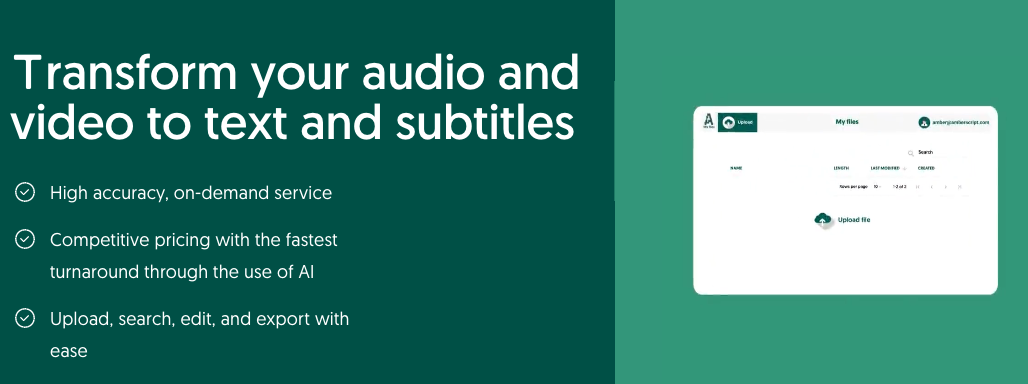
I'd consider it for a team that wants EU file storage and a human-review option within its transcription process. You can add names and specialist terms to a dictionary, then use the editor to correct the transcript while checking the recording.
Useful features
- Add a custom dictionary for names and specialist vocabulary.
- Review transcripts with automatic speaker labels.
- Order human transcription, subtitles, and translated subtitles.
Pricing: A 10-minute AI trial is available. One-off credits start at €10 per audio hour. Starter costs €19 monthly for five hours, and human transcription starts at €1.85 per minute.
7. tl;dv: Best for recurring reports across meetings
I'd look at tl;dv when you need to spot patterns across customer calls. You can compare discussions, find recurring questions, and have reports sent to your inbox. That's useful for a sales manager reviewing demos or a researcher bringing several interviews together.
It records Zoom, Google Meet, and Microsoft Teams calls, with a desktop option for recording audio without a bot. Business is the plan to consider if unlimited cross-meeting analysis and recurring reports are central to your work.
Useful features
- Ask questions across meetings to find common needs, objections, or decisions.
- Turn important moments into clips you can share with colleagues.
- Send notes and insights to your CRM, Notion, and other connected tools.
Pricing: A Free plan is available. Pro, Business, and Enterprise add more AI and team features. Check tl;dv's pricing for the plan that covers your reporting needs.
8. Fireflies: Best for AI help during meetings
Fireflies is worth considering if you want help while the call is still happening. Its Live Assist panel lets you follow the transcript, review AI notes, and ask AskFred questions during a meeting.
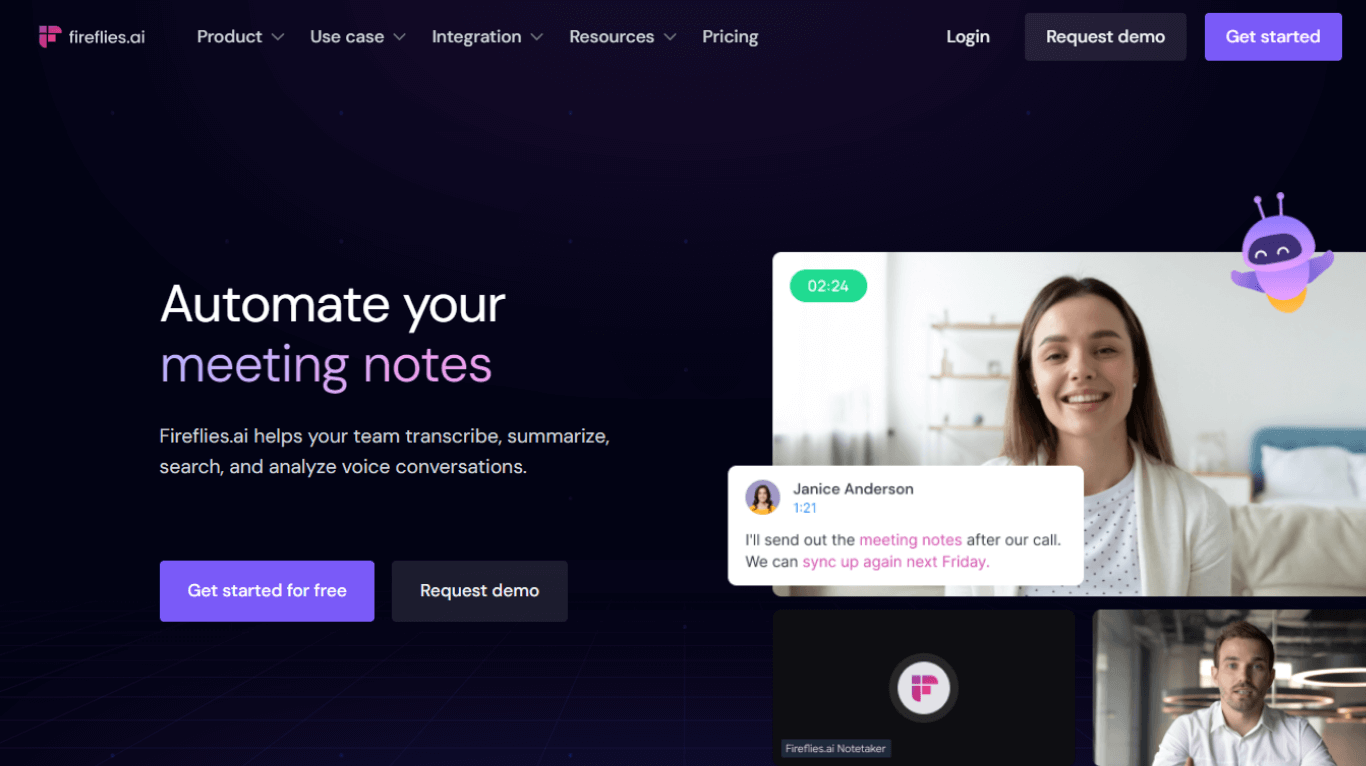
Afterwards, you can search your meeting history, share important moments, and send notes into the tools your team uses. I'd choose it when meetings feed directly into a busy sales or project workflow.
Useful features
- Use Live Assist for transcripts, AI notes, and questions during a call.
- Connect meeting notes to CRMs, collaboration apps, and other workflows.
- Review conversation trends across your team on Business.
Choose bot recording when you want saved audio or video. Paid desktop capture without a bot keeps transcripts and notes.
Pricing: Free includes limited AI summaries. Pro starts at $10 per seat/month, billed annually, or $18 with monthly billing.
9. Grain: Best for sharing customer-call evidence
Grain is a good fit when your team needs to hear what customers actually said. You can turn specific moments into clips, add context, and share the evidence with product, sales, or support.
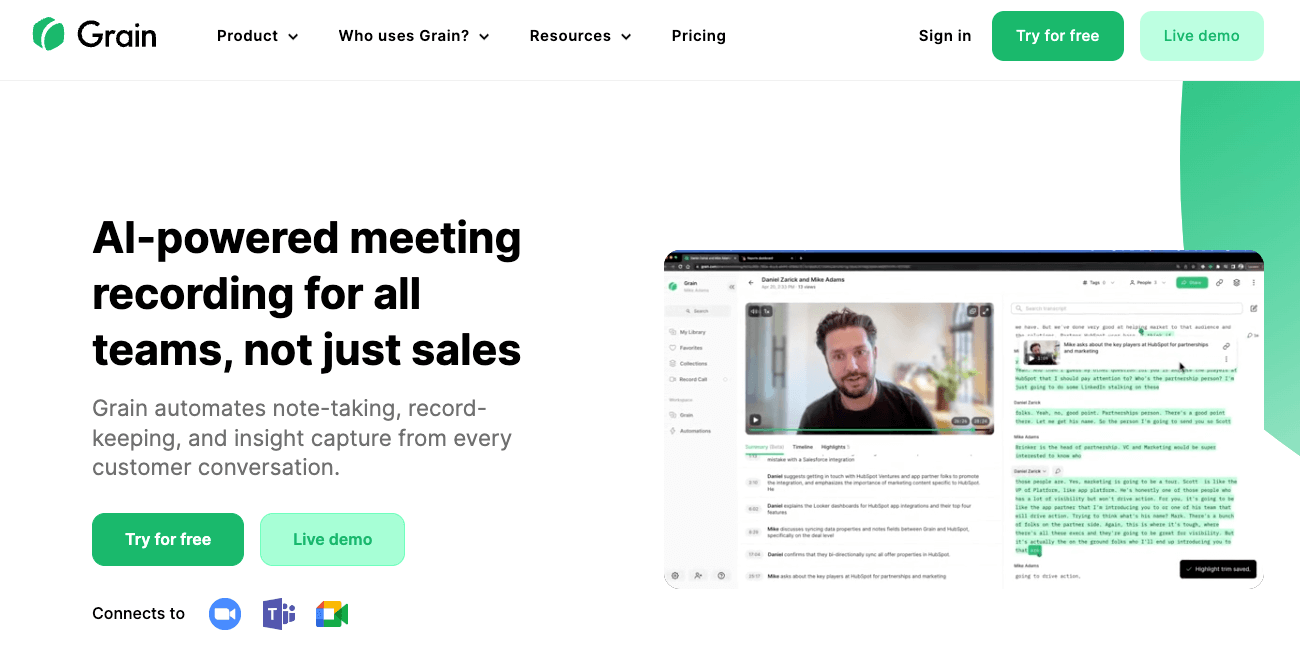
I'd pick it when a short customer clip will explain a problem more clearly than another written recap. Bot recording gives you video, while desktop capture lets you take meeting notes without adding a bot.
Useful features
- Create and share highlights linked to the original conversation.
- Ask questions across your meeting library and trace answers to their sources.
- Sync notes and fields to HubSpot or Salesforce on Business.
Free and Pro suit individual use. Business adds the shared company workspace, CRM workflows, and coaching tools.
Pricing: Free is available. Pro costs $15 and Business $29 per seat/month, billed annually. Business has a two-seat minimum.
10. Dialpad: Best for business calls and team communication
Dialpad belongs on your shortlist when you're choosing a business phone system as well as a way to keep track of conversations. It brings calls, messaging and meetings into one service, with AI transcripts and recaps to help you revisit what happened.
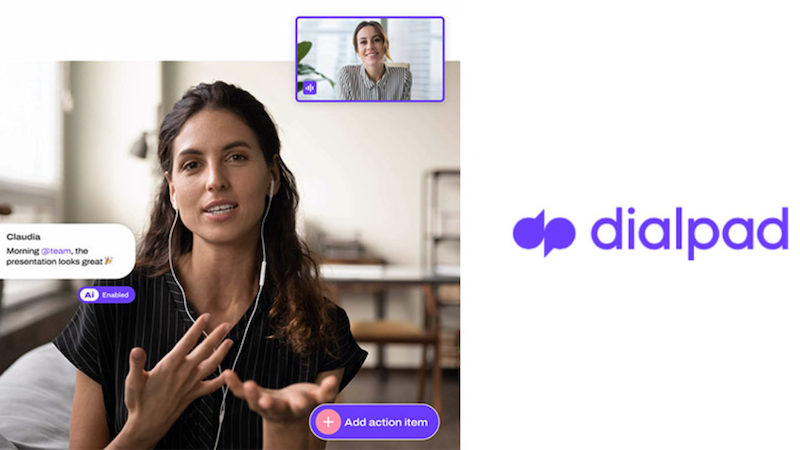
I'd consider it if your team spends much of the day speaking with customers by phone. Instead of adding a separate notes app to every call, you can work from the conversation record in the communication tool you're already using.
Useful features
- Make business calls and send messages through desktop and mobile apps.
- Search call transcripts and review AI summaries and action items.
- Use business integrations on Connect Pro to connect calls with other tools.
For contact-center or sales coaching, look at the separate Support and Sell products.
Pricing: A 14-day trial is available. Connect Standard costs $27 per user monthly or $15 per month billed annually. Connect Pro costs $35 monthly or $25 per month billed annually.
11. Avoma: Best for sales coaching and CRM follow-up
Avoma makes sense when meeting notes are part of a larger sales process. It combines call records with CRM updates, follow-up emails, and tools for reviewing how conversations went.
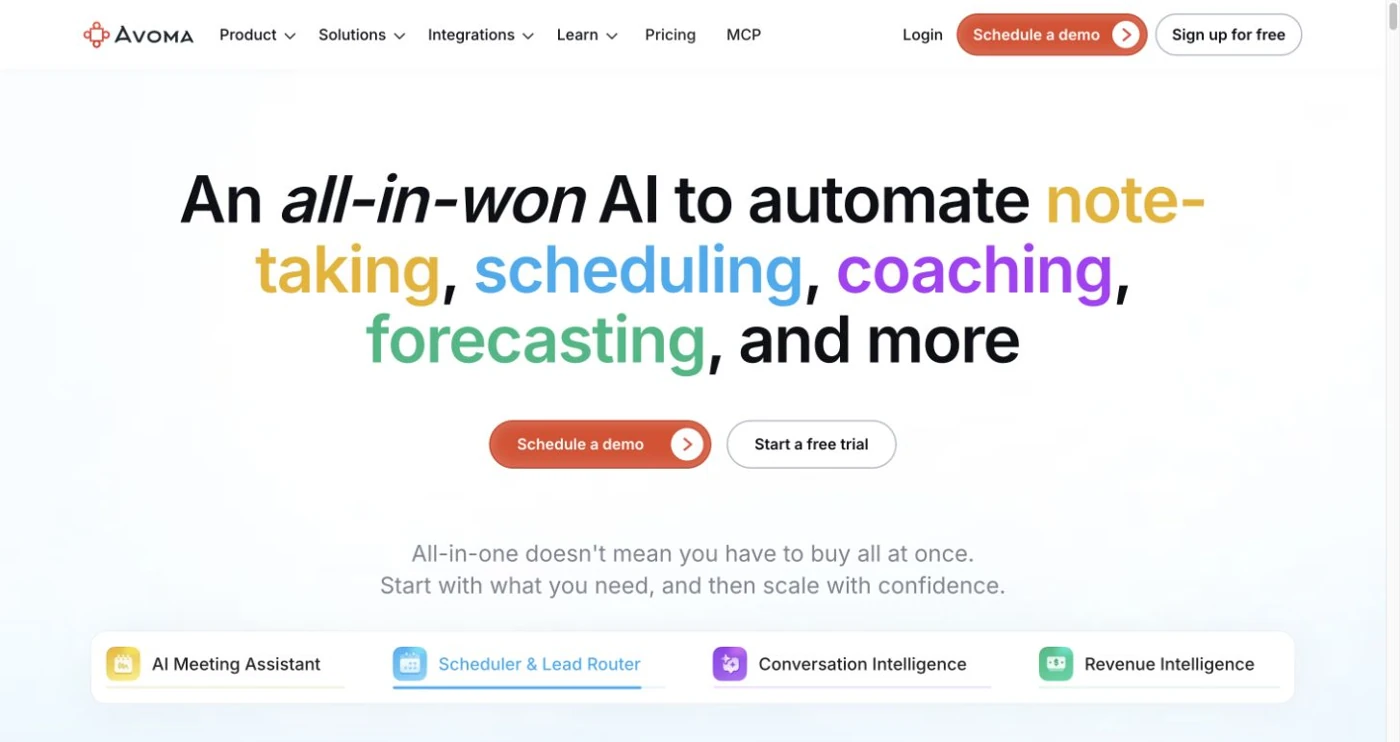
I'd look at it if your team needs discovery questions and next steps captured consistently across reps. You pay for the people recording meetings, while viewers and collaborators are free. That lets managers review calls without needing a recording license themselves.
Useful features
- Record online meetings with a bot or through the desktop app.
- Save meeting notes directly to the relevant CRM records.
- Add coaching, call scoring, or deal analysis with paid intelligence add-ons.
The main buying decision is whether you need meeting assistance alone or the extra sales analysis as well.
Pricing: A 14-day trial is available. Startup starts at $19 per recorder/month, billed annually, or $29 monthly. Intelligence add-ons cost extra.
12. Tactiq: Best for lightweight browser transcription
Tactiq is a handy option if you join Google Meet, Zoom, or Microsoft Teams in your browser. It gives you live, speaker-labeled text without adding a meeting bot.
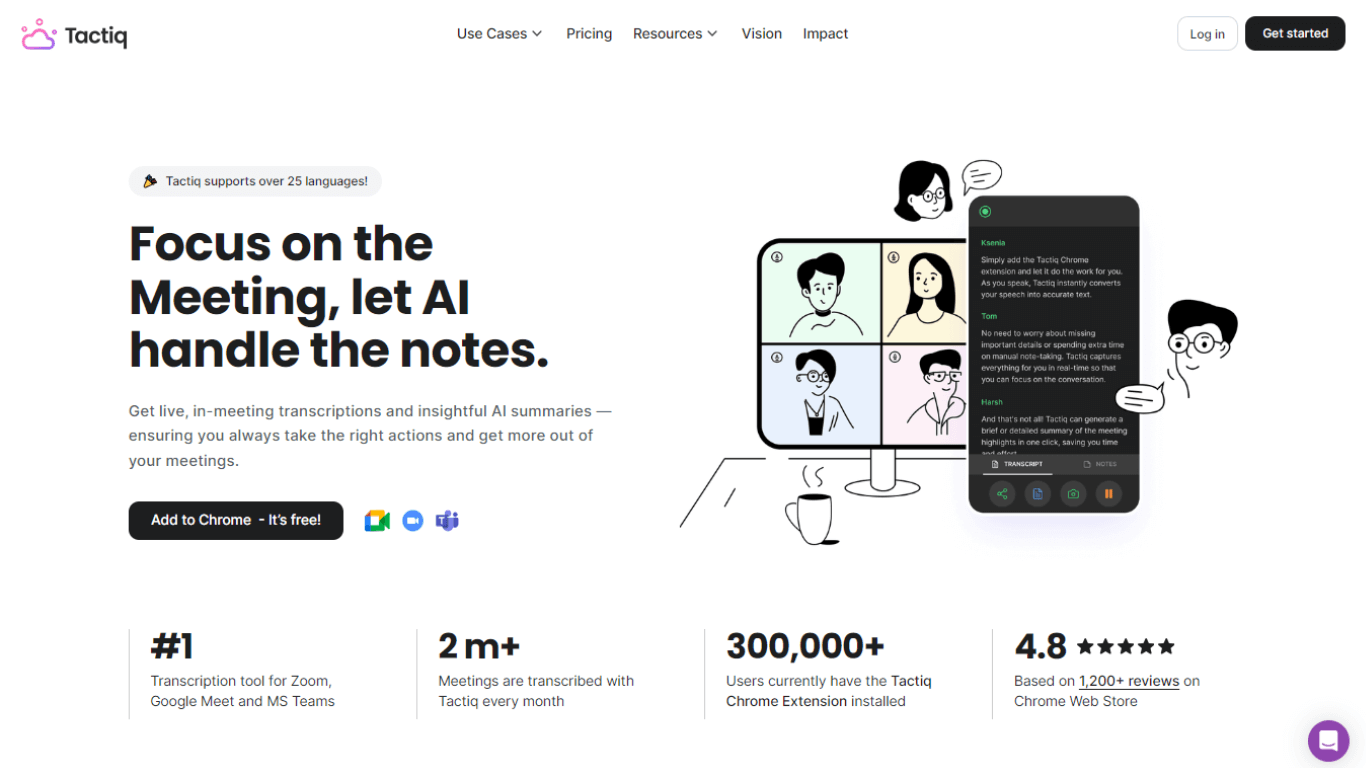
I'd choose it when I want a written record and quick AI follow-up. Its usual live workflow saves the transcript rather than an audio recording. You can also upload recordings you've captured elsewhere for transcription and AI analysis.
Useful features
- Follow live transcripts with speaker labels and timestamps.
- Turn discussions into summaries, action items, and follow-up drafts.
- Build workflows that send meeting information to Slack, HubSpot, or Linear.
A Mac app beta also supports Zoom desktop calls. For Google Meet and Microsoft Teams, use the browser extension.
Pricing: Free includes 10 transcripts per month and limited AI use. Pro starts at $8 per user/month, billed annually.
13. Sembly: Best for branded client deliverables
Sembly is worth considering if you work with several clients and want each client's context and branding kept together. It can turn that information into presentations, reports, and other work you can edit and share.
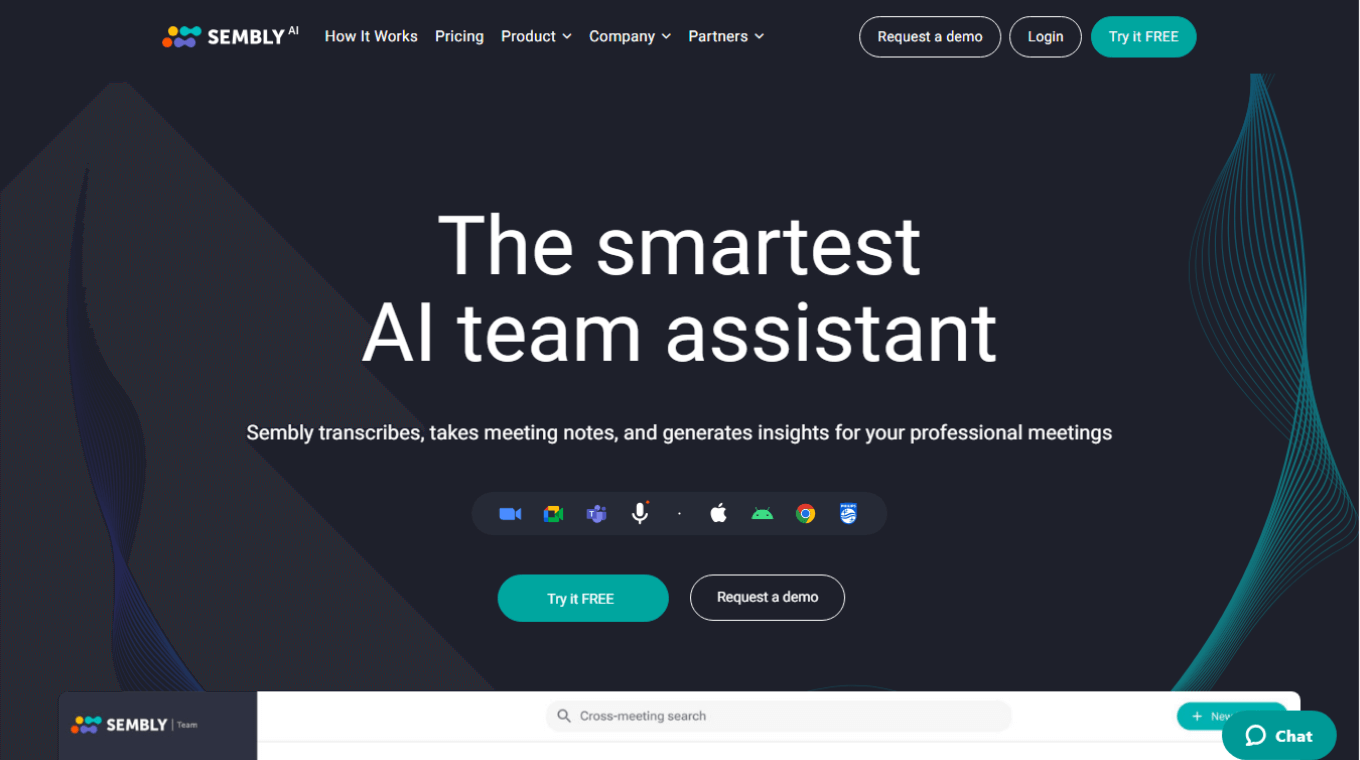
I'd look at it for consulting or agency work, where the meeting record needs to become something you send to a client. You can record online meetings, capture conversations through a microphone, or upload existing recordings.
Useful features
- Organize work in separate client spaces with their own branding.
- Create branded PowerPoint presentations and Word documents.
- Use multi-meeting AI chat and workflow automations on Pro.
Sembly also supports transcription in 45+ languages, including mixed-language meetings. Its client organization and output tools are the main reasons I'd put it on this shortlist.
Pricing: A free trial is available. Basic costs $10/month and Pro $20 per user/month, billed annually.
Choose the best Otter.ai alternative
I'd choose around the work you want to finish, rather than the longest feature list.
For conversations across online meetings, phone calls and in-person discussions, start with Notta. Memo gives you a dedicated recording device, while Brain helps turn the conversation and related files into a useful report, presentation or team update.
For a podcast or video, look at Descript. For transcripts and subtitles with a human-review option, compare Rev, HappyScribe and Amberscript. If you're managing an archive, Sonix is worth a look.
For team meeting workflows, narrow it down again: tl;dv for recurring reports, Fireflies for in-meeting AI help, Grain for customer clips, and Avoma for sales follow-up. Tactiq suits a lightweight written record, Dialpad fits business calling, and Sembly is useful for branded client deliverables.
Whichever you shortlist, try a conversation that resembles your usual work. Check the names, important decisions and final output. That's more useful than choosing from accuracy percentages measured in different conditions.
If you'd like to try Notta, start with a short recording. The Free plan transcribes up to three minutes per recording.
Frequently asked questions about Otter.ai alternatives
1. Is Otter.ai HIPAA compliant?
Otter offers a HIPAA add-on for Enterprise customers with a signed Business Associate Agreement. It isn't included with every account. If your work involves protected health information, confirm the eligible plan and agreement before recording it.
2. How do you select the right transcription app?
Start with where you record and what you need afterwards. A phone interview, a sales call and a podcast need different tools. Then check the languages, recording length, sharing options and price for your actual usage. If colleagues need access, include their seats in the comparison too.
3. What is the best transcription app?
I'd start with Notta for a mix of live meetings, phone calls and in-person conversations, especially if you also want bilingual text and editable follow-up work. Descript is a better fit when editing audio or video is the main job. Rev, HappyScribe and Amberscript are worth considering when you want human transcription or proofreading.
4. Can I use Otter.ai for free?
Yes. Otter Basic includes 300 transcription minutes per month, up to 30 minutes per conversation, and three file imports over the lifetime of the account. The import allowance doesn't reset each month. See our Otter.ai pricing guide for the paid-plan differences.
5. Does Otter.ai work well?
Otter can be a good fit if its languages, recording limits and team features match your work. It has meeting summaries, searchable transcripts, cross-meeting Chat and desktop recording. I'd judge it using a typical conversation of your own, then check the speaker names, specialist terms and details you'll rely on later.
