
tl;dv Pricing Breakdown & Top 6 Alternatives in 2026

Thomas Boldt
Notta is worth considering if you need live bilingual notes, phone-call recording with the Notta Memo recorder, and editable reports or presentations. Fathom is a useful starting point for free meeting transcription. If tl;dv already gives you the recurring reports you need, you may have little reason to switch.
In this post, I'll walk you through six tl;dv alternatives, their pricing and the trade-offs that matter. The aim is to find a tool that fits where you meet and what you need to do afterward.
tl;dv competitor breakdown
Here's how tl;dv and the six alternatives compare for capture, follow-up work and price.
| Tool | Best fit and capture | Language and follow-through | Starting paid price |
|---|---|---|---|
| tl;dv (baseline) | ✅ Online meeting bot, bot-free desktop audio, and iOS/Android in-person recording | Mixed-language processing with Business/Enterprise Whisper; recurring email reports | Free and paid plans; see tl;dv pricing |
| Notta | ✅ Online, bot-free desktop, mobile, Apple Watch and Memo phone/in-person capture | Live bilingual transcription and translated text; editable Brain reports, slides and other files | Pro: $8.17/user/month, billed annually |
| Fathom | ✅ Online meetings and iOS in-person recording; bot-free availability varies by platform | Multilingual transcripts, follow-up drafts and cross-meeting Q&A | Individual Premium: $16/user/month, billed annually |
| Avoma | ✅ Online meeting capture, desktop Local Recording and recording uploads | CRM-connected analysis; scheduled reports with Conversation Intelligence | Startup: $19/recorder/month, billed annually |
| Gong | ✅ Online meetings, calls and mobile in-person capture | Sales coaching, deal analysis and forecasting applications | Custom per-user licensing plus platform fee |
| Chorus | ✅ Calls and online meetings; mobile review/coaching | Sales conversation analysis in the ZoomInfo workflow | Custom quote |
| Fellow | ✅ Bot, bot-free desktop and mobile in-person recording | Collaborative agendas, cross-meeting Q&A and document creation | Team: $7/user/month, billed annually |
All dollar prices are USD. Annual-billing rates are monthly equivalents paid annually, not month-to-month prices. Fathom's lower $15 Team rate requires two users.
An overview of tl;dv
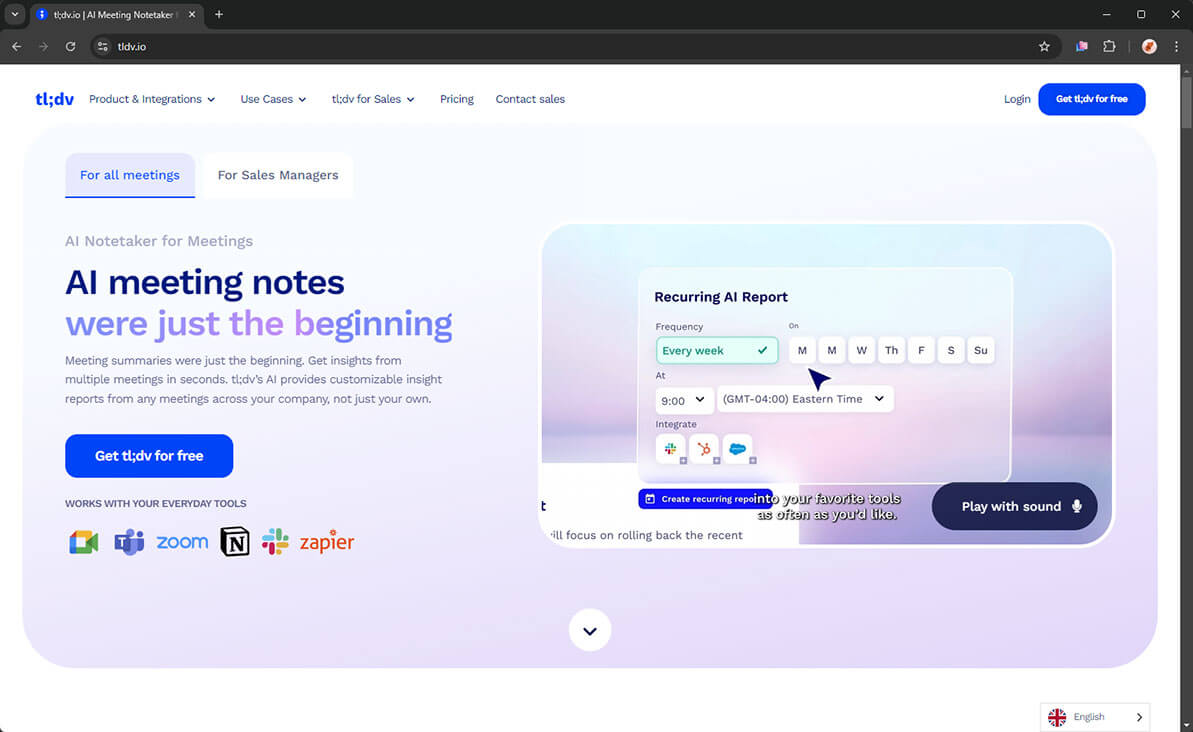
tl;dv records, transcribes and summarizes meetings, then helps you find patterns across conversations. It supports Zoom, Google Meet and Microsoft Teams through a meeting bot, plus bot-free desktop audio capture on Mac and Windows.
What does tl;dv do well?
Cross-meeting analysis is one of tl;dv's most useful strengths. Once you've built up a meeting library, you can ask about recurring themes instead of reviewing every transcript separately.
You can also set a prompt, choose which meetings to include and receive recurring reports by email. For example, a manager could follow customer objections across the team's calls. I'd consider staying with tl;dv if that regular reporting already answers your questions.
It also connects with workplace tools, including CRMs, calendars and document workflows. Business and Enterprise users can use its Whisper model to transcribe multiple spoken languages within one meeting.
Where does tl;dv fall short?
The mobile workflow involves a handoff: you record in-person audio on iOS or Android, then review the transcript and AI notes in the web app. The mobile app can record offline, but transcription follows upload. It isn't offline AI processing.
Bot-free desktop capture saves audio, not video, shared screens or chat. If you need those visual details, check the recording route before the meeting.
Source access also matters. Free source recordings are retained for three months, so I wouldn't treat that plan as a permanent audio/video archive. Archived media and deleted media are different; transcripts and notes can remain accessible after media is archived.
How tl;dv's plans affect your choice
The useful distinction is how much analysis you need:
- Free: a starting point for recording and trying AI features, with limited AI and manual uploads.
- Pro: unlimited single-meeting AI prompts and manual uploads, while multi-meeting analysis remains limited.
- Business: unlimited multi-meeting insights and recurring reports, plus the premium mixed-language transcription model.
- Enterprise: a custom offer for broader organizational requirements.
Check tl;dv's pricing for your currency and billing choice. I'd compare the plan that covers your reporting needs, rather than the cheapest paid tier alone.
List of tl;dv alternatives
These six tools cover different needs, from free personal notes to sales coaching and client deliverables.
1. Notta: Best for multilingual conversations and deliverables
Notta records and transcribes online and in-person conversations. It supports Google Meet, Zoom, Microsoft Teams and Webex, with mobile, desktop and hardware routes for conversations beyond those platforms.
If you want a dedicated recorder, Notta Memo captures phone calls and face-to-face meetings. Connected to the mobile app, it supports live transcription and translation. When disconnected, it records audio for later sync.
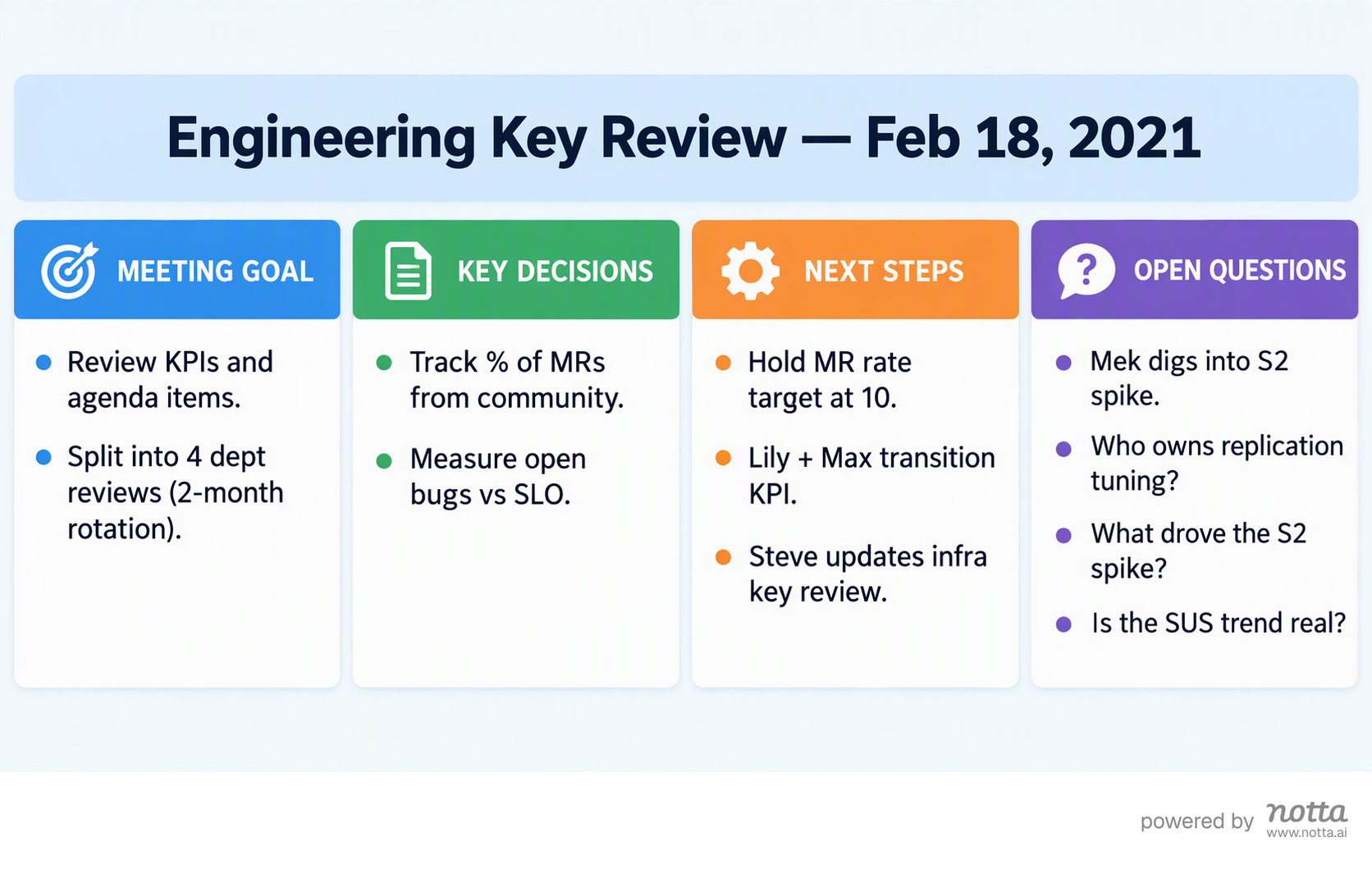
Once your transcript is ready, you can generate summaries using templates and share the information with your team. Notta Brain, built into Notta, helps you use those conversations and other files to create work you can share.
For example, you could combine project meetings with a client brief or spreadsheet, then ask Brain for an editable report or presentation. Save the generated file to Drive, or ask Brain to send a project update to a Slack channel. That brings what people said and the background files into the same piece of work.
Key features
- Record where the conversation happens. Use a meeting bot, Notta Desktop without a bot, mobile, Apple Watch, Chrome extension or Memo. Existing audio/video files and supported links can also be imported.
- Follow two spoken languages live. Bilingual transcription captures both languages in a conversation. Turn on translation to see translated text alongside the original on supported live recording and meeting-bot routes, including connected Memo through the app.
- Create useful files with Brain. Bring meetings, documents, spreadsheets and images together for reports, presentations, infographics and other outputs.
- Generate AI summaries. Turn transcripts into highlights, key points and action items using meeting templates.
- Collaborate and share. Edit transcripts and speaker names, share selected content, and use a team workspace on Business and above.
- Record your screen. Capture a process or presentation and transcribe the recording afterward.
- Connect your calendar and work tools. Record calendar meetings automatically and move notes into your document tools. Brain can also help with files in Drive and updates in Slack.
| Pros | Cons |
|---|---|
| Multiple recording routes, including Memo for phone calls and in-person meetings | Standard Free recordings are limited to three minutes each |
| Live bilingual transcription and translated text | Memo is a separate hardware purchase |
| Brain combines meetings with files and creates editable deliverables | Brain has a separate credit allowance from transcription minutes |
Pricing
Notta Pro costs $8.17 per month with annual billing ($97.99 annually). Business costs $16.67 per seat per month with annual billing ($199.99 annually). Enterprise uses custom pricing.
Standard Free includes 120 transcription minutes per month, with a three-minute maximum per recording. Memo costs $149 for the device; its hardware plan is separate from standard Free. Brain use follows its own credit allowance, so a transcription upgrade doesn't mean unlimited file creation.
Supported platforms
- Windows and macOS
- iOS and Android
- Apple Watch
- Web and Chrome extension
- Notta Memo hardware
Notta vs tl;dv
I'd lean toward Notta when your work combines online calls, phone or in-person conversations, live bilingual notes and a report or presentation afterward. Memo, the live language tools and Brain make that combination useful.
tl;dv remains a good fit for filtered, recurring analysis of meeting recordings. Both tools can work across meetings, so the decision is about the capture, language task and finished work you need.
See how Notta compares with tl;dv, or explore what Notta Brain can create.
Turn meeting notes into work you can share
Try Notta with a short recording, then use the transcript to explore summaries and follow-up work. Standard Free recordings cover up to three minutes each.
2. Fathom: Best for free meeting transcription
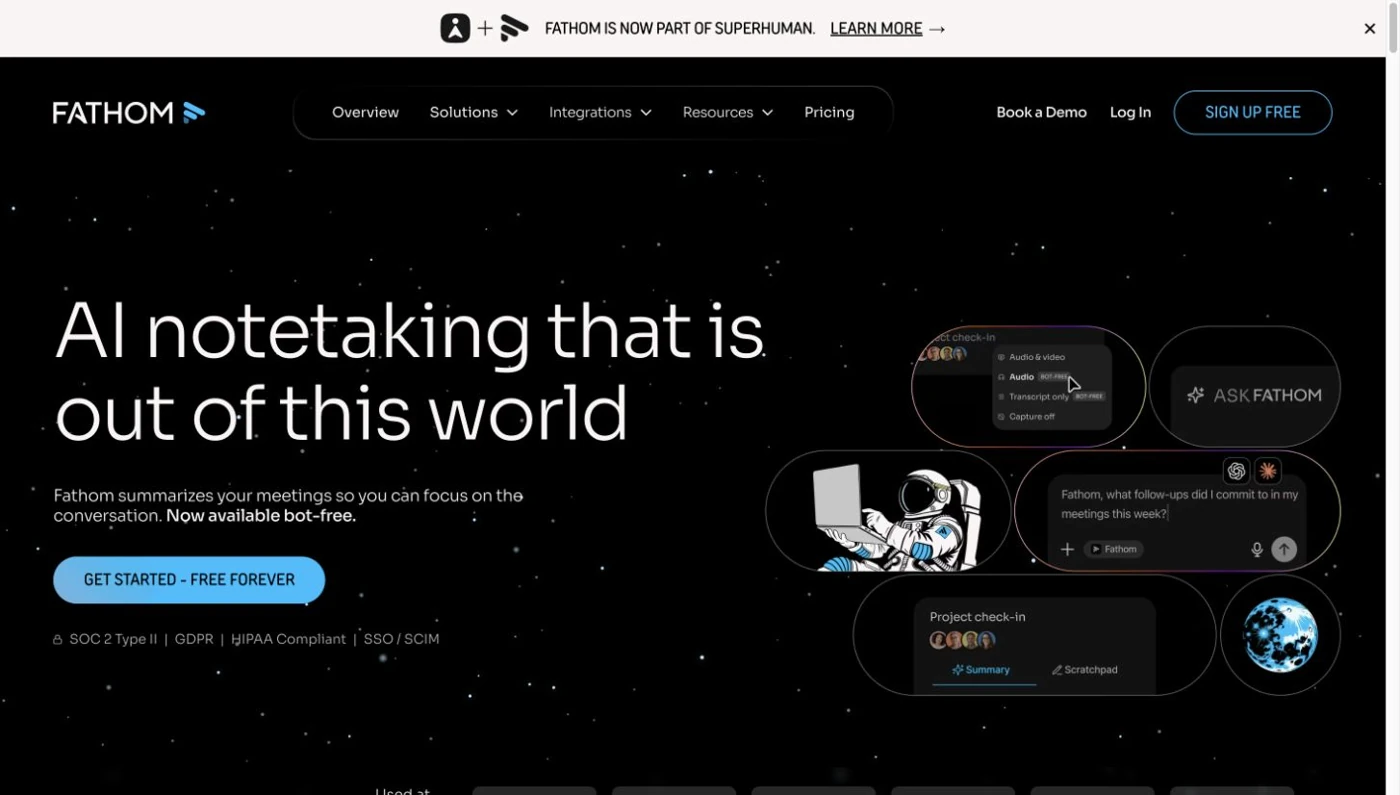
Fathom focuses on recording and transcribing meetings, with a Free plan that includes unlimited recording and transcription. It can summarize your meetings, highlight action items, prepare follow-up emails and pass meeting data to tools such as CRMs.
Key features
- Record online and in person. Capture Zoom, Google Meet and Teams meetings, or use the iPhone app for in-person conversations.
- Use bot-free capture where available. The new Mac experience is in beta. Windows bot-free capture is a limited Teams alpha, so availability isn't the same on both platforms.
- Transcribe in multiple languages. Language availability depends on the recording experience; the Mac bot-free beta currently enables 20 languages.
- Generate summaries and follow-ups. Get action items, summary templates and email drafts. Advanced Free summaries cover the first five calls each month; ordinary summaries remain available afterward.
- Ask across meetings. Account-Wide Ask Fathom searches your meeting history, with broader permitted team context on team plans.
- Share meeting data. Send information through Slack, CRM integrations and Zapier workflows.
| Pros | Cons |
|---|---|
| Unlimited Free recording and transcription | Existing recordings cannot be uploaded for transcription |
| Summaries and follow-up drafts support everyday meeting notes | Mobile capture is iOS-only, requires internet and cannot record phone calls |
| Questions can draw on your meeting history | Bot-free support differs by platform, account and language |
Pricing
Fathom Premium costs $16 per user per month with annual billing, or $20 monthly. Team costs $15 per user per month with annual billing, or $19 with monthly billing. Business costs $25 per user per month with annual billing, or $34 with monthly billing. Both team plans require at least two users. Enterprise uses a custom quote.
Supported platforms
- macOS and Windows, with different bot-free availability
- iOS for in-person recording and review
- Web for meeting review
Fathom vs tl;dv
I'd start with Fathom if you mainly want ongoing free meeting capture and useful follow-up notes. It also lets you review meetings on your iPhone.
tl;dv is worth keeping if recurring, filtered reports are central to your workflow. Compare the actual analysis plan and recording mode you need; neither tool is simply a basic transcript recorder.
3. Avoma: Best for CRM-connected meeting insights
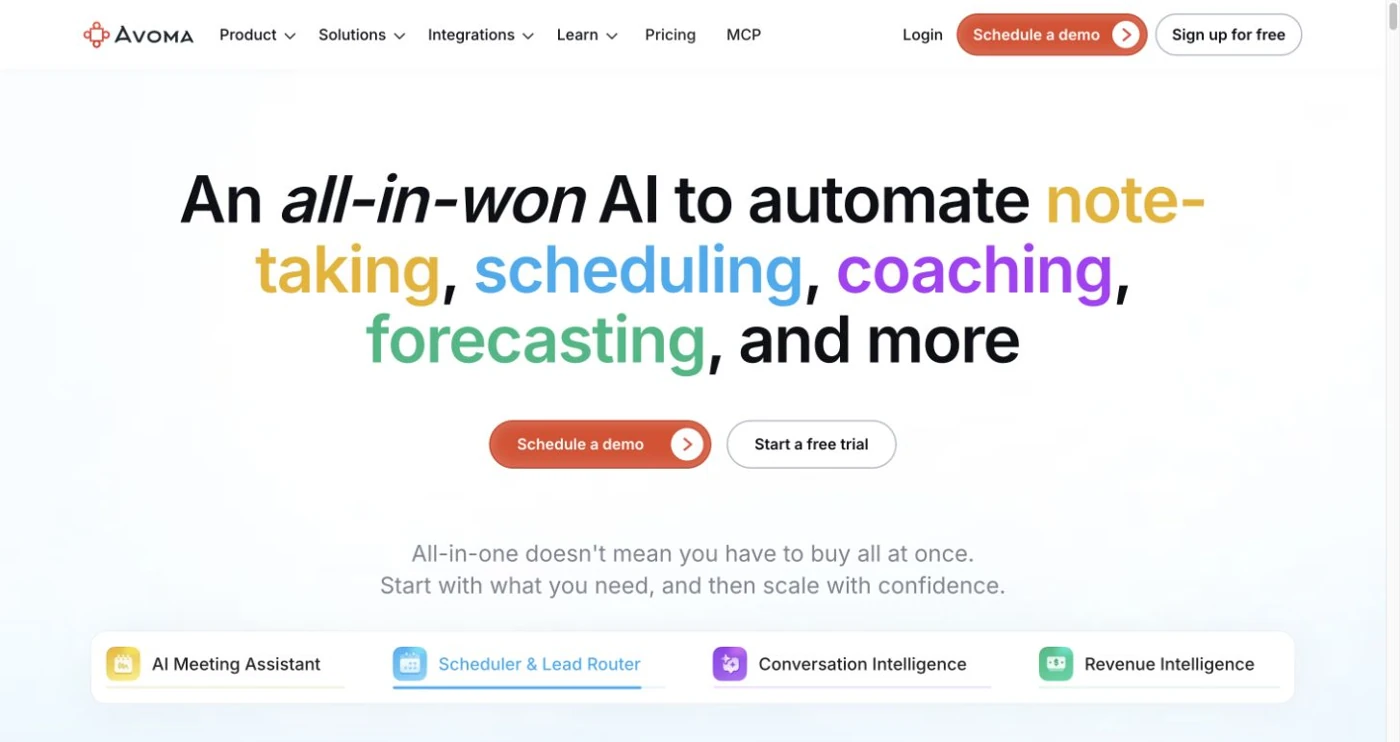
Avoma combines meeting notes with scheduling, collaboration and customer-facing team analysis. It offers recording, transcription and summaries, then connects that information to coaching and revenue workflows.
Key features
- Capture and import meetings. Use online recording, desktop Local Recording or uploaded audio/video. Desktop audio is uploaded for transcription; the AI doesn't run offline on your computer.
- Generate notes and summaries. Use transcripts, bookmarks and custom topics to find the parts of a conversation you need.
- Schedule meetings. Connect scheduling with meeting preparation and follow-up.
- Collaborate on meeting content. Edit transcripts, notes and summaries in a shared workspace.
- Connect customer data. Bring meeting information into Avoma's CRM and dialer integrations.
- Analyze across sources. Global Ask Avoma works across meetings and connected business context. It also accepts documents and images.
- Run recurring reports. Conversation Intelligence adds scheduled prompts delivered to Slack, Teams or email, with its own scheduled-prompt allowances.
| Pros | Cons |
|---|---|
| Connects meeting content with CRM and customer-facing workflows | The trial does not become a permanent free recording plan |
| Supports cross-meeting analysis and external context | Conversation Intelligence and Revenue Intelligence require separate add-ons |
| Free Viewer access supports colleagues who don't record | Costs depend on recorder seats and the analysis features you need |
Pricing
Avoma Startup starts at $19 per recorder per month with annual billing, or $29 monthly. Higher recorder plans and analysis add-ons have separate pricing; viewers and collaborators can use free access.
The trial lasts 14 days. Afterward, a free Viewer can access previous material but cannot record or transcribe new meetings. Conversation Intelligence and Revenue Intelligence each cost $29 per assigned seat per month annually, or $35 monthly, in addition to recorder subscriptions where required.
Supported platforms
- Web on Windows and macOS
- iOS and Android
- Desktop Local Recording on supported setups
Avoma vs tl;dv
I'd consider Avoma when meeting notes need to feed a customer-facing team's CRM, coaching and revenue work. Include the relevant add-ons when comparing the cost.
tl;dv also analyzes multiple meetings and supports recurring reports. Choose between the workflows and connected data you need, rather than assuming Avoma alone offers broader insights.
4. Gong: Best for sales coaching and deal analysis
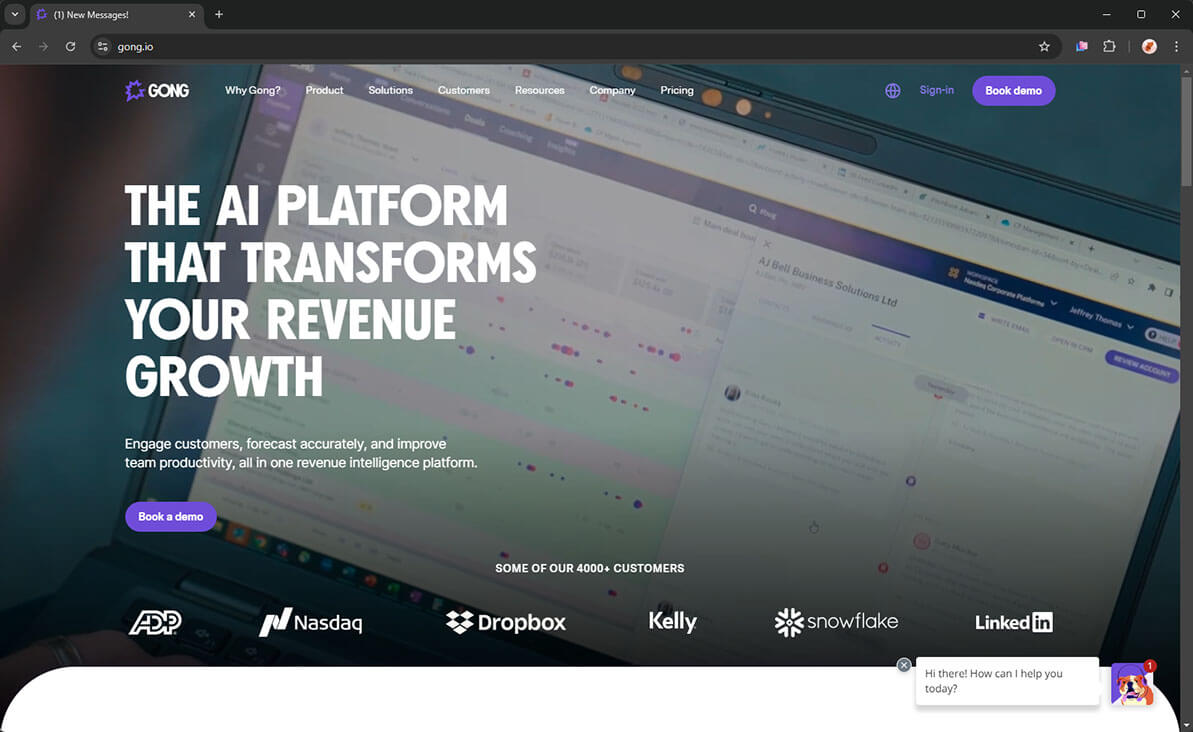
Gong analyzes meetings, calls and other business information to help sales and revenue teams. Its tools focus on customer concerns, coaching, deal progress and forecasting. I'd consider it when those tasks need to connect with your CRM and sales process.
Key features
- Record customer conversations. Capture online meetings and calls, plus in-person audio through the mobile apps.
- Transcribe meetings. Transcription supports more than 70 languages, with some analysis features limited to particular languages.
- Summarize sales conversations. Bring customer needs, objections and next steps into deal reviews.
- Connect business tools. Link meeting information with Gong's CRM and sales integrations.
- Analyze across conversations. Compare calls and connected customer context to find recurring issues and deal signals.
- Forecast and coach. Use the relevant Gong applications for forecasting, performance review and sales coaching.
| Pros | Cons |
|---|---|
| Sales coaching and deal analysis use conversation and CRM context | Pricing requires a quote covering licenses, applications and platform fees |
| Supports online, call and mobile recording routes | A broader sales-platform setup may be unnecessary for personal meeting notes |
| Connects conversation data with revenue workflows | Language support does not mean every analysis feature works in every language |
Pricing
Gong pricing combines custom per-user licensing with a platform fee. Ask for a quote covering the applications and seats you need, including forecasting or coaching. A single estimated seat price won't describe the whole offer.
Supported platforms
- Web on Windows and macOS
- iOS and Android
Gong vs tl;dv
I'd consider Gong if your team needs conversation evidence inside sales coaching, deal reviews and forecasting. Its value is the wider revenue workflow.
For general meeting notes and recurring meeting reports, tl;dv may be a simpler fit. Compare the work your team needs to complete rather than company size alone.
5. Chorus: Best for sales teams using ZoomInfo
Chorus is part of ZoomInfo and focuses on sales conversation intelligence. It brings call and meeting information into coaching, deal reviews and customer relationship analysis.
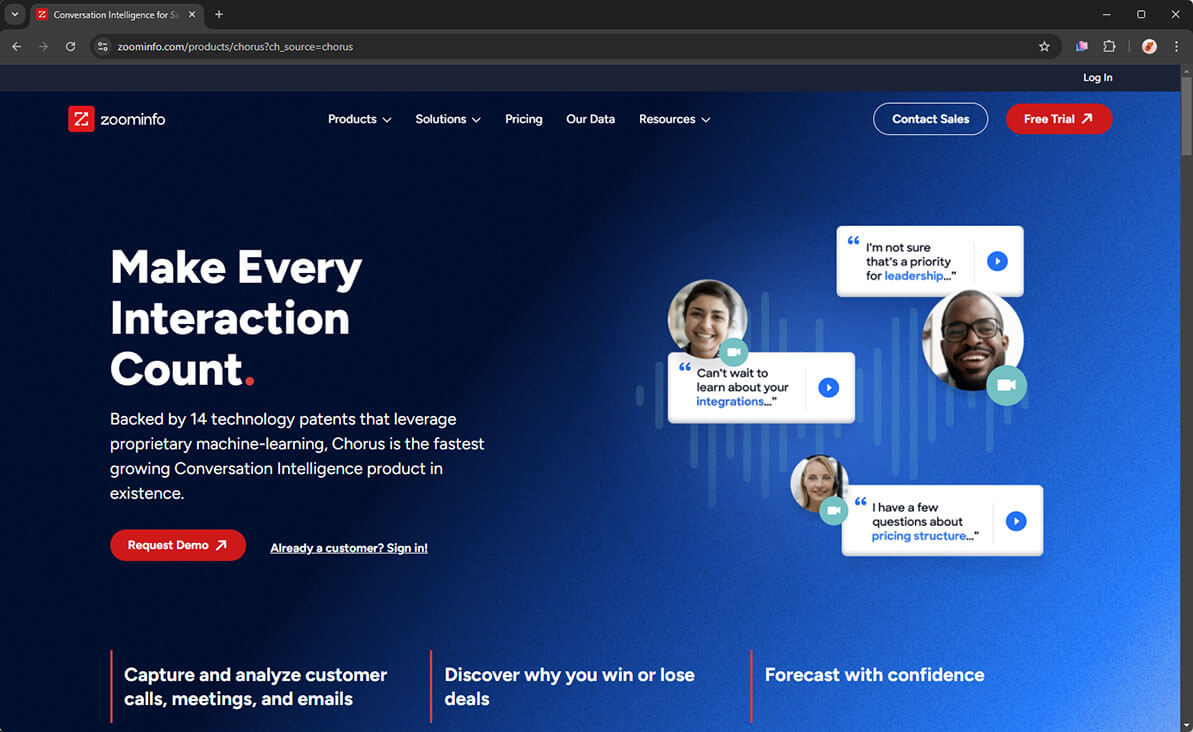
Using Chorus to capture customer conversations lets you connect what was said with ZoomInfo's wider sales context. I'd consider it if that is already where your team works.
Key features
- Record calls and online meetings. Keep customer conversations available for review.
- Transcribe and find key moments. Use transcripts and snippets to revisit important parts of a call.
- Connect CRM context. Bring conversation information into your connected sales tools.
- Review deal momentum. Identify customer concerns and changes that need attention.
- Coach the team. Review conversation patterns and call performance with reps.
- Review on mobile. Play back conversations and review coaching information on iOS and Android.
| Pros | Cons |
|---|---|
| Highlights useful moments for sales coaching and deal reviews | Pricing and contract scope require a sales conversation |
| Connects conversation analysis with the ZoomInfo workflow | Its sales focus may be more than you need for everyday meeting notes |
Pricing
Chorus uses a custom quote. Confirm which users, integrations, recording access and retention terms are included. Don't assume its fee structure matches Gong's.
Supported platforms
- Web on Windows and macOS
- iOS and Android for review and coaching
Chorus vs tl;dv
I'd shortlist Chorus for a sales team that wants customer conversation analysis in ZoomInfo. It still overlaps with tl;dv on recording and analysis, even though its broader focus differs.
tl;dv is a more direct fit when you want meeting notes and recurring reports without choosing a wider sales platform.
6. Fellow: Best for collaborative meeting routines
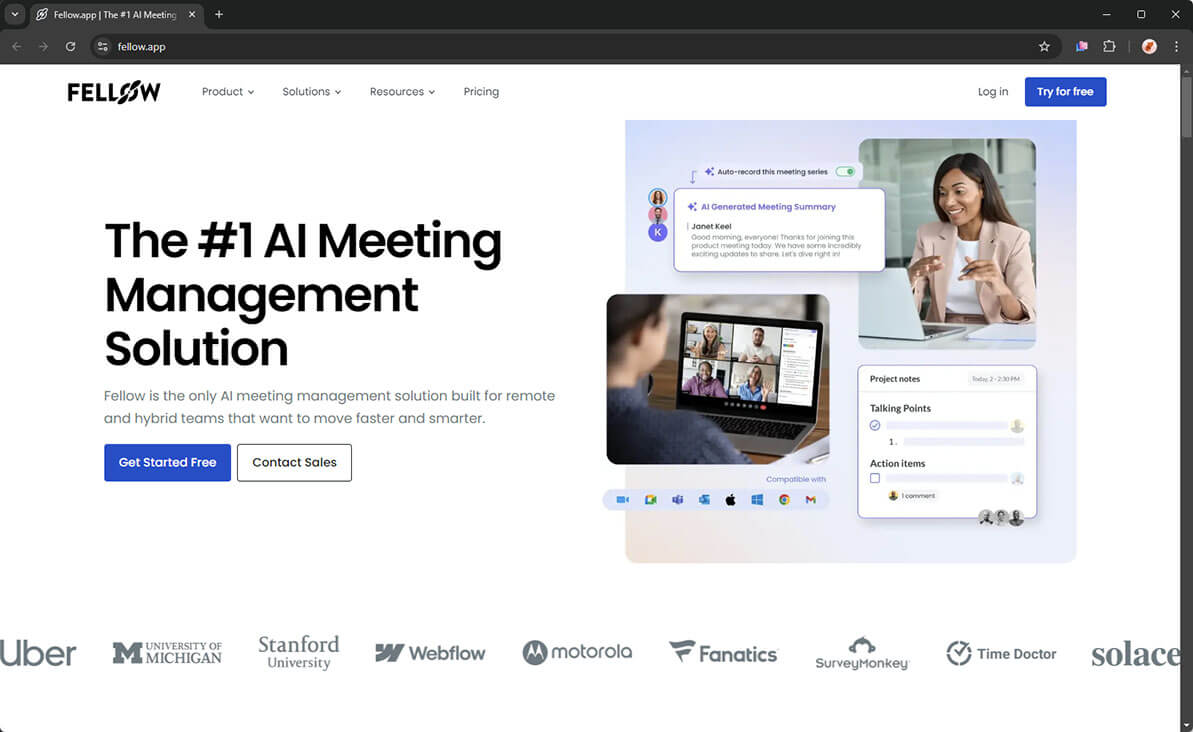
Fellow provides meeting preparation, transcription, summaries and collaborative notes. Its agendas and action items help a team carry work from one meeting into the next, while Ask Fellow adds analysis across permitted meetings.
Key features
- Record online and in person. Use meeting bots, bot-free desktop audio or mobile in-person capture. Supported paid Zoom Native Capture is another route.
- Transcribe in multiple languages. Fellow supports transcription in more than 100 languages.
- Generate summaries. Highlight decisions and action items from meeting transcripts.
- Prepare together. Use collaborative agendas and notes before and after a meeting.
- Ask across meetings and files. Add documents, spreadsheets or images to Ask Fellow, then create documents to download or export to Google Docs, Notion or Confluence.
- Review meeting patterns. Enterprise adds organization-wide meeting analytics.
| Pros | Cons |
|---|---|
| Connects agendas, meeting notes and action-item follow-up | Free includes five AI notes and five recordings per user over the account's lifetime |
| Ask Fellow supports cross-meeting context and document creation | Team includes ten AI notes and ten recordings per user monthly; heavier use needs Business or above |
| Offers bot and bot-free recording routes | Organization-wide analytics requires Enterprise |
Pricing
Fellow Team costs $7 per user per month with annual billing, or $11 monthly. Business costs $15 per user per month with annual billing, or $23 with monthly billing. Enterprise costs $25 per user per month with annual billing and starts at ten users.
Free includes five AI notes and five recordings per user over the account's lifetime. File uploads have a separate allowance.
Supported platforms
- Web, Windows and macOS
- iOS and Android
Fellow vs tl;dv
I'd choose Fellow when shared agendas, notes and follow-up actions are central to how your team runs meetings. Its analysis tools also go beyond a single summary.
tl;dv is worth keeping when recurring, filtered meeting reports are the priority. Check your actual AI usage and plan requirements before deciding which subscription fits.
Make the most of your meetings
Explore Notta's recording and follow-up tools with a short sample. Standard Free includes 120 transcription minutes per month, with up to three minutes per recording.
Choose the best tl;dv alternative
The best tl;dv alternative depends on what you need beyond a transcript. I'd choose Notta for a mix of online, phone and in-person capture, live bilingual work, and editable deliverables. Fathom is worth starting with for free meeting transcription, while Fellow suits a shared agenda-and-action routine.
For CRM-connected analysis, compare Avoma's recorder subscription and add-ons. Gong and Chorus make sense when sales coaching and deal workflows justify a broader platform.
You may also find that tl;dv already fits. Its mobile recording, desktop bot-free audio and recurring reports remove several reasons people once needed to switch.
Pick one recurring task you want the tool to handle, then check the recording route, plan and finished output against that task.
Frequently asked questions
Which is better for remote teams worried about bot intrusion?
Both Notta and tl;dv offer desktop recording without adding a bot participant. tl;dv's bot-free route captures audio; Notta also offers other capture routes and live bilingual tools. Choose based on your platform, recording needs and follow-up work. You still need appropriate participant notice or permission and must follow your workplace's recording policy. For a wider comparison, see these botless meeting recorders.
Can tl;dv record in-person meetings on a phone?
Yes. tl;dv's iOS and Android apps record in-person audio, including when you're offline. You then upload the recording and review the transcript and AI notes in the web app. If you want phone-call capture with a dedicated device, Notta Memo provides a different route. Offline audio capture does not mean the device performs offline AI transcription.
Can Notta analyze multiple meetings like tl;dv?
Yes. Notta Brain can bring multiple meetings and relevant files together for questions, reports, presentations and other outputs. tl;dv can also analyze multiple meetings and send recurring filtered reports. I'd choose based on the sources you need, the plan allowance and whether your next step is a regular report or an editable file to share.
